4YFN 2026: Biorce Wins + Top 20 Standouts
A look inside the 4YFN 2026 finals—featuring the winner, the runners-up, and the standout startups moving from pilots to deployment.



4YFN 2026 had a different energy this year. Sharper. More grounded. The conversations weren't about pitching the future of AI—they were about building companies that can actually scale.
What stood out wasn't hype, but execution. The startups that made it to the Top 20 arrived with traction signals, defensible moats, and a realistic path to market leadership. You could feel the difference between tech ideas and tech companies—especially among the finalists, where founders defended their approaches in front of investors who have backed category leaders.
That’s where 4YFN cut through. It acted as a proving ground rather than a showcase. The teams that advanced arrived with compelling answers to the hard questions about go-to-market, competitive positioning, and unit economics. Biorce’s win reflected this shift. Their AI-native platform for clinical trials does something tangible: it automates complex operations with AI agents to streamline planning and execution for research teams. This is operational reality.
Below is a closer look at the winner and startups that demonstrated the kind of clarity and conviction that gets deployed, not just funded.
The Competition
This year’s 4YFN competition surfaced a high-conviction cohort of founders tackling foundational, infrastructure-level problems—from clinical trial automation and sign-language accessibility to soil intelligence, secure AI, and borderless connectivity. Twenty finalists reached the Top 20, representing a global mix from Europe, Asia, the Middle East, and North America. Only five teams advanced to the Grand Finale on the Banco Sabadell Stage, with one overall winner taking home the 4YFN26 Award.
What stood out was viability. The finalists demonstrated clear operational traction, regulatory awareness, and a credible path to enterprise adoption. For 4YFN, this year marked the transition from a "startup carnival" to a rigorous sorting mechanism—offering a snapshot of an ecosystem moving beyond the experiment and into actual deployment.

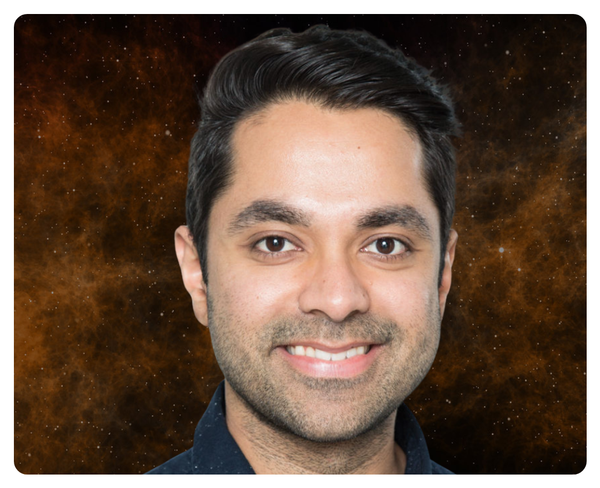
Startup: Biorce
Founder: Pedro Coelho
Pitch:
Biorce automates clinical trial operations with AI agents to accelerate protocol design and feasibility. The platform targets the $50B in annual waste within drug development, ensuring patients reach new treatments without the traditional delays of manual research.
What stood out:
Clinical trials are where promising treatments go to slow down. The operational drag of inefficient protocol design and manual feasibility assessments costs years and lives. Pedro Coelho arrived at this problem through life sciences consulting and the personal experience of watching a family member face a terminal illness. He understands what trial delays actually mean to the people waiting on the other side.
Biorce responds to this friction with Aika, an end-to-end platform that automates the operations keeping research slow and inaccessible. The system handles protocol design, site feasibility, and patient recruitment within one integrated product built for the most regulated workflows in healthcare. It moves beyond the role of a digital assistant to function as an automated infrastructure for clinical teams.
Traction:
Founded in Barcelona, Biorce has scaled to 80 people with offices in New York and Boston. The company raised a $52M Series A, marking the largest healthtech and AI round in Iberian history. Pedro is an Endeavor Entrepreneur leading a team that targets 200 enterprise users across Europe, North America, and Asia.
Why they won 4YFN 2026:
Founded in Barcelona, Biorce has scaled to 80 people with offices in New York and Boston. The company raised a $52M Series A, marking the largest healthtech and AI round in Iberian history. Pedro is an Endeavor Entrepreneur leading a team that targets 200 enterprise users across Europe, North America, and Asia.
Standout Startups
Beyond the winner, 4YFN 2026 brought together a cohort of founders building across climate tech, fintech, and digital infrastructure. While only one took the top prize, the teams below distinguished themselves through their clarity and readiness to scale.
What made them notable was not the technology itself, but their understanding of specific operational workflows and regulatory pathways. These are the companies moving beyond pilots and into deployment.
Startup: ConnectHear
Founder: Azima Dhanjee
Pitch:
ConnectHear builds AI-powered sign language infrastructure that enables Deaf individuals to access banking, healthcare, telecom, and government services independently. The platform adds sign language as a third communication layer alongside text and voice, integrating directly into existing service environments.
What stood out:
Azima Dhanjee’s parents were born Deaf. The founding story of ConnectHear began with the observation of their struggle to make a phone call, see a doctor, or attend a school meeting. This perspective shaped a product designed for a world where 500 million people lack basic communication access because society is built almost entirely on text and audio.
ConnectHear addresses this gap through infrastructure. The company developed a massive sign language dataset, a recognition engine, and a dedicated grammar translation engine. Instead of a standalone consumer app, they built a sign-language-native AI agent and API layer that plugs into existing institutional systems. The solution is optimized for low-end devices, low bandwidth, and offline use, functioning in the world as it actually exists.
Traction:
ConnectHear has delivered over two million minutes of real-time sign language interpretation within live production environments. The company works with major institutions including Standard Chartered Bank, Unilever, and the British Council. The technology is currently being rolled out across telecom operators and banks in Pakistan, with active pilots in the GCC targeting airports and regional service providers to reach 10 million individuals.
Startup: DeepKeep
Founder: Gil Harel
Pitch:
DeepKeep provides a platform for AI security and trustworthiness across the entire model lifecycle. The system protects enterprises from data leakage, model vulnerabilities, and regulatory risk, securing autonomous behavior from the development phase through to full deployment.
What stood out:
Enterprises are racing to deploy generative AI, but security protocols have not kept pace. Many organizations ship models without adequate controls over what those models expose or how they behave at runtime. DeepKeep addresses this entire surface area rather than focusing on a single layer of the stack.
The end-to-end platform is compatible with any model, language, or cloud environment, making it a viable solution for large enterprises with complex AI infrastructures. As agentic systems gain more autonomy, the associated risk grows. DeepKeep is building the governance layer required to manage that transition safely.
Traction:
DeepKeep has signed dozens of customers and completed hundreds of proof-of-concept projects, demonstrating a repeatable sales motion within the enterprise sector. The company has earned recognition from industry analysts at Gartner, Omdia, and Markets and Markets.
Startup: DRUO
Founder: Alejandro Pinzon
Pitch:
DRUO provides a payment method that allows businesses to accept transactions directly from any bank account for free. By rebuilding the financial stack and connecting directly with institutions, the platform offers 25x better fraud protection and removes the traditional costs associated with local and international payments.
What stood out:
For five decades, a small handful of companies have controlled nearly the entire volume of global payments. This lack of competition has created a system where every transaction carries a hidden 3–5% toll. Rather than attempting to patch existing rails, Alejandro Pinzon and his team rebuilt the stack from the ground up.
They created a direct-debit network that costs merchants nothing and reaches any bank account with high-grade security. The system allows buyers to use their existing accounts without maintenance fees, backed by support that resolves issues directly. DRUO is building a parallel financial backbone designed to function where the current system extraction has become a barrier to entry.
Traction:
DRUO has acquired over 1.5 million users with zero marketing spend and doubled its growth over the past year. The company is cash-flow positive ahead of its seed round and has been accelerated by Endeavor and the Visa + Plug and Play program. The former president of Mastercard serves as the lead investor.
Startup: Enhans
Founder: Seunghyun Lee
Pitch:
Enhans builds the "Action Layer" for enterprise AI, deploying agents that autonomously navigate web interfaces to execute mission-critical commerce workflows. By performing tasks as a human operator would, the platform moves AI from a passive assistant into the category of digital labor.
What stood out:
Large language models can communicate, but they cannot execute. The gap between answering questions and performing tasks is where many industries remain stalled. Workflows such as dynamic pricing, global sourcing, and quality assurance are too complex for traditional automation and too action-dependent for standard models.
Enhans developed an architecture that allows AI to log in, navigate, and complete tasks across web interfaces and legacy software without human intervention. To ensure the system is enterprise-grade, the company utilizes a commerce ontology that prevents the hallucinations common in typical models. This allows the AI to perform the work directly rather than merely assisting with it.
Traction:
Enhans is used by Samsung Electronics, P&G, and Philips to automate commerce operations across 90 countries. The platform processes millions of SKUs in high-stakes production environments. The company ranks second on the Global Large Action Model Leaderboard and was selected for the Palantir Startup Fellowship.
Startup: Sensegrass
Founder: Lalit Gautam
Pitch:
Sensegrass builds AI-powered soil intelligence infrastructure to measure carbon, nutrients, and climate risk in real time. The platform converts underground biological activity into actionable data for farmers, agribusinesses, and carbon markets.
What stood out:
Agriculture faces a structural data problem located beneath the surface. Farmers currently make critical decisions regarding fertilizer, water, and land management without visibility into soil carbon or nutrient levels. These variables determine yield and climate impact, yet current alternatives are insufficient. Lab testing is too slow, and satellite estimates lack the ground-level precision required for high-stakes decision-making.
Sensegrass addresses the problem at the source with proprietary in-field sensors. These devices measure soil carbon and nutrients in real time, feeding the data to an AI agronomist that converts raw readings into specific operational decisions. By providing actual measurement instead of modeled estimates, Sensegrass enables farmers to access climate finance and optimize input efficiency with precision.
Traction:
Sensegrass has deployed proprietary sensor prototypes and completed field pilots across various agricultural conditions. The team has established a live data collection pipeline and secured strategic partnerships with institutional stakeholders. The company has earned recognition across global AI and climate innovation platforms for its work in establishing a verifiable measurement system for soil health.
Startup: Skyfora
Founder: Fredrik Borgström
Pitch:
Skyfora transforms existing mobile network base stations into a global weather sensor grid through a pure software solution. By delivering high-resolution atmospheric data without new hardware, the platform provides the ground-truth observations required to improve AI-driven weather forecasting.
What stood out:
Weather forecasting faces an observation problem that modeling cannot solve. Less than 0.1% of the atmosphere is measured with sensor-grade accuracy, creating a structural data gap that becomes more expensive as extreme weather events increase. Skyfora identified that the infrastructure to fix this already exists within the mobile networks blanketing the planet.
Mobile base stations contain GNSS timing receivers that, with a software upgrade, function as precision atmospheric sensors. This allows for the immediate creation of a dense observation grid without new hardware or deployment cycles. The data has been scientifically validated to improve both AI-based and traditional numerical weather models, turning telecom infrastructure into a critical tool for climate resilience.
Traction:
Skyfora has deployed its solution in live public mobile networks, with operators validating the implementation in production environments. The company has over 20 commercial projects active across critical infrastructure, renewable energy, and defense—sectors where forecast accuracy determines financial and operational risk.
Startup: ZIM Connections
Founder: Irina Gheorghiu
Pitch:
ZIM Connections builds the connectivity layer for global businesses, enabling borderless mobile access through software-driven eSIM infrastructure. The platform allows companies to embed, control, and scale mobile connectivity without the need for physical SIM cards.
What stood out:
Mobile connectivity remains essential, yet the underlying infrastructure is decades old. Global businesses often manage a fragmented stack of physical cards, carrier relationships, and unpredictable costs. Irina Gheorghiu and her co-founders recognized that eSIM technology allows connectivity to be rebuilt as programmable infrastructure.
ZIM’s platform abstracts the entire telecom layer into a single API, orchestrating carrier profiles and networks in real time. This approach allows connectivity to function like cloud infrastructure—dynamic, scalable, and entirely managed through software. It replaces manual logistics with an automated system under the operator's direct control.
Traction:
ZIM has reached $1M ARR with a customer list that includes SBB Switzerland, Softbank, and G&D. These enterprise clients require high reliability at scale, signaling that the platform has moved beyond the early-adopter phase into a stable, production-ready solution.
Operational Readiness, Not Just Visionary Potential
4YFN has moved beyond its origins as a showcase for prototypes to become a stress test for enterprise utility. The founders highlighted here reflect a broader shift in the ecosystem. They understand that innovation is not measured by the technical complexity of a model, but by the reliability of its deployment. Regulatory compliance, integration paths, and legacy workflows are no longer treated as secondary hurdles. They are the core of the product.
The Filter of 4YFN
While these eight companies represent the standout signals from the 2026 edition, the event moves faster than a single recap can capture. Many promising teams remain in stealth or are currently refining pilots away from the main stages. What is documented here reflects the founders who arrived with the clarity and traction required to survive professional scrutiny.
We will continue tracking the teams and infrastructure layers shaping what is UpNext in the global economy.