Why Medicines Cost Thirty Times More in Some African Markets and What Kapsule Is Doing About It
Pharmaceutical companies have spent decades circling African markets, unable to act without reliable data. David Chen built Kapsule to fix that, pooling health records from hospitals, pharmacies, and insurers across Africa into a single compliant platform.


Pharmaceutical companies have spent decades circling African markets, knowing the opportunity was real but unable to act on it. The data infrastructure that would let them identify patients, price products, or design clinical trials across the continent simply did not exist, and without it, a billion people remained commercially invisible to the institutions that could have served them. David Chen built Kapsule to close that gap, aggregating health data from hospitals, pharmacies, and insurers across Africa into a single, legally compliant platform that gives global institutions the visibility they have been missing.
Growing up, he wanted to be Spider-Man, and entrepreneurship was the closest thing
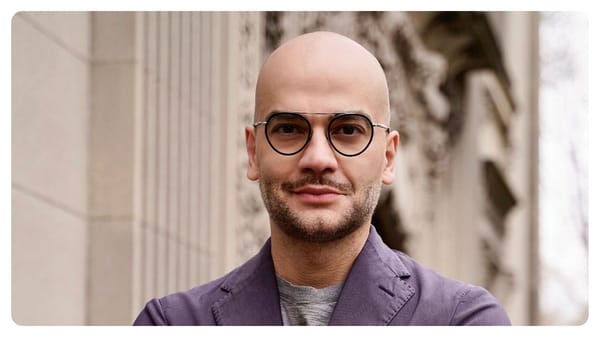
David Chen grew up in London, the son of a mixed Chinese and black heritage, and describes himself as one of those kids who were smart at school but never did a piece of homework. He showed up to exams, did well enough, and carried a quiet conviction that he was capable of more than anyone around him seemed to expect. The career path that would eventually match that conviction took a while to reveal itself. As a teenager, he was drawn to cartoons and comics, particularly stories in which a protagonist gathers a ragtag crew of friends and accomplishes something remarkable with them. He studied genetics at university, more out of aptitude than passion, and worked nights in a nightclub to pay his way through. One evening, a sales guy a few years older, who had dropped out of school at sixteen, spent £15,000 pounds on champagne from a single commission cheque. David was cleaning his table. He decided that night that science was not the path.
He moved into pharma consulting after graduating, primarily supporting pharmaceutical clients in regulatory affairs, drug safety, and market access. It was useful training in how to think, how to form a hypothesis and test it quickly, and how to operate inside large institutions. It also put him in the room, year after year, with clients who were eyeing African markets and finding reasons to wait.
Africa was always going to be interesting, just not yet
The verdict was consistent across every engagement. Africa was eventually going to be interesting, but right now, they were flying blind. The data that would let a pharmaceutical company identify the right patient populations, understand what those patients were actually paying for care, or design a clinical trial with confidence did not exist in any centralized or accessible form. So the industry kept circling, and nothing moved. In markets like Ghana, medicines were landing at thirty times the international reference price, or not landing at all, simply because no one had demonstrated that the patients existed and had the ability to pay.
David left consulting and spent time in enterprise technology at Axiom, a Silicon Valley legal tech firm, where he learned how to apply people, process, and technology at scale to large institutional clients. When he came back to the healthcare space a few years later, he found that nothing had changed. He was crazy enough, as he puts it, to decide to do something about it himself, and the ragtag crew he had always imagined began to take shape. His closest childhood friend, Hannan, whom he had known since the age of five, came first. Hannan had trained as a doctor, then a lawyer, then gone deep into software engineering and AI before it was fashionable. David promised Hannan that if he built it, he would sell it. Their CTO Femi, came later, reeled in gradually after a chance encounter at a carnival night on Old Street, turned a professional introduction into a friendship.
Kapsule aggregates health data from hospitals, pharmacies, insurers, and healthtech companies across Africa using on-premise middleware that pulls data from partner systems without requiring it to leave their infrastructure. Partners share data in exchange for a cut of the revenue Kapsule generates from selling access, which solves the question of why any institution would participate. The legal and data sovereignty constraints that had kept every other entrant out were handled directly rather than avoided. Customers access the resulting dataset through the Kapsule Terminal, a SaaS platform that enables pharmaceutical companies, researchers, and consulting firms to query patient records, run analytics, and identify populations and markets they previously couldn't see.
A continent of a billion people, made visible
The motivation behind all of it runs deeper than the commercial opportunity. David's father died unexpectedly while he was at university. That gave him a framework he has carried since. Life is brief, and the only question worth answering is how you want the story to read at the end. His co-founder, Hannan, crystallized the professional version of that question early on, when both of them were working day jobs and complaining about being undervalued. Hannan put it plainly one day. Surely, if we are as smart as we think we are, we can find a way to get rich and make the world a better place at the same time. For David, that was the call to action. Either he was as smart as he thought he was, or he needed to stop talking about it.
Kapsule is now operating across 14 countries, with 75 million patient records in its dataset, has been profitable since May 2024, and has received 2 acquisition offers that it has declined. The company has presented at the WHO, the United Nations General Assembly, and the African Union, and holds an endorsement from the Africa CDC. A Series A is in preparation, with new offices planned for China and active expansion requests coming in from across Asia, Latin America, and the GCC region. The commercial thesis David has spent years proving comes down to one observation. The patients are there, the purchasing power is there, and the only thing that was ever missing was someone building the infrastructure to show it.
About Flashpoint POV Spotlights
Flashpoint Global produces each Founder POV Spotlight using its proprietary category leadership framework. Every Spotlight begins with a Future Narrative session, where a founder’s POV is clarified and operationalized as the lens through which new categories are built. The result is content that moves founders beyond product messaging and into the role of category leader, helping the market understand the problem, the stakes, and the future being created.
If you are a founder building a new category, learn more.