A Language Dies Every 14 Days. This Founder Built AI to Stop It.
Chad Quinn discovered that reconnecting Indigenous communities with their languages dramatically reduces suicide rates. So he built an AI platform to make language revitalization scalable—before more disappear forever.

Why Language Loss Threatens Identity and Well-Being
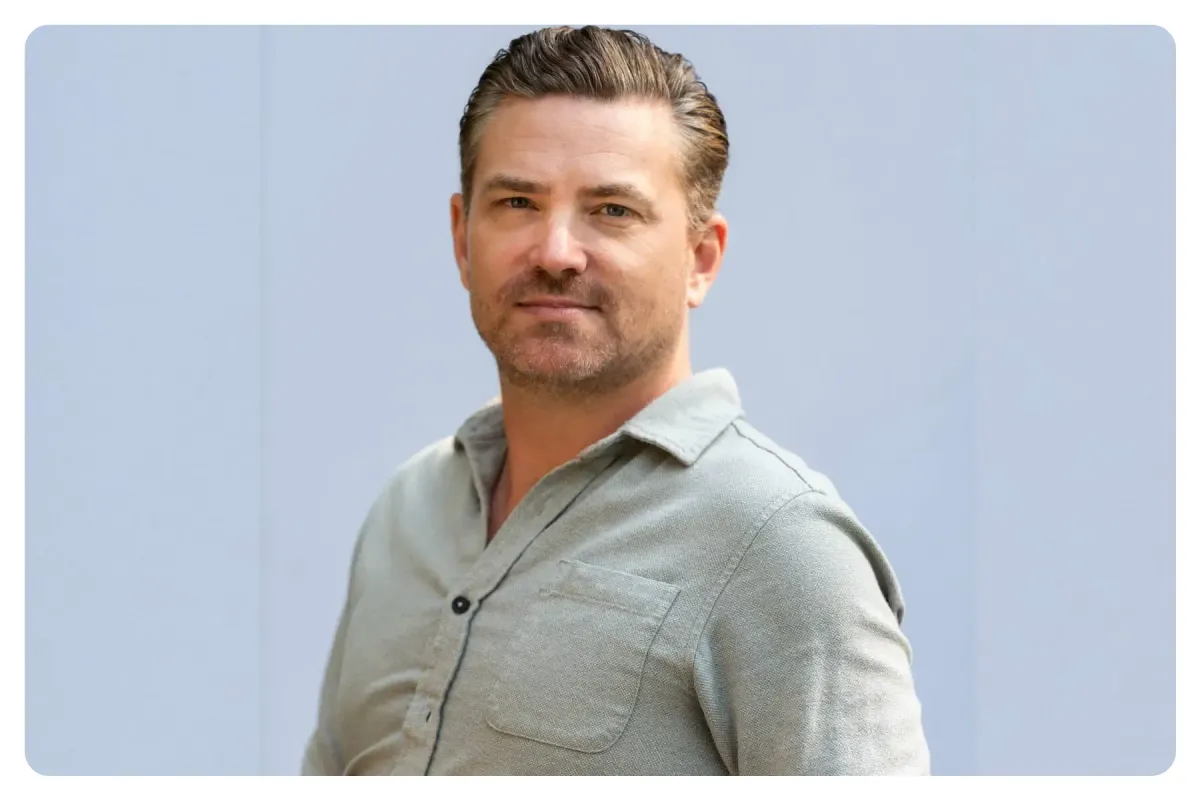
Every fourteen days, a language disappears. Around 6,700 endangered languages are at risk. Each loss carries stories, identity, and a way of thinking that cannot be recreated once it is gone. For Chad Quinn, Founder and CEO of Language Foundry, this crisis became personal the moment he encountered research showing the benefits to a community when people reconnect with their language and culture. As he put it, “There is a massive reduction in suicide and truancy when people get reconnected with their language.”
Chad grew up on Thetis Island, across a narrow channel from Penelakut Island. His parents ran a marina that became a natural gathering point. He attended school alongside Indigenous classmates and learned a dialect of Salish. Years later, his mother uncovered that his great-grandmother was Indigenous, making sense of the racism his grandmother had faced and illuminating a blended identity he had lived without fully understanding. That personal lens, paired with firsthand experiences of friends losing elders who carried irreplaceable knowledge, shaped his conviction that language revitalization is a race against time.
How Language Foundry Creates Community-Grounded Learning
Language Foundry is built on one principle. Communities must own their voices, their data, and their learning pathways. Chad’s AI background helped him see a way to create technology that supports this rather than imposes on it. Interactive lessons, artwork, syllabics, and AI-enhanced avatars all originate from community contributions. Teachers can guide learners even without speaking the language. Students hear familiar voices and see local stories brought to life.
The approach is rooted in ethics. As Chad said, “The only way this works is if the community owns the data and the tools.” This commitment led his team to develop models that require minimal recorded speech from elders and keep ownership fully in community hands.
The results have been powerful. Roughly eleven thousand learners, hundreds of teachers, and dozens of school boards now use the platform. Interest grows weekly as more languages and dialects come online. Communities that once struggled to find instructors can now offer structured, culturally grounded learning with confidence.

Where Community Led Revitalization Can Go Next
Chad views language as a foundation for leadership and resilience. Reconnection with language brings back a way of thinking that offers new possibilities for how communities confront change. He often draws on a metaphor from agriculture. “A monocrop can be wiped out by a single disease,” he said. “Societies are the same. We need many points of view to stay resilient.”
This belief fuels the pace of his work. New communities reach out weekly. School boards request large-scale deployments. Partnerships are forming across North America and Europe. The goal is accessible tools that support language preservation at scale while maintaining cultural integrity.
Chad describes the journey as something that keeps unfolding in front of him. The right people and opportunities appear at the right time. It feels less like a choice and more like alignment. As he said, “At some point you realize this is the only path you can take.”
Language Foundry is now expanding its course libraries, growing its infrastructure, and preparing to bring more than 100,000 learners onto the platform. The vision is a world where languages no longer fade quietly and where technology helps young people strengthen their identity rather than lose it.
About Flashpoint POV Spotlights
Flashpoint Global produces each Founder POV Spotlight using its proprietary category leadership framework. Every Spotlight begins with a Future Narrative session, where a founder’s POV is clarified and operationalized as the lens through which new categories are built. The result is content that moves founders beyond product messaging and into the role of category leader, helping the market understand the problem, the stakes, and the future being created.
If you are a founder building a new category, learn more.