The Software Developer Who Coded a Solution to Fashion's $200 Billion Data Problem
When Edgar Azcorra's activewear customers kept coming back, he knew it was because he had asked them what they wanted first. Xactsize is the fit-intelligence platform he built after realizing that the rest of the apparel industry had never asked the same question.

Online apparel returns cost retailers more than $200 billion a year in North America alone, and seventy percent of those returns trace back to one thing. The clothes did not fit. Toronto-based founder Edgar Azcorra spent twenty-five years writing software before he built an activewear brand that put him face-to-face with that problem. Then he built Xactsize, an AI-powered fit intelligence platform that gives apparel brands and manufacturers the data they have always been missing.
Selling chicken door to door in Cozumel was just the beginning
Edgar grew up in Cozumel, Mexico, and started selling at 9 years old, going door-to-door with chickens. He learned early that giving customers exactly what they wanted was what made sales climb. The instinct never left him.
He studied engineering in Mexico City, where he designed an electrocardiogram that hospitals are still using today, then joined Ericsson's research centre as a software developer. The communication code he wrote there became part of the 5G architecture. He moved through several Canadian telecoms before landing in Toronto.
In 2020, spotting a surge in demand for comfortable clothing during COVID, he launched an activewear brand targeting women. Rather than designing in isolation, he went to the gyms, talked to the women buying the clothes, and adjusted accordingly based on what they told him. When customers said the hip line bothered them, he changed it. The brand worked because he asked first.
Gym goers already knew what the fashion industry refused to hear
When Edgar looked beyond his own brand at the broader apparel industry, what he saw was the same problem running in reverse. Brands were designing for bodies they had never measured, producing inventory nobody had asked for, and absorbing the cost when customers returned it. Twenty-six percent of online purchases are returned. Manufacturing plants overproduce by thirty percent, and much of that excess is never sold. Some get cut up and destroyed. Some end up in a landfill. For every return, roughly 100 grams of CO2 are released into the atmosphere.
“We are not providing only a sizing tool,” Edgar says. “We are providing a data platform that understands bodies, garments, and the customer needs.”
Xactsize captures body measurements in real time through a smartphone camera, matches them against garment specifications, and returns a size recommendation without storing a photo or requiring any additional hardware. Brands get the fit data their customers were always willing to give, if anyone had thought to ask. The platform is already live with brands in Brazil, Mexico, and Canada, including an agreement with Salesforce.
When you code every line yourself, you know exactly what comes next
Edgar has been building neural networks since 2018 and still puts his hands on the code alongside a team of twelve, seven of whom are engineers. That depth of technical involvement shapes how he sees the road ahead. Xactsize is preparing to deploy conversational AI that will interact with shoppers in real time, learn preferences, remember customers across sessions, and guide them to the right garment for their body and taste.
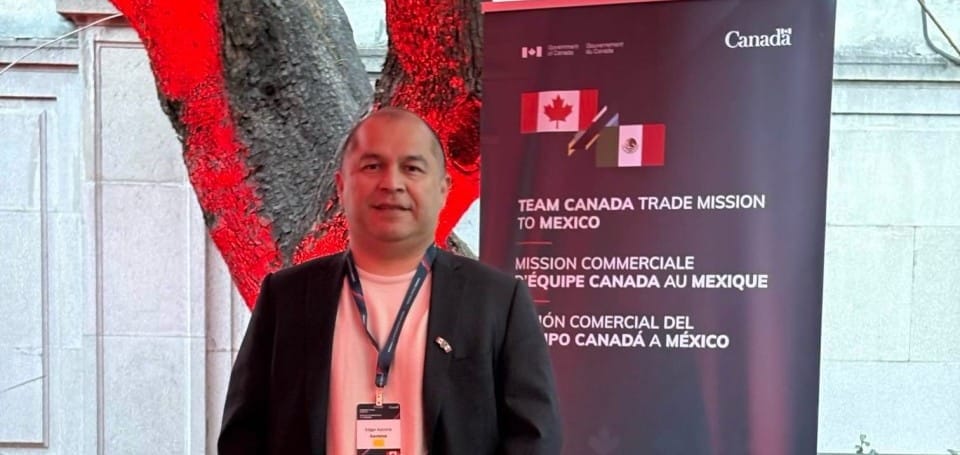
The volume of data that will be generated is significant enough that Edgar is planning to build dedicated infrastructure to hold it. He went to Mexico as part of the Canada-Mexico Trade Mission and returned with new contracts and a Mexican government investment arm interested in backing the company in Monterrey. A manufacturing pilot is planned with a facility of 800 employees.
Edgar quotes Einstein when he describes how he thinks about what comes next. “Imagination is better than knowledge.”
About Flashpoint POV Spotlights
Flashpoint Global produces each Founder POV Spotlight using its proprietary category leadership framework. Every Spotlight begins with a Future Narrative session, where a founder’s POV is clarified and operationalized as the lens through which new categories are built. The result is content that moves founders beyond product messaging and into the role of category leader, helping the market understand the problem, the stakes, and the future being created.
If you are a founder building a new category, learn more.