Bridging the Language Divide
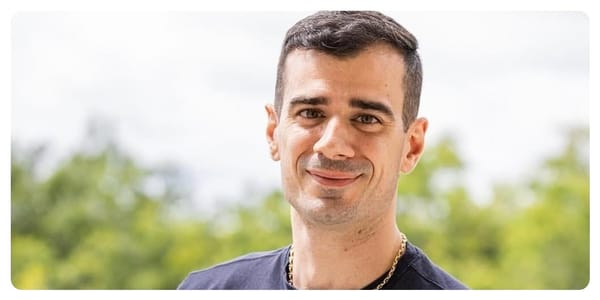
Joshua Barimon Firima, founder of KrosAI, is breaking the world’s language barrier by building AI that speaks like its users. His mission: to create equity and inclusion through technology that empowers billions to connect, learn, and thrive in their own language.


How KrosAI is Unlocking the World’s Next Billion Voices
The Inequity Created by Language
When Joshua Barimon Firima talks about inclusion, he doesn’t mean it as a buzzword. For him, it’s personal. Born and raised in Nigeria in a large family of nine children, he learned early what it meant to create leverage where none existed. “I grew up knowing that not everyone starts on the same playing field,” he says. “I had to find ways to compete in environments where others already had access to more resources.”
That sense of inequity stayed with him. As he entered the tech world, Joshua began to see a pattern: the same structural imbalance he faced growing up existed globally in technology. Billions of people across emerging markets are left behind due to one invisible barrier: language. “Businesses want to reach new markets, but the language gap makes it impossible to communicate authentically,” Joshua explains. “And for users, it’s not just a translation problem. It’s about identity. They want to use technology without having to change who they are.”
This insight became the seed for KrosAI, a company designed to enable businesses to communicate with customers in their own local languages and dialects. For Joshua, without solving the language barrier, the promise of AI-driven inclusion would remain out of reach for most of the world.
Building AI That Speaks Like You
KrosAI is developing infrastructure-level tools that enable businesses to effectively serve customers in emerging markets. Its technology fine-tunes AI models to understand and speak local languages across Africa, Southeast Asia, and Latin America. The company provides APIs, similar to OpenAI’s model access, that allow organizations to integrate voice and text understanding directly into their existing systems.
The approach is bold. “We’re building the backbone for inclusive AI,” Joshua says. “Just like fintech opened up financial systems across Africa, we’re opening access to technology through language.” He believes this could double the market potential for many companies. “If you were doing 100 million a year serving only English-speaking customers, imagine what happens when you unlock the rest of the market,” he explains. “You don’t have to change your product. You just have to let people use it in their language.”
KrosAI has already launched, generating $36,000 in annual recurring revenue and serving several B2B clients, with tens of thousands of end users. The company is backed by investors and accelerators, including Right Side Capital, MARL Accelerator, Microsoft for Startups, Google for Startups, and NVIDIA Inception Program. Next, Joshua is preparing for a pre-seed round in January 2026, with plans to expand through partnerships with telecommunications companies that can distribute AI agents directly through their networks.

Eliminating Language Barriers and Opening Doors
Joshua’s vision extends far beyond business growth. His goal is to create a world where technology no longer forces people to conform to its standards. “Human nature thrives when people feel included,” he says. “When you can access technology in your own language, you’re not just using a tool, you’re being seen.”
He draws a clear line between what fintech achieved in the last decade and what he believes AI can do next. Fintech gave millions of people access to the global economy. KrosAI, he believes, can do the same for communication, education, and access to information. “AI can bring equity, inclusion, and prosperity to every region,” Joshua says. “It can help billions of people participate in the global digital economy without losing their cultural identity.”
Behind his drive is a relentless but straightforward mission: to give others the opportunities he had to fight for. “Everything I am today came from refusing to accept no as an answer,” he says. “I want to give people like me more shots at life, ten chances instead of one.”
Joshua Firima is building a bridge across the world’s language divide and redefining what true inclusion in the age of AI can look like.
About Flashpoint POV Spotlights
Flashpoint POV Spotlights are in-depth founder features produced by Flashpoint Global—a thought leadership management studio that helps innovators articulate the world they’re creating.
Each story begins with a Future Narrative Session and develops into a Minimum Viable POV (MVPov): the founder’s clearest statement of purpose and perspective.
Follow UpNext Global to discover more founders shaping the future. (If you’re a founder interested in clarifying your own POV, stay tuned — applications open soon.)