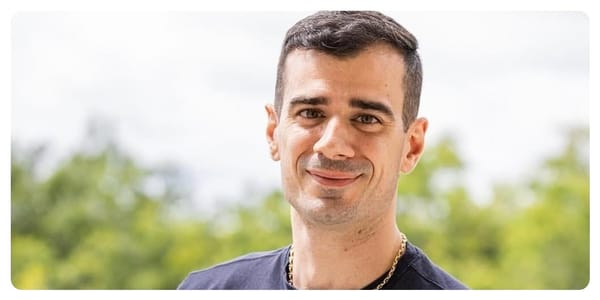
How a Turkish-American Mom Built the Marketplace for Children's Activities That Turkey Was Missing
A Turkish-American mother of two saw the gap between New Jersey and Turkey: parents searching for children's activities with no dedicated platform to find them. She built Bulbi, a marketplace for kids aged 0-12, and reached the Web Summit Qatar semi-finals.

Şeyma Taşkın Yıldırım moved to New Jersey at eight years old, not speaking a word of English. She adapted, graduated from Rutgers with a double major in neuroscience and economics, planned to attend medical school, and worked as an EMT. Then she took a vacation to Turkey. That was fifteen years ago. She never came back.
Her family still runs a Turkish bakery in New Jersey. All five of her sisters stayed in the US. Şeyma is the one who returned, settled in Mersin in the southeast of Turkey, married, had two daughters, and built a career in sales and marketing through her husband's family export business. It was a life shaped by pragmatism and adaptation, the same qualities that would eventually lead her to start Bulbi.
Bulbi was not a calculated startup play. It was two mothers, exasperated, asking each other why finding a Saturday morning pottery class for a seven-year-old required an hour of scrolling through Instagram accounts, WhatsApp groups, and half-broken websites, often still not sure they had the right information.
The market existed everywhere except in one place
Şeyma's co-founder, Dolunay Ersoy, brings fifteen years of experience in finance and purchasing. Together, they spent a year in research and development before Bulbi launched. The platform connects parents and caregivers with instructors and small businesses that offer workshops, courses, and activities for children aged 0 to 12. Bookings, payments, and discovery all happen in one place.
Turkey has no dedicated marketplace for this kind of offering. Concert ticketing platforms cover theatre productions and large events, but a yoga studio running a mommy-and-me class on Thursday mornings is invisible to the parents two streets away. Bulbi makes that studio findable, bookable, and real.
The insight Şeyma brings is specific. She has watched her daughter attend arts-and-craft programs at the Guggenheim and Broadway theatre camps in New Jersey, then come home to southeastern Turkey with a completely different set of options. She knows what a developed ecosystem for children's activities looks like, and she knows how hungry Turkish parents are for exactly that.
Pay it forward started with one school and sold a hundred tickets in days
Bulbi's platform includes a social layer called Pay It Forward. When a parent books an activity, they can purchase an additional ticket for a child in financial need. The first school pilot sold over a hundred tickets within days. A second school followed. Children who had never made a candle before made candles.
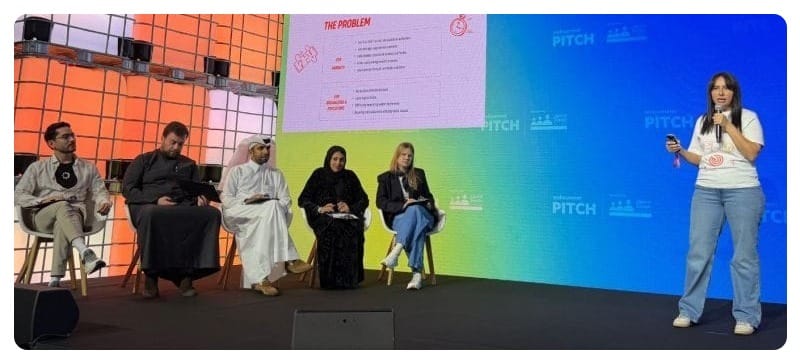
That example is deliberate when Şeyma tells it. The experience does not have to be grand. It just has to happen. A child who tries a taekwondo class once, who never would have found it otherwise, might return every week for a decade. Bulbi is currently piloted across three Turkish cities and is eyeing the MENA region and neighbouring countries. Web Summit Qatar was a strategic step in that direction. They reached the semi-finals.
Two working mothers built the thing they could not find
Şeyma talks about time the way only a working parent does, as a finite resource with a moral weight to it. Turkish parents want the one hour they have with their child on a weekday evening to mean something. That urgency is not abstract to her. It is how she lives.
Her eight-year-old has already memorized the Bulbi pitch and delivered a version of it at home while Şeyma was preparing for Qatar. She watches her mother build something from nothing and seems to take it as the obvious thing a person does.
Bulbi's name comes from a Turkish children's word. Bul means find. Kids use it constantly, tugging at a sleeve: find me this, find me that. It is probably the most honest mission statement a startup has ever accidentally given itself.
About Flashpoint POV Spotlights
Flashpoint Global produces each Founder POV Spotlight using its proprietary category leadership framework. Every Spotlight begins with a Future Narrative session, where a founder’s POV is clarified and operationalized as the lens through which new categories are built. The result is content that moves founders beyond product messaging and into the role of category leader, helping the market understand the problem, the stakes, and the future being created.
If you are a founder building a new category, learn more.