CIX Startup Awards: Canada Bets on Infrastructure
Capital in this year’s CIX cohort is shifting from SaaS to hard infrastructure. Defense tech, climate systems, and regulated health ventures now define the highest-conviction bets, pointing to longer-cycle, capital-intensive builds.



The CIX Summit powered by Elevate lives up to its tagline,“Where deals get done.” The 2026 cohort tests whether Canadian institutional capital will back ventures with 7–10 year timelines, regulatory moats, and physical deployment constraints.
This marks a shift from the SaaS-heavy cohorts of prior years. The change reflects a maturing ecosystem: Canadian LPs and strategics are backing hardware, regulated health, and climate infrastructure with longer timelines and higher capital intensity. Canada’s advantage is showing up in sectors that demand technical depth, regulatory navigation, and defensible IP.
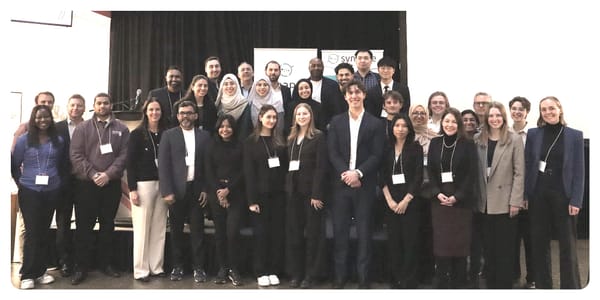
The UpNext team was on-site, with our founder moderating a session on municipal partnerships. Scooty outlined how they navigate procurement cycles and use pilots to enter city contracts. Startups in these markets are optimizing for trust, compliance, and repeatability across jurisdictions.
What Stood Out
The 2026 winners show where Canadian capital is placing its highest-conviction bets.
- Defense and dual-use tech are now fundable categories.
Xubin Aerospace’s presence in the Emerging tier signals that Canadian investors are backing ventures selling into defense procurement, a category long dominated by U.S. primes. - Climate ventures are moving from pilots to revenue.
Eavor Technologies in the Growth tier and WeavAir in Early demonstrate that geothermal and carbon capture companies can scale past $10M in revenue despite long sales cycles and infrastructure buyers. - Regulated health tech is attracting institutional capital.
Qidni Labs and Sonaro show that diagnostic and clinical-grade ventures can secure early traction despite FDA and Health Canada timelines, marking a shift away from consumer health apps. - Female leadership is concentrated in hard tech, not consumer.
Hiiive’s Growth-stage win reflects a shift from neobanks to B2B financial infrastructure serving underbanked segments, aligning with how institutional buyers deploy capital. - Fintech is maturing into embedded infrastructure.
Hiive's Growth-stage win reflects a pivot from neobanks to B2B financial infrastructure serving underbanked segments, aligning with where institutional buyers deploy capital.
The CIX Startup Awards
The CIX Startup Awards spotlight emerging companies across Canada’s innovation ecosystem, spanning stages and sectors. While no winners or finalists were disclosed for this edition, the cohort reflects the range of ventures gaining traction. Below is a closer look at selected startups.

2026 Emerging Category Recipients
Cashew
Founder: Addy Graves
Pitch:
Cashew is an AI-powered market research platform that automates research workflows while connecting companies with verified human respondents to deliver insights in days instead of weeks.
Problem:
Traditional market research is slow, expensive, and service-heavy, making it difficult for companies to gather external consumer feedback at the speed business decisions require.
What stood out:
While competitors turn to synthetic or recycled data, Cashew gathers fresh human insight for every study—a deliberate choice that preserves the reliability of consumer feedback even as automation handles the operational work.
Traction:
The company is approaching $1 million in revenue with over 30 subscription customers and has grown three times year-over-year. Cashew won the Enterprise Stage pitch competition at TechCrunch Disrupt 2025..
Why it matters:
Companies can now run more studies without sacrificing data quality, which means product and marketing decisions get tested against real consumer preferences before significant capital is deployed.
Elle, MD
Founder: Jennifer Johnston
Pitch:
Elle, MD is developing a once-monthly, non-hormonal copper vaginal ring designed for user-controlled contraception.
Problem:
About half of women discontinue hormonal birth control within the first year due to side effects, while non-hormonal options remain limited and often invasive.
What stood out:
The ring delivers copper vaginally rather than in the uterus, which is designed to avoid the heavy bleeding and cramping associated with copper IUDs while maintaining contraceptive effectiveness without requiring a clinical procedure.
Traction:
The company has raised $1.2 million in combined dilutive and non-dilutive funding and completed proof-of-concept sheep studies showing 100% contraceptive efficacy at the highest dose tested.
Why it matters:
A self-inserted, non-hormonal contraceptive that avoids both systemic side effects and invasive procedures could address a significant gap for the millions of women seeking effective alternatives to hormonal birth control.
PRE
Founder: Parham Aarabi
Pitch:
PRE converts LLM outputs into probabilistic confidence levels, enabling multi-step reasoning chains that reduce hallucinations in complex decision-making tasks like marketing optimization and predictive modeling.
Problem:
LLMs return answers with implied certainty even when accuracy is low, making them unreliable for decisions requiring nuanced judgment.
What stood out:
PRE uses Monte Carlo simulation to assign probabilities to LLM responses at each reasoning step, allowing downstream decisions to account for uncertainty without significant token overhead.
Traction:
The company has 5 large enterprise customers and 6 patents pending.
Why it matters:
By making LLM reasoning probabilistic, PRE enables enterprises to deploy AI in high-stakes workflows where overconfidence has historically limited adoption.
Sonaro
Founder: Karina Gasbarrino
Pitch:
Sonaro's Vaso3D software converts standard 2D ultrasound scans into 3D models of carotid arteries to assess stroke risk and detect high-risk plaques in under 10 minutes.
Problem:
Traditional 2D ultrasound exams for stroke risk are operator-dependent, take 30 minutes to an hour, and result in misclassification rates around 30%.
What stood out:
The software works with existing ultrasound machines and guides clinicians through the scan in real time, removing the need for specialized vascular expertise while automating the analysis.
Traction:
The company has completed early clinical validation with Johns Hopkins and other U.S. sites, secured over $700,000 in non-dilutive funding, and is closing an $800,000 CAD pre-seed round with approximately 60% committed.
Why it matters:
By making 3D vascular diagnostics hardware-agnostic and significantly faster, Sonaro enables stroke risk screening in primary care and community settings where specialized sonographers are unavailable.
Xubin Aerospace
Founder: Mostafa Najafiyazdi
Pitch:
Xubin Aerospace's Eagle Vision detects and classifies drones from electro-optical and infrared video by extracting their aerodynamic signatures—the air disturbance patterns created by rotors and airframes.
Problem:
Traditional counter-drone sensors struggle in urban environments and RF-contested conditions, where drones can operate silently or jamming disrupts detection.
What stood out:
The system uses physics-based detection that remains functional even when drones emit no radio signal, addressing a gap that radar and RF sensors cannot close in cluttered or electromagnetically contested settings.
Traction:
Eagle Vision completed a five-day field trial with Canada's Department of National Defence through the IDEaS CUAS Sandbox program and won a NATO innovation hackathon focused on counter-UAS.
Why it matters:
As drones increasingly operate autonomously without RF emissions, passive aerodynamic detection provides a sovereign sensing capability for securing critical infrastructure and military operations in conditions where conventional sensors fail.
2026 Early Category Recipients
Qidni Labs
Founder: Morteza Ahmadi
Pitch:
Qidni Labs builds a portable, battery-powered hemodialysis device that runs on standard saline solution without requiring tap water, water purification systems, or continuous electricity.
Problem:
Traditional dialysis machines need massive water purification infrastructure and up to 120 liters of ultrapure water per session, making treatment impossible in rural, remote, or disaster settings.
What stood out:
By eliminating the water infrastructure entirely, the device makes dialysis viable in field hospitals, earthquake zones, and off-grid locations where blood purification was previously unavailable.
Traction:
The company has built three device generations and completed clinical testing on 15 patients in Canada.
Why it matters:
Removing infrastructure dependencies opens dialysis access in emergency response scenarios and underserved geographies where 10 million kidney failure patients currently have no treatment options.
WeavAir
Founder: Natalia Mykhaylova
Pitch:
WeavAir fuses IoT sensor networks with satellite data to create high-resolution Digital Twins of infrastructure, delivering real-time, verifiable sustainability data for financial institutions and enterprises.
Problem:
ESG and carbon reporting relies on self-reported estimates and infrequent audits, preventing capital from flowing efficiently into decarbonization because insurers and lenders cannot accurately price climate risk or verify impact.
What stood out:
WeavAir anchors localized ground sensor data—capturing emissions and structural health—to satellite intelligence, creating audit-ready verification that makes sustainability performance bankable for insurance and green lending.
Traction:
The company has deployed infrastructure pilots globally, integrated with financial institutions for ESG risk assessment, and expanded across 6 countries in under 4 years.
Why it matters:
By providing the precision needed to turn environmental performance into a financial asset, WeavAir addresses the $1 trillion trust gap blocking capital deployment in climate infrastructure.
LiORA
Founder: Steve Siciliano
Pitch:
LiORA deploys AI-powered sensor hardware that continuously monitors contaminated soil and groundwater at industrial sites, turning subsurface data into predictive insights that forecast contamination movement.
Problem:
Operators rely on infrequent manual sampling, leaving them blind to how contamination moves underground between quarterly tests.
What stood out:
LiORA combines proprietary sensors with predictive software in a single platform, generating continuous subsurface data that trains models to forecast where contamination spreads next. Every deployment feeds a proprietary dataset of over 400 million environmental records, creating a data moat that strengthens prediction accuracy over time.
Traction:
The company operates 420 sensors across 57 North American sites and reports clients are reducing remediation costs by 30%.
Why it matters:
Continuous monitoring shifts environmental remediation from reactive cleanup to predictive intervention, compressing timelines and lowering asset retirement obligations for industrial operators.
MedMe Health
Founder: Purya Sarmadi
Pitch:
MedMe Health provides an operating system for pharmacies to schedule, document, and deliver clinical services like vaccinations, prescribing, and chronic disease management. The platform integrates with existing pharmacy software and includes AI agents to expand service capacity without additional staff.
Problem:
Pharmacy software was built for dispensing drugs, not managing patient care, leaving pharmacists unable to scale clinical services despite expanded scope of practice.
What stood out:
The platform functions as infrastructure that connects pharmacies to adjacent healthcare markets—medical devices, digital therapeutics, peptides—positioning them as a consumer entry point for emerging care models rather than just a dispensary.
Traction:
Used by over 4,500 pharmacies in North America, with $7M ARR in Canada and $300K ARR across 150 U.S. pharmacies in 20 states within months of launch.
Why it matters:
As primary care access shrinks, pharmacies are absorbing frontline clinical work, and MedMe provides the infrastructure to make that transition operationally viable at scale.
Pontosense
Founder: Alex Qi
Pitch:
Pontosense builds a contactless wireless sensor that uses mmWave radar and AI to monitor falls, inactivity, sleep, and mobility changes in the home without cameras, microphones, or wearables.
Problem:
Families and care teams struggle to monitor older adults aging at home because cameras invade privacy and wearables are frequently forgotten or refused.
What stood out:
The radar-based approach removes the compliance burden entirely—monitoring happens passively in the background, which means continuous data collection without requiring behavior change from users who may resist traditional devices.
Traction:
The company raised $4.36M in Series A and is running active pilots and rollouts in the UK.
Why it matters:
Eliminating the need for user participation makes continuous home monitoring viable for populations that have historically rejected assistive technology, expanding who can safely age in place.
2026 Growth Category Recipients
Hiive
Founder: Sim Desai
Pitch:
Hiive operates a centralized marketplace for buying and selling shares in private, venture-backed companies. The platform provides real-time pricing data and automates secondary transactions for shareholders, investors, and issuers.
Problem:
Private company shareholders lack standardized infrastructure to access liquidity before an exit event.What stood out:
Hiive built a coherent product roadmap that integrates pricing, execution, and compliance into a single workflow, rather than offering fragmented point solutions. This approach reduces friction across the entire transaction lifecycle.Traction:
The company reached a $100 million revenue run rate as of February 2026.Why it matters:
Standardizing secondary transactions creates a more efficient private capital market as companies delay public listings and employees hold equity longer.
Venn
Founder: Saud Aziz
Pitch:
Venn provides Canadian businesses with a unified platform to manage banking, issue corporate cards, make global payments, and automate financial workflows.
Problem:
Canadian companies rely on outdated banking infrastructure built for large corporations, forcing them to juggle multiple banks, payment tools, and FX providers while facing high fees and manual reconciliation work.
What stood out:
Venn built its financial rails from the ground up rather than layering new interfaces over legacy systems, allowing the company to ship product improvements faster and create a genuinely integrated platform instead of stitching together third-party services.
Traction:
The platform serves over 5,000 businesses, generates more than $10M in annual recurring revenue, and has raised $26.5M in funding through Series A+.
Why it matters:
By replacing fragmented financial tooling with purpose-built infrastructure, Venn gives growing Canadian companies access to the modern banking capabilities that have been standard in other markets for years.
Eavor Technologies
Founder: Mark Fitzgerald
Pitch:
Eavor Technologies operates a closed-loop geothermal system that circulates fluid through underground wellbores to extract heat via conduction, generating baseload electricity without requiring naturally occurring water reservoirs or permeable rock formations.
Problem:
Traditional geothermal energy is limited to specific geological zones with underground water and high permeability, restricting its deployment as a scalable fossil fuel alternative.
What stood out:
The closed-loop design decouples geothermal generation from geographic constraints, making the technology deployable wherever drilling can reach sufficient depth and heat—effectively expanding the addressable market beyond volcanic regions.
Traction:
The company achieved first electricity production and grid connection at its commercial-scale facility in Geretsried, Germany in late 2024, and recently closed a $65 million funding round.
Why it matters:
Closed-loop geothermal offers 24/7 baseload power without emissions or fuel dependency, addressing grid reliability needs as electrification and data center demand accelerate globally.
Loopio
Founder: Zak Hemraj
Pitch:
Loopio provides an AI-powered response management platform that automates answers to RFPs, DDQs, and security questionnaires by centralizing company knowledge and streamlining collaboration across teams.
Problem:
Responding to complex business questionnaires requires manually tracking down scattered information from multiple subject matter experts, slowing sales cycles and draining internal resources.
What stood out:
Loopio treats institutional knowledge as a structured, reusable asset rather than requiring teams to rebuild answers from scratch for each request, which directly reduces the time revenue teams spend on non-selling activities.
Traction:
The company has raised over $200M in growth equity funding and operates as a category leader serving a large enterprise customer base.
Why it matters:
As procurement processes become more security-focused and rigorous, automating response workflows allows companies to accelerate deal cycles without overburdening internal experts.
What Gets Built Next
This cohort signals that Canadian capital is underwriting complexity. Defense aerospace, geothermal systems, and clinical diagnostics require multi-year sales cycles, regulatory clearance, and physical deployment—constraints that filter for execution over narrative. The winners are building for procurement committees and infrastructure buyers, not product-led growth funnels.
The shift from SaaS to hard tech reflects where institutional LPs see durable moats: technical depth, regulatory approval, and government contracts. These businesses are not built for rapid iteration. They demand patient capital, domain expertise, and the ability to navigate compliance as a core competency. The 2026 cohort points to an ecosystem moving beyond growth-at-all-costs and into sectors where time to revenue is measured in years.
We will continue tracking the founders and systems shaping what is UpNext in the global economy.