
The Eyes Physical AI Has Been Waiting For
Diffraqtion founder Johannes Galatsanos-Dueck builds quantum cameras that help machines see twenty times farther and react faster than ever. His work merges AI and astronomy to improve safety, space awareness and physical AI.

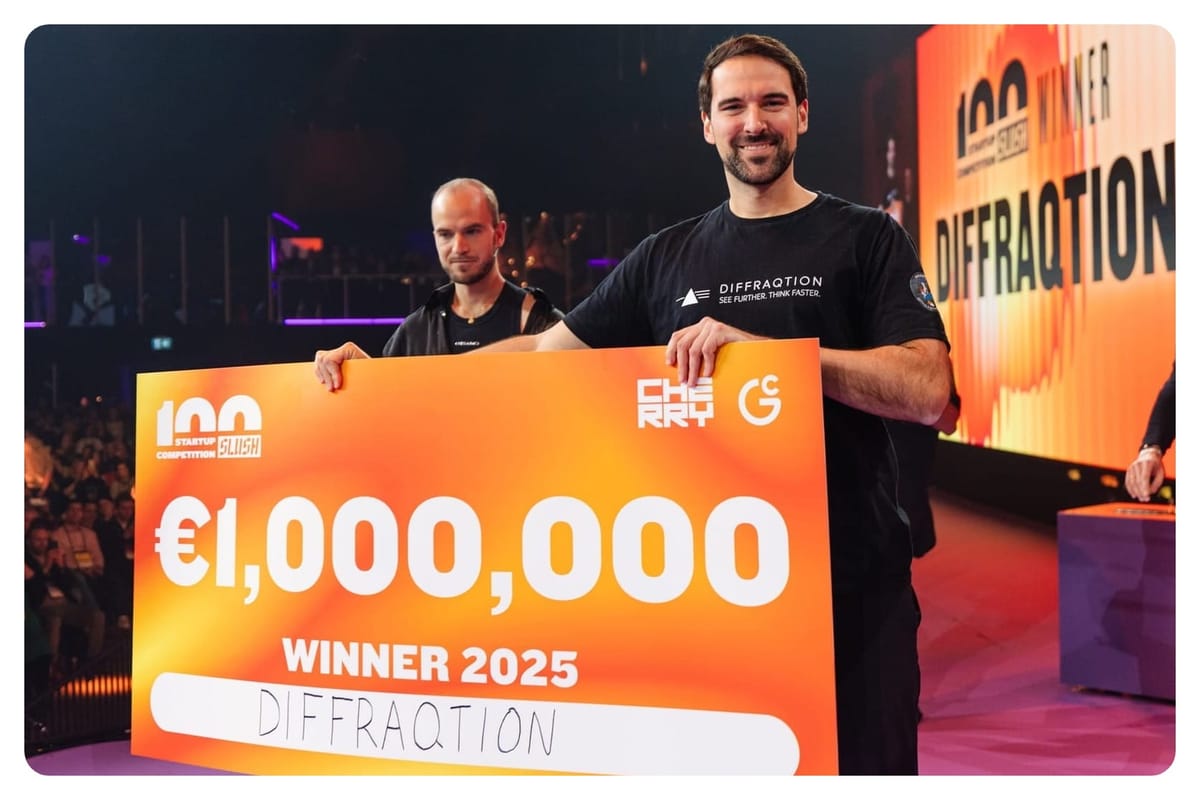
How Diffraqtion is giving machines the ability to see farther, react faster, and act with confidence
Why Today’s Machines Cannot Keep Up
Physical AI is advancing quickly. Robots, drones, and autonomous systems are expected to make real-time decisions, yet most operate with limited awareness. Their cameras do not see far enough, and they process what they see too slowly. The hardware that delivers strong vision is large, costly, and impossible to scale.
In space, the limits are even more severe. Satellites can track movement only at narrow windows of dawn or dusk. For the rest of the day, activity occurs without visibility. A small spacecraft can approach a valuable asset undetected, enabling evasive action in time.
On the ground, the stakes are immediate. A drone moving toward a target might be visible for only a few seconds. A robot or autonomous vehicle acts with limited awareness because its sensors cannot gather sufficient information. Distance and speed keep outpacing the systems built to protect people.
Johannes Galatsanos-Dueck saw the challenge early. As a young chess player watching Garry Kasparov lose to IBM’s Deep Blue, he realized that intelligence relies on how well machines perceive the world. That loss shifted his path toward AI. He studied computer science, wrote his thesis on board game algorithms, and spent years thinking about how machines pay attention to the right information and discard the rest. His parallel passion for astronomy pushed the question even further. How far can we see, and what would we do with that knowledge?
Where Diffraqtion Changes What Is Possible
Diffraqtion approaches vision in a different way. Instead of capturing everything and processing it later, its quantum cameras work inside the light itself. They discard what does not matter and extract only what carries meaning. The result is a camera that sees twenty times farther and reacts a thousand times faster than today’s systems.

This design unlocks new capabilities. A satellite the size of a cup can match the resolution of telescopes that cost hundreds of millions of dollars. A defense system can detect a drone two miles away rather than a few hundred yards. Time to react expands from seconds to minutes, and lives can be protected.
Governments across the United States and Europe have taken notice. Diffraqtion works with NASA, DARPA, and several other agencies. Its first prototype is already tracking satellites from the ground and is preparing for deployment in space, where the camera will operate without atmospheric limits.
Johannes’ background in AI guides the architecture. His experience in search algorithms and his lifelong fascination with telescopes merge in a system that thinks like advanced AI while seeing like a precision instrument. It is an uncommon combination of insight that shapes the company’s advantage.
What a World of Clearer Vision Looks Like
Johannes imagines machines that move through the world with instinctive awareness. Robots navigate crowded spaces with confidence. Autonomous vehicles avoid collisions with accuracy. Drones and aircraft maintain constant awareness of their surroundings.
He also imagines a safer global landscape. When threats are detected early, conflict becomes harder to start. Drones, missiles, and fast-moving objects lose the advantage of surprise. Governments gain time to respond, and civilians gain protection.
Beyond security, new scientific and environmental insights emerge. Researchers can study wildlife populations, track illegal fishing, observe environmental change, and measure activity across land and sea with clarity that once seemed out of reach.
Johannes believes a clearer vision leads to wiser action. With Diffraqtion, he is building the eyes that will help machines, researchers, and nations see with a level of understanding the world has never had.
About Flashpoint POV Spotlights
Flashpoint Global produces each Founder POV Spotlight using its proprietary category leadership framework. Every Spotlight begins with a Future Narrative session, where a founder’s POV is clarified and operationalized as the lens through which new categories are built. The result is content that moves founders beyond product messaging and into the role of category leader, helping the market understand the problem, the stakes, and the future being created.
If you are a founder building a new category, learn more.