John Hopkins's Pava Marie LaPere Center First Alumni Accelerator Showcase
They are different from the average accelerator cohort. The founders are Alumni and most already have a product in their customers hands. The cohort built elsewhere and came back to build greater at John Hopkins.

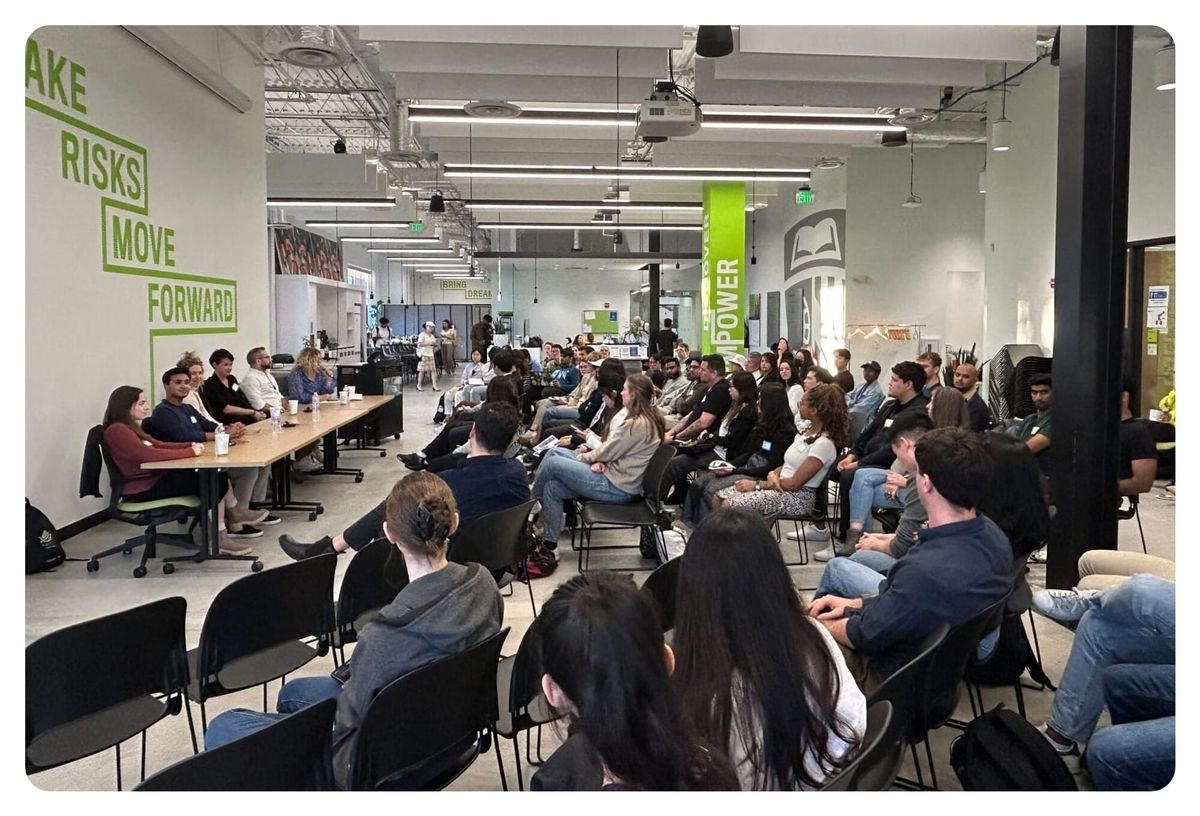
The Pava Marie LaPere Center for Entrepreneurship closed out its first Alumni Accelerator on July 1 with nine founding teams pitching on the same stage where student ventures usually compete. This showcase skipped moonshot pitches for something rarer: alumni who left Hopkins, spent a few years building elsewhere, and came back to build again. The cohort spans precision psychiatry, drone detection, and K-12 math, but shares one thread. A built and tested product. Most of these founders already had a product in someone's hands before they walked on stage.
Standouts
Brāv Buddies [AI / Enterprise] — Founder and CEO Josephine B. Tientcheu built a mobilization intelligence platform that lets Army National Guard commanders get a real-time deployment picture over text messages. It's a system responders already use and no new app is required. The platform has won the Pitch George Competition at George Washington University and a Hopkins Ignite Fund Award from Johns Hopkins Technology Ventures, and it's been selected for both the NSF Mid-Atlantic I-Corps and U.S. Ignite's AI for DMV Startups cohorts. That's a run of institutional validation that's rare this earlyin the stage. Tientcheu is targeting Army National Guard personnel across all 54 states and territories at $15 per user per month, pitching the platform as a way to turn a 2-to-4-hour phone tree into a decision commanders can make in minutes.
Gargoyle Systems [Robotics / Hardware] — Co-founder Mike Fraietta, an FAA-certified drone pilot, is building a decentralized drone detection network that uses rooftop units to track registered and unregistered aircraft by RF signal and acoustic signature. The company already ships a consumer product, Gargoyle Sentinel, on the Google Play store, and Fraietta has taken the pitch to NewsNation and the Drone Radio Show as drone-enabled crime rises. Gargoyle is aiming at the gap between military-grade counter-drone systems and the commercial sites — data centers, stadiums, corporate campuses. These organizations need airspace awareness but have neither the budget nor the legal cover for anything more aggressive.
iksa.ai [Healthtech / AI] — Founded by Shaurya Verma while studying the physician-patient relationship at Johns Hopkins, iksa builds AI treatment companions for longevity clinics running peptide, hormone, and stem-cell protocols between visits. The company says it's customer-funded, HIPAA- and ISO-compliant, and already in use with thousands of patients.
BRAIV [Healthtech] — BRAIV is building machine learning-powered clinical decision support to help psychiatrists pick the most effective medication on the first try instead of months of trial and error. The company says its recommendations draw on more than 50,000 patient outcomes.
Math Your Mind [EdTech] — Founder Magnus Malabre, who failed math twice in high school before earning a physics degree and a master's in nuclear engineering, built a K-12 platform teaching students to think like mathematicians through interactive lessons and simulations.
smartSTAT [Healthtech] — An RFID-equipped smart code cart giving hospitals real-time inventory tracking on emergency supplies, aimed at cutting the labor and compliance work of manually restocking a crash cart. The company filed a trademark for "smartSTAT: Revolutionizing Code Carts" this spring.
LUMIQO [Healthtech] — An AI platform aiming to automate adverse event reporting in oncology trials, a process that can otherwise run 250-plus hours and $15,000 per patient.
Also in the cohort: Athletes Intell, a mental performance platform for college athletic departments, and Teaching Tools, a platform for evaluating and developing college-level teaching.
Why It Matters for the UpNext Network
Four of the nine companies here are building healthcare software — psychiatry, longevity medicine, oncology trials, hospital inventory — which says something about where Hopkins alumni default when they go build something. The strongest signal in this cohort is how many of these founders had already collected outside validation — NSF I-Corps, a Hopkins Ignite Fund Award, a GWU pitch competition win — before this stage ever happened.