When Nurses Build Technology
Former ICU nurse turned tech founder Magdalena Druml is using AI to fix what healthcare forgot: real-time insight. Through her company Nox Avis Tech Solutions and its product HeliDoc, she’s turning chaos into clarity and building a future where technology truly serves care.

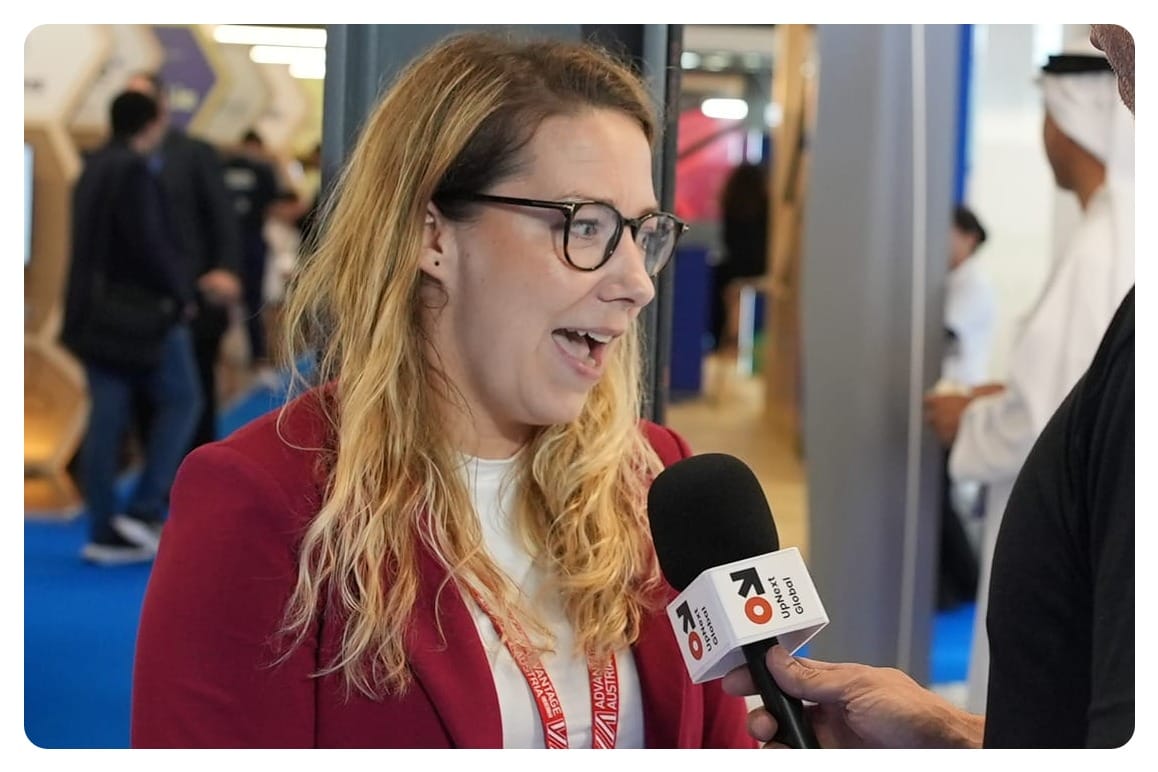
The Insider Who Stepped Out to Fix the System
When Magdalena Druml talks about healthcare, she does not just describe a system; she describes a living organism in need of healing. For more than a decade, she lived inside that system, working as an intensive care and anesthesia nurse in Austria. She saw the beauty of life-saving teamwork and the heartbreak of burnout. She saw technology that promised to help, but it ended up creating more paperwork. And she saw how little time anyone had to fix it.
“I used to work 200 hours a month, often in 24-hour shifts,” she recalls.
“Everyone knew things could be better, but nobody had time or energy left to change anything.” That insight became the seed of NoxAvis Tech Solutions, the company she founded to build technology that actually lightens the load of healthcare professionals rather than adding to it.
The Problem: A System Too Tired to Change
Magdalena’s years in intensive care revealed a painful truth about modern medicine. The people inside the system care deeply, but they are trapped in routines that leave no room for innovation. The phrase she heard most often was, “This is how we’ve always done it.” Hospitals are filled with talent and compassion, yet progress stalls under exhaustion. Even simple improvements are pushed aside because everyone is too busy keeping up.
She describes a culture of survival rather than transformation. Endless shifts, complex documentation requirements, and outdated systems consume the energy that could have gone into real progress. “When you spend hours reconstructing what you did instead of caring for people, everyone loses,” she says. “Fixing that process is not glamorous, but it changes everything.”

The Solution: Human-Centered AI
While still working in hospitals, Magdalena pursued graduate studies in nursing science and engineering, learning to code along the way. Programming gave her a new lens on the problems she had been living. “Once I could write software, I could step outside the medical field and see it from another angle,” she explains. “I could see the system not just as something to survive, but as something that could be redesigned.”
Her first project, HeliDoc, embodies that belief. It is a voice-based documentation assistant that securely listens during emergency care, extracts necessary details, and generates structured medical records in real time. The software allows trauma teams, paramedics, and hospital staff to remain entirely focused on the patient while data is automatically captured. It turns documentation into a natural part of care instead of an exhausting second shift.
Nox Avis Tech Solutions designed HeliDoc with clinicians in mind. It is privacy-preserving, workflow-compatible, and tested in real emergency environments, including Austria’s largest air rescue service. Early users describe it as the first tool that truly feels designed for them. The company expects its first commercial rollout this year, marking a critical step toward a more human kind of healthcare technology.
The Future: Creating Health, Not Just Treating Sickness
For Magdalena, the technology is only the beginning. Her true mission is to create a future where healthcare systems are designed around care itself. “We call it healthcare,” she says, “but most of what we do is sick care. I want to build systems that actually create health.”
She imagines a world where real-time data improves response, research, and prevention. Information would flow seamlessly from the field to the hospital, helping teams prepare interventions before patients arrive and identify early warning signs long before crises occur. Real-time documentation of medications, reactions, and patient responses would also provide new visibility for researchers, revealing patterns that are invisible today. “Right now, nobody really knows what happens in those moments,” she says. “With accurate, time-stamped data, we can finally shine a light on it.”
Her unique perspective comes from bridging two worlds that rarely meet: the compassion of nursing and the logic of engineering. She often references Florence Nightingale, who was known as the lady with the lamp, walking through wards at night to bring comfort and clarity with light. Magdalena smiles when she draws the comparison. “Florence carried a lamp to illuminate what others could not see,” she says. “I carry the source code to light up what medicine still cannot see.” The symbolism is clear. Both women use the tools of their time to bring understanding where there was once darkness.
Magdalena’s long-term vision includes hundreds of projects still waiting to be built, from smarter coordination in trauma response to early detection tools for heart attacks and chronic conditions. Every idea circles back to the same goal: giving people back their time, dignity, and capacity to care.
If the future of medicine is about creating health instead of managing sickness, then voices like Magdalena Druml’s and the technology she builds will lead the way.
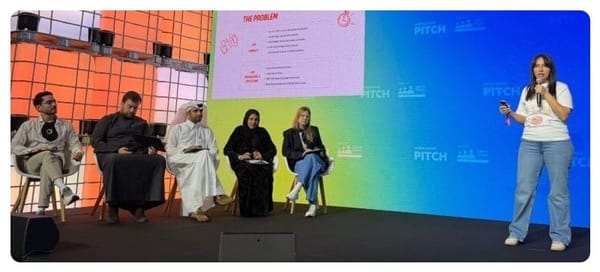
Watch the founder's UpNext PopUp interview from Expand North Star 2025
About Flashpoint POV Spotlights
Flashpoint POV Spotlights are in-depth founder features produced by Flashpoint Global—a thought leadership management studio that helps innovators articulate the world they’re creating.
Each story begins with a Future Narrative Session and develops into a Minimum Viable POV (MVPov): the founder’s clearest statement of purpose and perspective.
Follow UpNext Global to discover more founders shaping the future. (If you’re a founder interested in clarifying your own POV, stay tuned — applications open soon.)