
The Salmon Feed Additive That Activates Natural Immunity and Removes Antibiotic Dependency
Daniela Allerbon solved aquaculture’s antibiotic crisis by shifting from external additives to biological amplification. Her team uses a protein salmon naturally produce to boost immunity, eliminating antibiotic dependency and achieving industry-leading survival rates.

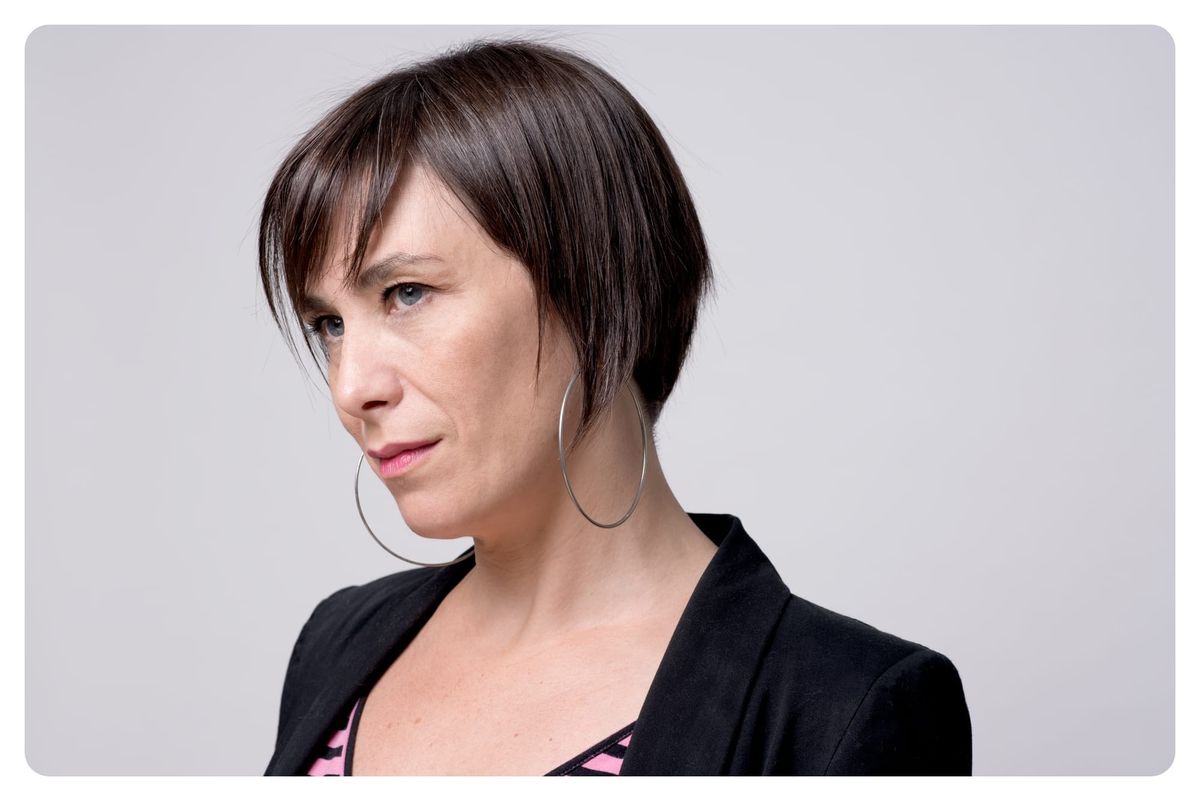
Daniela Allerbon graduated from economics school in 2001 as Argentina's economy collapsed. Five presidents in two weeks. But the real hit was to its citizens: GDP per capita plummeted by over 60%, from $8,085 to just $2,998 by 2002. Rather than chase security, Daniela Allerbon spent twenty years building things that mattered. She published four million books for families entering government housing. She convinced a cabinet secretary to publish the first gender manual in Argentina, changing how women understood their lives. She ran clinical trials where chronically ill patients recovered. Now, as a founder addressing antibiotic resistance, she's solved the problem the same way she solved every other problem. Not by replacing what exists, but by amplifying it. Her first product is a salmon feed additive that activates the fish's own immunity, eliminates antibiotic use, and achieves the best survival rates the industry has ever reported.
She Spent Twenty Years Building Concrete Impact Before She Ever Heard of Fish Farming
Allerbon's path to founding Aquit was anything but linear. After the economic crisis in Argentina, she could have pursued traditional finance work. Instead, she chose cultural management. She ran poetry workshops in neighbourhoods. She published and distributed books as director of Argentina's National Reading Program.
"Feeling that you are giving all this impact or that you are impacting all the people, there's something very concrete that you are doing that's making others' lives better in some sort of way," she says. That conviction never changed, even as the work did.
When she moved into R&D at an Italian company developing plant-based animal health products, she brought the same instinct. She wasn't a biologist. She had no medical training. But she understood how to coordinate expertise around a problem that mattered. She helped formulate products, navigate regulatory frameworks across four countries, and eventually coordinate international clinical trials. The skills were different. The principle was identical. Impact had to be concrete and measurable.
Eighty Percent of Global Antibiotics Enter Animals, Not Humans
The crisis Allerbon encountered in aquaculture is staggering in scale. More than two million people die annually from antibiotic resistance. Of all antibiotics used globally, 80% are administered to animals rather than humans. When salmon farms use antibiotics to fight bacterial infection, that resistance enters the ocean, contaminates ecosystems, and accelerates the evolution of superbugs faster than humanity can develop new antibiotics to replace them.
The World Health Organization calls antimicrobial resistance the greatest threat to modern medicine. It projects that within 25 years, resistance will kill more people than cancer. For producers, the cost is immediate. Antibiotic resistance drains six billion dollars annually from aquaculture in infection losses alone.
Consumers refuse to buy antibiotic-treated salmon. Regulators demand producers eliminate antibiotic dependency. Everyone sees the problem. Nobody had solved it because most solutions offered the same answer. Add an external additive. Build another platform. Override biology with technology. Allerbon's co-founders in Chile, both fish immunology experts, asked a different question.
Can We Amplify What's Already Working?
Instead of relying on conventional immune stimulants that can trigger excessive inflammation, Allerbon and her team identified a protein that salmon naturally produce and that plays a key role in regulating immunity. They produce the protein through fermentation using yeast and add it to standard feed pellets for seven days. Because the protein is naturally present in salmon, it works with the fish's own immune system, activating a protective response without triggering harmful inflammation.
"Something that's from inside the fish, the fish already recognizes it and self-regulates it instead of giving something from the outside which at first produces inflammation," Allerbon explains. The results speak for themselves. Aquit achieved the best survival rates reported anywhere in the industry against Piscirickettsia salmonis, the bacteria driving antibiotic use in Chilean salmon farming. Protection arrives in seven days instead of a month.
Broad-spectrum resistance emerges across multiple pathogens. The product integrates directly into existing feed production and requires no new infrastructure. This year, Allerbon moved from lab validation to the ocean. Multi X, the second-largest salmon producer in Chile, is running an industrial pilot with one million fish. Aquit was selected as one of the Deep Tech Pioneers by Hello Tomorrow, chosen from 5,000 startups worldwide and one of only seven food tech companies recognized. The answer to antibiotic resistance was never more technology. It was amplifying what already worked.
About Flashpoint POV Spotlights
Flashpoint Global produces each Founder POV Spotlight using its proprietary category leadership framework. Every Spotlight begins with a Future Narrative session, where a founder’s POV is clarified and operationalized as the lens through which new categories are built. The result is content that moves founders beyond product messaging and into the role of category leader, helping the market understand the problem, the stakes, and the future being created.
If you are a founder building a new category, learn more.