Synapse Competition: Medical Device Founders Build for Buyers, Not Labs
Medical device hardware is moving from research validation to commercialization readiness. Ontario's life science pipeline now produces founders who can articulate regulatory pathways and buyer economics before raising capital.


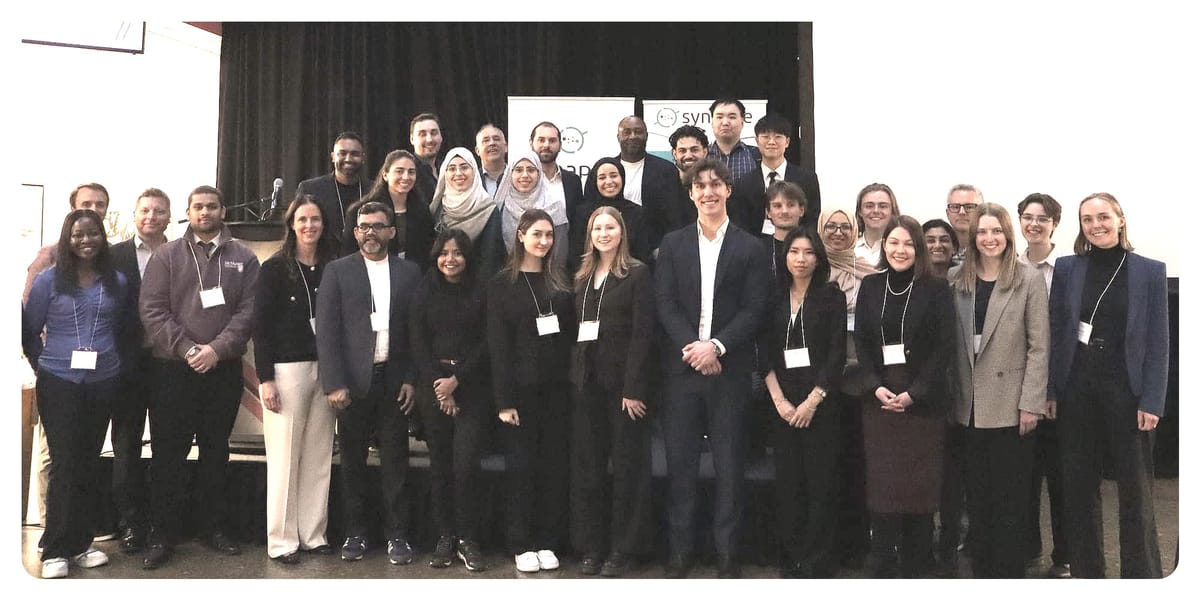
The 2026 Innovation Factory’s Synapse Life Science Competition tested whether Ontario's academic health-tech pipeline could produce commercially viable medical device companies. Thirteen startups entered the three-month program pairing technical founders with business students to stress-test commercialization plans. Five finalists pitched live, and the cohort composition revealed a clear pattern: hardware-enabled diagnostics and therapeutics designed for deployment, not just clinical validation.
This year's finalists demonstrated fluency in regulatory strategy, manufacturing economics, and buyer workflows. NovaSonix Healthcare won with ultrasound technology for musculoskeletal disease monitoring. Epiloid Biotechnology placed second with brain organoid drug screening platforms. Better Bionics took third with AI-generated prosthetics. The shift is clear—life science founders now articulate paths to revenue before seeking venture capital.
What Stood Out
The finalist cohort reflected a maturation in how early-stage medical device companies approach commercialization.
- Founders presented regulatory pathways and manufacturing timelines as core product features, not post-funding concerns
- Hardware solutions targeted specific clinical workflows with defined buyer economics, moving beyond research validation
- Diagnostic and therapeutic technologies emphasized non-invasive deployment and integration into existing care infrastructure
- Companies demonstrated traction through partnerships with clinical institutions and quality management systems already in development
- The winning pitch centered on market access strategy and reimbursement logic, not just technical differentiation
The Competition
The Synapse Competition is a startup pitch event that brings together early-stage companies working in healthcare and medical technology. It provides a platform for founders to present their innovations to investors, industry experts, and potential partners.
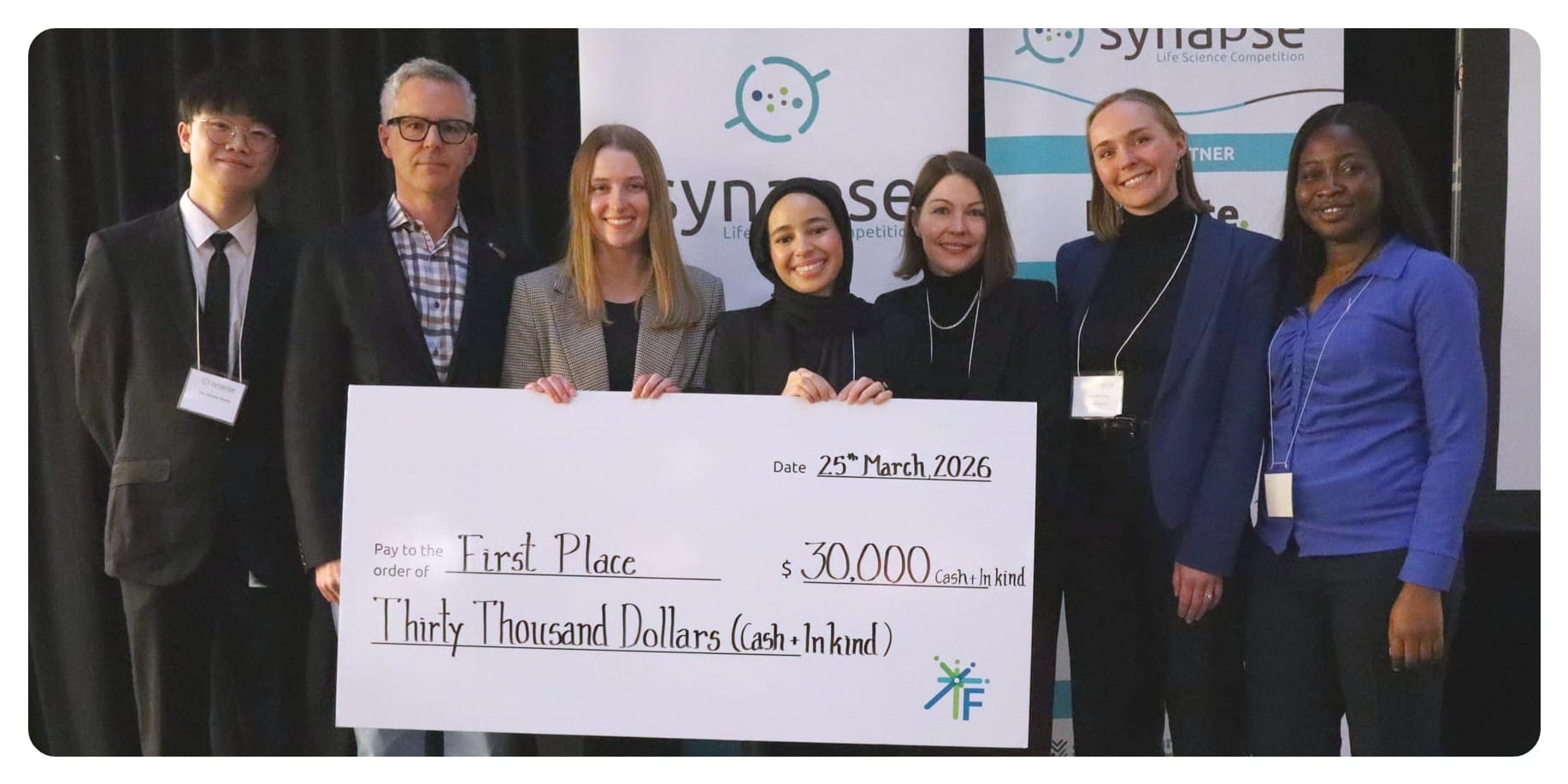
The Winner
NovaSonix Healthcare Inc.
Founder: Randa Mudathir
Pitch:
NovaSonix develops MSKNovaVue™, a hardware attachment and AI-powered software suite that converts standard 2D ultrasound machines into real-time 3D scanners for musculoskeletal imaging.
Problem:
Diagnosing joint and tissue conditions typically requires expensive MRIs with long wait times, while conventional ultrasound lacks the volumetric depth to accurately quantify inflammation or damage.
What stood out:
The approach upgrades existing ultrasound infrastructure rather than replacing it, delivering MRI-like 3D insights without requiring new capital equipment or specialized facilities.
Traction:
NovaSonix was selected as a finalist for the 2026 Synapse Life Science Competition and has completed clinical validation studies at Robarts Research Institute.
Why they won:
By making volumetric musculoskeletal imaging accessible through standard ultrasound, NovaSonix could significantly reduce diagnostic costs and wait times for patients with chronic joint conditions.
The Finalists
Better Bionics
Founder: Ahmed Ibrahim
Pitch:
Better Bionics develops the Dreamweaver Hand, a bionic prosthetic with 17 degrees of freedom, interchangeable fingers, and an ultra-lightweight skeleton designed for high-dexterity natural motion.
Problem:
Traditional prosthetic hands lack fine motor control, are heavy to wear, and difficult to repair, limiting long-term usability for amputees.
What stood out:
The modular, repairable design addresses both performance and longevity—users can replace individual components rather than discarding the entire device when parts wear out or break.
Traction:
The company was a finalist in the 2026 Synapse Life Science Pitch Competition and the 2026 Build a Biotech Competition, and reports over 16 design and utility awards.
Why it matters:
By making advanced prosthetics serviceable over time, Better Bionics is tackling the cost and waste barriers that have kept high-performance devices out of reach for many amputees.
Digits Health
Founder: Caitlin Symonette
Pitch:
Digits Health uses computer vision software to measure hand and wrist function—including range of motion, dexterity, and swelling—through any smartphone or camera.
Problem:
Hand and wrist conditions require repeated functional assessment, but current measurements rely on manual tools and in-person visits that are time-consuming and inconsistent.
What stood out:
The platform is hardware-agnostic and does not require specialized equipment, making objective hand function measurement accessible through standard devices already in clinical and home settings.
Traction:
The company has a patent pending, an MVP undergoing usability testing, and is in discussions with US partners to launch a market validation pilot in 2026.
Why it matters:
By turning any smartphone into a clinical monitoring tool, Digits Health enables scalable remote assessment for conditions that previously required in-clinic visits and specialized equipment.
Epiloid
Founder: Mark Aquilino
Pitch:
Epiloid runs neuropharmaceutical assessments using human brain organoids to predict drug efficacy and toxicity before clinical trials. The platform screens candidates in 3D human tissue models rather than animal models.
Problem:
Less than 6% of neurology drugs reach market because traditional preclinical models fail to replicate human brain biology.
What stood out:
The company uses human brain organoids as the testing substrate, which more closely mirrors actual human response than animal models. This shifts the failure point earlier in development, when it's cheaper to abandon or refine candidates.
Traction:
Epiloid has raised Seed funding and secured grants from CABHI and the Federal Economic Development Agency for Southern Ontario.
Why it matters:
Earlier detection of drug failures could reduce the billions lost annually on neurological candidates that fail in late-stage trials.
Neuro-Mod
Founder: Stevie Foglia
Pitch:
Neuro-Mod develops ARISE, an augmented reality system that gamifies neck pain rehabilitation through interactive sensorimotor training. The platform uses AR glasses to guide patients through personalized exercises while tracking range of motion and progress.
Problem:
Physical therapy for chronic neck pain suffers from poor adherence—up to 70% of patients drop out due to travel burden and low engagement with traditional at-home exercises.
What stood out:
ARISE overlays virtual objects into the patient's real environment rather than fully immersing them in VR, avoiding nausea and vertigo while maintaining engagement. The system's AI adjusts daily training based on pain levels and performance, enabling clinicians to monitor remotely and reduce in-clinic supervision time.
Traction:
The platform is deployed across 10 clinical sites in the Hamilton area, with a non-exclusive distribution agreement through Magstim covering 3,000 clinics across Canada and the US.
Why it matters:
By making rehabilitation viable at home without side effects, Neuro-Mod addresses the adherence gap that limits outcomes in chronic pain management while enabling clinics to scale patient throughput.
Standout Startups
Synod Intellicare
Founder: Constantine Rhaich'al
Pitch:
Synod develops software that detects and mitigates bias in healthcare algorithms in real time, integrating silently into existing clinical workflows via standard EHR APIs.
Problem:
Healthcare providers deploying clinical AI tools face unexplained disparities in patient outcomes and rising preventable readmission penalties tied to algorithmic bias.
What stood out:
The platform monitors fairness continuously without adding logins, alerts, or clicks for clinicians—routing bias metrics only to leadership dashboards when thresholds are exceeded.
Traction:
Completed MVP build of the flagship DDFA module, formed academic partnerships with one college and two universities, and is recruiting 10–12 pilot customers for 2026 deployment.
Why it matters:
As regulators classify healthcare AI as high-risk and tie reimbursement to equity outcomes, hospitals need defensible evidence that their algorithms are fair—or face financial and legal exposure.
DigiBiomics
Founder: Meraj Khan
Pitch:
DigiBiomics builds AI-driven diagnostic and treatment planning tools for healthcare providers, analyzing medical data to support clinical decision-making. The platform also offers Data as a Service to streamline workflows.
Problem:
Clinical research findings move slowly into practice, leaving providers without precise diagnostics or personalized treatment options.
What stood out:
DigiBiomics applies machine learning directly to clinical data to close the research-to-practice gap, positioning its tools as a bridge between evidence generation and bedside application.
Traction:
The company was selected as a finalist for the 2026 Synapse Life Science Pitch Competition and reports partnerships with academic and healthcare institutions.
Why it matters:
By embedding AI into clinical workflows, DigiBiomics accelerates the shift toward precision medicine where treatment decisions are data-informed rather than protocol-driven.
miRoncol
Founder: Victoria Xu
Pitch:
miRoncol is developing a blood-based test that uses AI to detect microRNA signatures associated with over a dozen types of early-stage solid tumors.
Problem:
Most cancers are detected too late for effective treatment, and current screening programs only cover a few specific types.
What stood out:
The test is designed as a non-invasive pre-screen covering cancers that represent roughly 80% of incidence in men and 40% in women, shifting the model from reactive diagnosis to proactive, physician-guided early detection.
Traction:
The company was a finalist in the 2026 Synapse Life Science Pitch Competition, and the technology is built on peer-reviewed research and large-scale studies.
Why it matters:
Broad-spectrum early detection could enable intervention before tumors progress, fundamentally changing oncology care from late-stage treatment to early-stage management.
Sensible Vascular
Founder: Kevin Macwan
Pitch:
Sensible Vascular is developing a fully integrated thrombectomy system to remove blood clots in stroke patients during mechanical interventions.
Problem:
Current clot-removal devices frequently fail to capture the entire clot on the first attempt, extending procedure times and increasing the risk of further brain damage.
What stood out:
The system is designed to improve first-pass success rates by integrating components that work together to capture clots more reliably, addressing a critical gap in neurovascular procedures where incomplete retrieval is common.
Traction:
The company was a finalist in the 2026 Synapse Life Science Pitch Competition and is a client of The Forge, McMaster University's incubator.
Why it matters:
Higher first-pass success in stroke interventions directly reduces mortality and improves long-term patient outcomes by minimizing the time brain tissue is deprived of blood flow.
Sielo Robotics
Founder: Evan Zeglinski-Spinney
Pitch:
Sielo Robotics builds an AI-assisted robotic arm that mounts to power wheelchairs, allowing users to perform daily tasks like eating, opening doors, and retrieving objects through voice control and semi-autonomous sequences.
Problem:
Individuals with limited upper-body mobility depend on caregivers for basic actions, reducing independence and increasing care costs.
What stood out:
The system uses semi-autonomous sequences to simplify complex movements, reducing the cognitive load of controlling a robotic arm and making assistive robotics more practical for everyday use.
Traction:
The company was selected as a finalist for the 2026 Synapse Life Science Competition and announced a distribution partnership with Houle Healthcare.
Why it matters:
By making assistive robotics easier to control, Sielo could reduce caregiver dependency and lower long-term healthcare costs for wheelchair users.
Vrit
Founder: Sushant Singh
Pitch:
Vrit is developing INSITE, a handheld bioprinting device that allows surgeons to print personalized bioinks and therapeutics directly onto wounds during procedures.
Problem:
Severe skin wounds typically require autografts, which involve harvesting skin from another part of the patient's body, creating secondary injuries and extending recovery time.
What stood out:
Vrit is moving bioprinting from lab-based systems to a portable device that works at the point of care, allowing surgeons to treat wounds without invasive grafting procedures.
Traction:
The company was a finalist in the 2026 Synapse Life Science Competition and is backed by University of Toronto Entrepreneurship, Creative Destruction Lab, and UTEST.
Why it matters:
By making advanced tissue regeneration accessible in operating rooms, Vrit could eliminate the need for painful secondary surgeries in wound treatment.
Deployment Infrastructure
Medical device startups now build for buyers before they build for investors. This cohort demonstrated fluency in regulatory timelines, manufacturing constraints, and reimbursement mechanics as foundational product decisions. The shift from lab validation to commercial readiness reflects founders who understand that clinical efficacy is necessary but insufficient—market access determines deployment.
Ontario's life science pipeline is producing operators who treat FDA pathways and hospital procurement cycles as design constraints, not downstream problems. The companies that advance will be those that solve for adoption friction while maintaining technical performance.
We will continue tracking the founders and systems shaping what is UpNext in the global economy.