Turning Plastic Waste into the Building Blocks of the Future
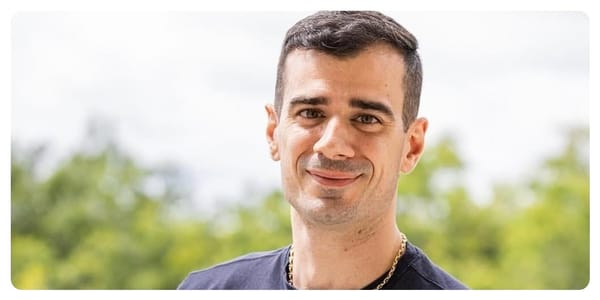
Randy Budiwicaksono, founder of Ravelware Technology, turns Indonesia’s plastic waste into graphene—stronger than steel, lighter than aluminum, and more conductive than copper. His breakthrough process transforms pollution into progress, building a cleaner, smarter future for humanity.

Transforming Pollution into Progress
Indonesia’s plastic crisis is staggering. Millions of tons of waste enter the oceans each year, and only a small fraction is recycled. But what if that pollution could become the foundation for the next technological revolution? That is exactly what Randy Budiwicaksono, founder of Ravelware Technology, is doing. His company transforms discarded plastic into graphene, one of the most promising materials on Earth.
Graphene is incredibly light, flexible, and stronger than steel. It conducts electricity better than copper and has the potential to reshape industries from computing to energy storage. Using a process that combines flash-joule heating with shock-wave stabilization, Ravelware can convert nearly any plastic, including PET bottles, multilayer packaging, and coconut husks, into high-quality graphene. The result is one of the cheapest and most scalable graphene production systems in the world.
Making the Impossible Affordable
While competitors spend eight hours producing just a few milligrams of graphene, Ravelware’s system can create three grams per minute. This breakthrough lowers costs by as much as twenty times while maintaining industrial-grade quality. That kind of efficiency transforms graphene from a laboratory curiosity into an everyday material.
Ravelware’s applications already extend far beyond the lab. The company produces graphene-based coatings, sensors, and materials for batteries and structural composites. Randy’s vision does not stop there. He sees graphene as the next-generation replacement for silicon in computing. “If we can produce graphene cheaply,” he explains, “we can remove the biggest barrier to the future of quantum technology.”
Graphene’s unique structure could eventually enable chips that are faster, smaller, and more energy-efficient than today’s silicon-based designs. For Randy, this is not just an industrial breakthrough. It is a paradigm shift. “The future of computing is when humans and machines become one,” he says. “Graphene will make that possible.”
From Average Student to Visionary Inventor
Randy’s path to innovation started in unlikely circumstances. Growing up in Indonesia, he was bullied and often overlooked. “I was never the popular kid,” he says. “My grades were average, but my curiosity was above average.” His fascination with the natural world became both refuge and teacher. He saw physics as the hidden rules of the universe and chemistry as the language of matter.
When teachers told him to “get real,” he decided to build a world where imagination could be proven. One teacher joked that he would only be recognized if he won a Nobel Prize, a remark Randy took as motivation. Today, that same drive fuels his mission to turn waste into value and invisibility into influence. “Success,” he says, “is the sweetest form of revenge.”
A New Era for Deep Tech in Indonesia
Ravelware is currently scaling up to open the first graphene factory in ASEAN and already exports to Japan, Brazil, and Saudi Arabia. With annual revenues around $1.5 million, the company is proving that deep-tech innovation can thrive outside Silicon Valley. Randy believes that real progress requires precision and patience, not the “move fast and break things” mindset common in startup culture.
He calls his philosophy “One is all and all is one,” emphasizing the interconnectedness of science, business, and nature. It is a mindset built on balance rather than speed. “Innovation must be deep, adaptable, and designed for real-world needs,” he explains. “That is how we build technology that lasts.”
Ravelware’s mission is as symbolic as it is scientific. It takes what humanity discards and transforms it into a foundation for the future. For Randy, plastic waste is an opportunity to redefine what is possible when curiosity meets purpose.
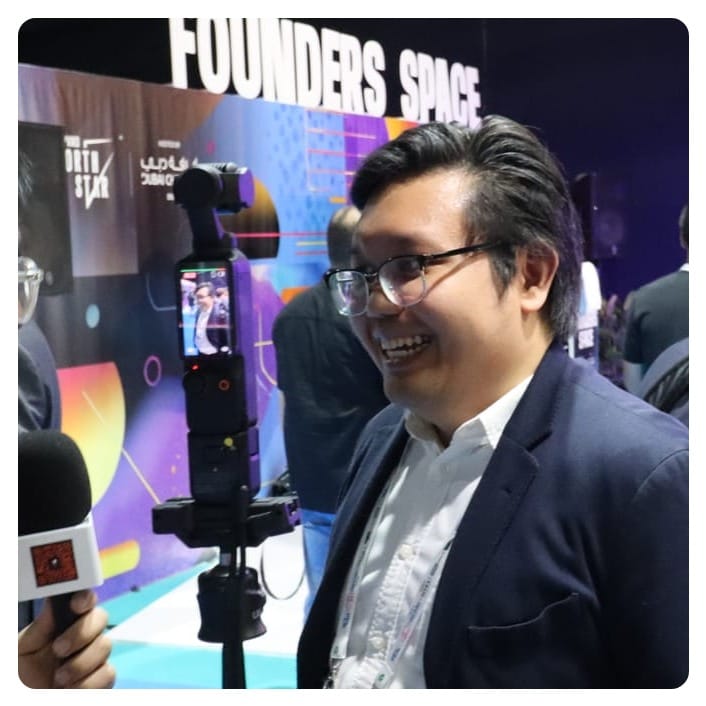
Watch the founder's UpNext PopUp interview from Expand North Star 2025
About Flashpoint POV Spotlights
Flashpoint POV Spotlights are in-depth founder features produced by Flashpoint Global—a thought leadership management studio that helps innovators articulate the world they’re creating.
Each story begins with a Future Narrative Session and develops into a Minimum Viable POV (MVPov): the founder’s clearest statement of purpose and perspective.
Follow UpNext Global to discover more founders shaping the future. (If you’re a founder interested in clarifying your own POV, stay tuned — applications open soon.)