WHX Xcelerate 2026: Innovation Meets Clinical Reality
A look inside the WHX Xcelerate 2026 finals—featuring the winner, the runners-up, and the standout startups shaping what's UpNext in healthcare.



WHX had a different energy this year. Sharper. More clinical. The conversations weren't about pitching healthcare trends—they were about solving actual problems in operating rooms, maternity wards, and oncology departments.
What stood out wasn't innovation theater, but precision. The startups that made it to Xcelerate arrived with regulatory clarity, clinical evidence, and a realistic path to implementation. You could feel the difference between health-tech ideas and health-tech solutions—especially on the Future X Stage, where founders were defending their approaches in front of investors who'd funded actual medical device rollouts.
And that's where Xcelerate cut through. Not as a showcase, but as a filter. The teams that advanced didn't just have compelling decks—they had compelling answers to the hard questions about reimbursement, regulatory pathways, and clinical adoption. Predictheon's win wasn't surprising. Their Predictive Decision Assistant does something tangible: it gives anesthesiologists ten minutes of advance warning before adverse events. That's not visionary. It's operational.
Below is a closer look at the winner, the runners-up, and a selection of startups that demonstrated the kind of clarity and conviction that gets deployed, not just funded.
Xcelerate 2026 - Winner & Finalists
This year's Xcelerate competition surfaced a strong cross-section of clinical founders tackling real, category-defining problems—from anaesthesia safety and maternal health to early cancer detection, regenerative medicine, and precision diagnostics. Thirty finalists reached the Future X Stage, representing a global mix from Asia, Europe, the Middle East, Africa, North America, and Latin America. Only three teams took home cash prizes and guaranteed exhibition space at WHX 2027.
What stood out wasn't novelty, but viability. The finalists demonstrated clear clinical validation, regulatory awareness, and a credible path to adoption—offering a snapshot of where healthcare innovation is moving beyond proof of concept and into actual deployment.

WINNER: PREDICTHEON MEDICAL
Founder: Eva Gubern
Pitch:
Predictheon makes surgeries and anesthesia safer by bringing AI into the operating room. The platform uses proprietary AI models built on real patient data to provide anesthesiologists with real-time, personalized information. Predictheon is transforming reactive monitoring into proactive intervention that anticipates complications before they occur.
What stood out:
Moving from reaction to prediction in the operating room. Anesthesiologists manually integrate over 100,000 data points per hour from disparate monitors, often responding only after adverse events have begun. Predictheon's AI analyzes data in real time to anticipate complications before they manifest, enabling anesthesiologists to proactively adjust anesthesia levels. The technology is built by training proprietary AI models on real patient data rather than relying on generic algorithms.
Traction:
Network of 150+ anesthesiologists waiting to deploy Predictheon in their operating rooms. UN AI For Good award recipient for building AI that is reliable, unbiased, transparent, and clinically validated. Seed stage with commercial launch planned for Europe by 2028.
Why they made the finals:
With 300 million surgeries performed each year globally and 20% experiencing anesthesia-related complications, the problem isn't small—it's systemic. Predictheon is solving it by bringing predictive intelligence to a field that has remained reactive for decades. By enabling anesthesiologists to see what's coming rather than responding to what's already
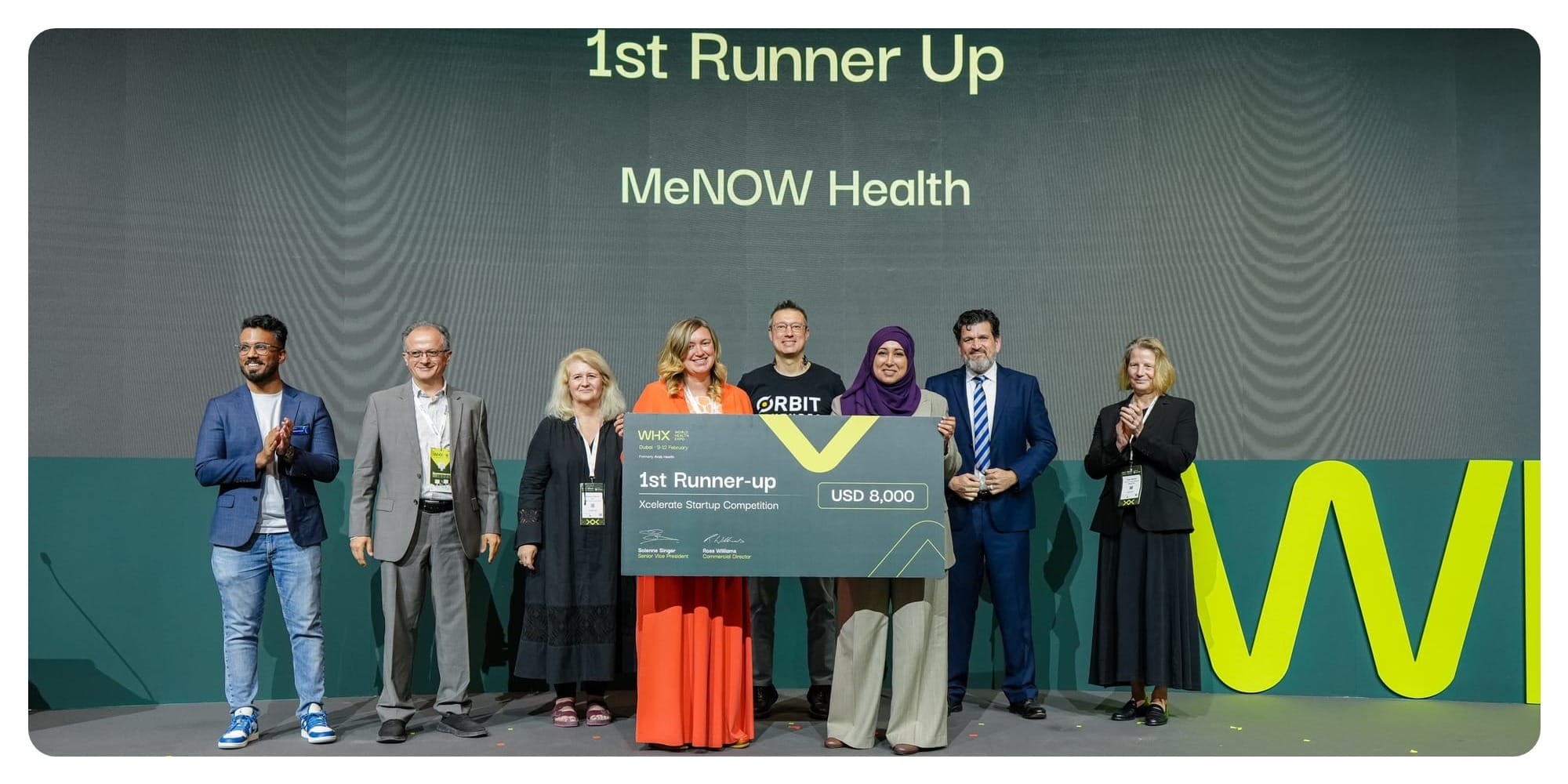
1st Runner Up: MeNOW Health
Founder: Kausar Tahir
Pitch:
MeNOW Health is a digital multilingual platform that supports women in perimenopause in a clinically informed, culturally sensitive manner. The platform bridges women and the healthcare ecosystem by meeting them where they are with easy-to-use, multilingual resources that increase patient trust and compliance.
What stood out:
Cultural relevance as a clinical imperative. MeNOW Health recognizes that the lack of awareness, education, and culturally relevant resources for women in midlife isn't just a gap—it's a barrier to care. By building a multilingual platform that addresses perimenopause through culturally sensitive frameworks, they're solving the accessibility problem that prevents millions of women from getting support. The focus on being the "bridge between women and the healthcare ecosystem" signals an understanding that effective health solutions must fit the cultural context of the communities they serve, not force patients to adapt to Western-centric models.
Traction:
Winner of the 2025 GCC Mental Award for Best Startup in Women's Wellbeing. Accepted into multiple competitive accelerators globally. Featured in media coverage. Pre-seed stage with next milestone: launching workplace corporate training and clinic subscription model.
Why they made the finals:
Perimenopause affects every woman, yet remains profoundly under-resourced—especially for non-English speaking populations and women in culturally diverse communities where midlife health is stigmatized or underdiscussed. MeNOW Health is solving the dual problem of clinical gaps and cultural barriers by creating a platform that's both medically informed and culturally resonant. By positioning as the bridge between women and healthcare—rather than replacing clinical care—they're building the infrastructure to make perimenopause support accessible, trusted, and actionable for women who have been systematically underserved by one-size-fits-all approaches.
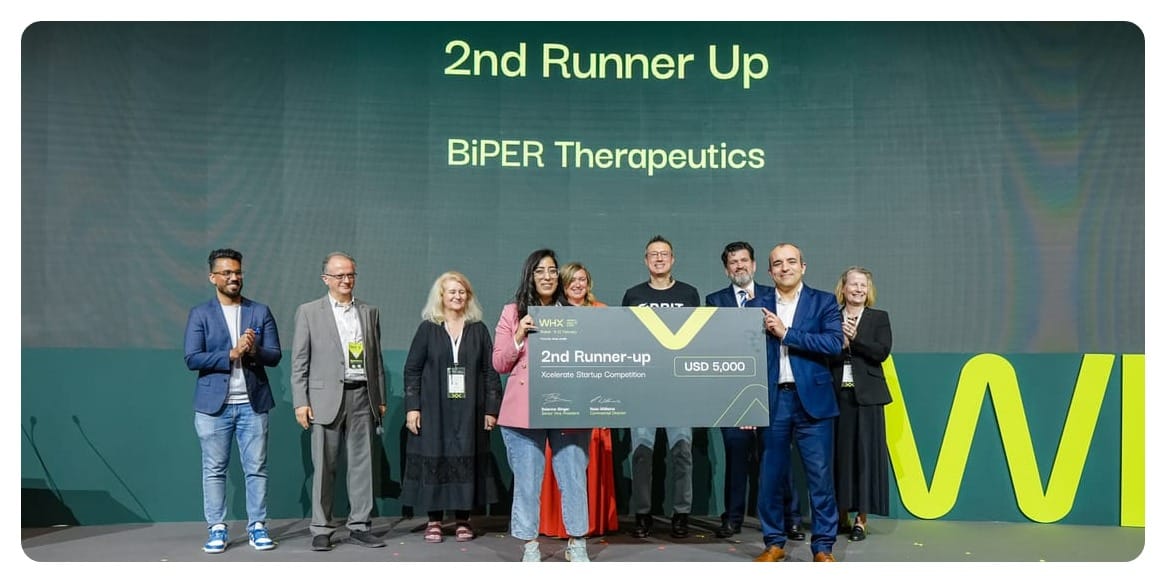
2nd Runner Up: BiPER Therapeutics
Founder: Mehdi Chelbi
Pitch:
BiPER Therapeutics is revolutionizing cancer treatment by developing new drugs that push cancer cells to burn out. The company's lead candidate, BPR001-615, is the first and only oral drug in development that selectively inhibits BiP—a key protein for tumor survival and resistance that is overexpressed in cancer patients.
What stood out:
Targeting the resistance mechanism itself. BiPER isn't developing another chemotherapy or immunotherapy—they're attacking BiP, the protein that enables tumors to survive and develop resistance in the first place. As the only company pursuing selective oral BiP inhibition, they've identified a novel vulnerability in cancers that are not responsive to existing treatments. The lead candidate has demonstrated tumor regression in multiple animal models, both as a single agent and in combination with standards of care, validating the mechanism across indications
Traction:
Lead clinical candidate BPR001-615 is 6 months from clinical trials with demonstrated tumor regression in multiple animal models across several indications. Generating interest from pharma companies and investors. Series A+ stage, currently closing Series A to finance clinical development through Phase 2b clinical efficacy in BiP-high gastrointestinal cancer patients.
Why they made the finals:
Despite recent progress, 50% of cancer patients remain without solutions due to chemotherapy resistance, immunotherapy non-response, and ineligibility for targeted therapies. BiPER is addressing the patients left behind by current treatments—not by creating incremental improvements, but by targeting the fundamental mechanism that allows tumors to survive and resist therapy. By selectively inhibiting BiP, they're opening a new therapeutic avenue for the half of cancer patients who currently have no options.
WHX Dubai Xcelerate Pitch Event - Standout Startups
Beyond the finalists, Xcelerate brought together a wider cohort of healthcare founders building across diagnostics, digital health, therapeutics, and clinical infrastructure. Not all competed on the Future X Stage, but the teams below stood out for their clarity, clinical relevance, and readiness to scale.
What made them notable wasn't just the technology—it was how well they understood their regulatory pathway, reimbursement model, and the specific clinical workflows they were entering. These are the startups worth tracking as they move from pilots to deployment.

Startup: ABCDx
Founder: Ingrid Lansard
Pitch:
ABCDx is developing the first rapid, AI-based blood test to detect Large Vessel Occlusion (LVO) stroke in under 10 minutes. Built for pre-hospital use, the test equips paramedics with actionable insight when time matters most—before patients ever reach imaging.
By combining patented blood biomarkers with an AI-powered mobile reader, ABCDx enables faster triage decisions and directs patients to the right treatment pathway earlier.
What stood out:
A clinically grounded approach to AI in healthcare. Rather than relying on symptom scoring or complex equipment, ABCDx focuses on a simple, deployable diagnostic that fits directly into emergency workflows. The emphasis on time saved—and the downstream impact on survival and disability—was clear and compelling.
Traction:
ABCDx is at the seed stage with strong clinical validation: an 800-patient prospective study underway with Charité Berlin, over 2,000 patients evaluated across studies, and €2.7M in non-dilutive funding from the European Innovation Council. The team also holds multiple patents in brain-related blood biomarkers.
Why they made it to Xcelerate:
ABCDx tackles one of the highest-impact problems in acute care with a solution that is both technically sophisticated and operationally realistic. Ingrid articulated a path from clinical evidence to real-world deployment across Europe, the US, and the Middle East—positioning the company as a potential category-definer in rapid stroke diagnostics.
Startup: Braillic Limited
Founder: Camroo Ahmed
Pitch:
Braillic is building affordable AR-guided surgical navigation for underserved economies. ArNav overlays a precise 3D map of the patient's CT/MRI directly onto their anatomy, giving surgeons millimeter-level, heads-up, "X-ray-like" guidance—making complex neuro and orthopedic surgeries safer and more accessible at a fraction of conventional navigation costs.
What stood out:
Addressing the accessibility gap in surgical precision. Many life-saving surgeries become "inoperable" not because surgeons lack skill, but because hospitals can't afford the navigation systems needed for minimally invasive procedures. Braillic delivers the same millimeter-level accuracy via AR at a fraction of the cost, enabling complex procedures in low-tier hospitals that previously had to refer patients elsewhere—often at the expense of time, money, and lives.
Traction:
5 pilot customers deployed. Pre-seed stage company moving from validation to scale.
Why they made it to Xcelerate:
Surgical navigation shouldn't be a luxury limited to top-tier hospitals. Braillic is democratizing access to precision surgery by making AR-guided navigation affordable for underserved economies. By replacing expensive navigation towers with accessible AR technology, they're enabling surgeons to perform complex procedures they couldn't risk before—turning "inoperable" cases into treatable ones and bringing life-saving precision to the hospitals that need it most.
Startup: Calla Lily Clinical Care
Founder: Thang Vo-Ta
Pitch:
Calla Lily Clinical Care is a versatile vaginal drug-delivery platform for threatened miscarriage and IVF, with broader applications in menopause, oncology, and the microbiome. The patented device provides superior retention, mess-free delivery, and dosage confidence—solving the fundamental inadequacy of existing intravaginal drug delivery methods
What stood out:
A novel way to approach women's health and drug delivery. Callavid isn't optimized for one condition—it's designed to be adaptable across fertility, pregnancy, gynecological conditions, and live biotherapeutics. The device maintains correct drug positioning while absorbing leaked excipients, offering convenience during daily activities and unique advantages for vaginal microbiome colonization. The new strategic collaboration with Merck validates the platform's commercial potential beyond single-indication development.
Traction:
A strategic collaboration with Merck was announced at WHX Dubai. Clinical stage beginning this year with a 60-person bioequivalence trial for progesterone delivery in miscarriage and IVF.
Why they made it to Xcelerate:
Women's health has long been underserved by inadequate drug delivery methods—no existing product offers adaptability across conditions while providing true convenience and dosage confidence. The team is building the infrastructure for a new generation of intravaginal therapeutics. By creating a versatile drug delivery system rather than a single-use device, they're enabling capital-light growth through pharma licensing partnerships while addressing critical unmet needs across fertility, pregnancy, and gynecological health
Startup: Eupnoos
Founder: Arshia Gratiot
Pitch:
Eupnoos listens to your breathing to detect early heart and lung changes using clinically validated AI technology. The platform analyzes natural breathing sounds through smartphone microphones, translating subtle patterns into objective signals of lung function. By learning what's normal for each person, Eupnoos detects meaningful changes over time—enabling early intervention across asthma, interstitial lung disease, drug-induced lung injury in oncology, and heart failure before symptoms become severe.
What stood out:
Turning everyday breathing into continuous early detection. Most lung health tools only detect damage after it's already progressed—relying on infrequent symptoms, basic oxygen checks, or hospital tests that show damage once it's progressed. Eupnoos works differently: it analyzes how the lungs function day-to-day, learns individual baselines, and spots problems much earlier. Critically, it doesn't just flag changes—it helps explain why, distinguishing between ongoing lung disease, temporary inflammation, fluid buildup, or medication reactions. Using technology people already have (smartphone microphones) makes it accessible for home use while remaining reliable enough for clinical settings.
Traction:
CE Class I-approved lung health screening app launching on Apple App Store. Studies are being completed and are ongoing across the UK, Europe, and other regions, covering chronic lung disease, heart failure-related lung fluid, and lung safety in cancer treatment. €650K+ raised through investment and grants. Three patent families filed. Paid pilot projects delivered with healthcare and industry partners. Active discussions with pharmaceutical companies for clinical trial lung safety monitoring. Multiple innovation awards across UK and Europe. Strong team combining doctors, scientists, engineers, and AI specialists. Seed stage.
Why they made it to Xcelerate:
Respiratory disease is one of the world's most common and dangerous health problems, yet lung health remains invisible between hospital visits. Most people only discover problems when symptoms become severe—often too late to prevent serious harm. Eupnoos is making lung health measurable, understandable, and actionable in everyday life by teaching machines to "listen" to lungs the way doctors once did with stethoscopes. By turning natural breathing into a continuous early signal, they're enabling intervention long before patients reach crisis—bringing the same accessible monitoring that exists for heart rate and blood pressure to an organ that has been flying blind.
Startup: Healp
Founder: Elizabeth Tikoyan
Pitch:
Healp uses AI to diagnose patients faster by comparing symptoms to real patient experiences, surfacing likely conditions and guiding users to the right doctors and tests. The platform cuts unnecessary appointments, lab work, and delays by providing a clinical roadmap based on verified, longitudinal data from patients who've lived through similar diagnostic journeys.
What stood out:
Moving from theoretical medicine to lived-experience intelligence. While traditional diagnostic tools ask "what condition fits this symptom in a textbook," Healp's AI asks "which real-world patients have lived through this exact trajectory, and what was their diagnosis?" The platform doesn't just offer possibilities—it provides custom diagnostic roadmaps specifying exact sub-specialists and high-yield tests needed, replacing the "referral merry-go-round" with precision navigation. The focus on pattern matching from actual patient outcomes rather than theoretical symptom checking represents a fundamental reimagining of diagnostic intelligence.
Traction:
Tens of thousands of users across 70+ countries, with 40% rare disease patients and 75% Gen Z/Millennials providing unique longitudinal data. Backed by Techstars (with J.P. Morgan), BARDA, Halcyon House, U.C. Berkeley, and NYCEDC. Finalizing pilots with major U.S. hospital systems (under NDA). Won Audience Choice Award at DIA and Fan Favorite at Digital Health Innovation Summit.
Why they made it to Xcelerate:
84% of patients experience misdiagnosis, with the diagnostic odyssey lasting an average of 7 years for complex conditions—contributing to over $1 trillion in annual healthcare waste. Healp is solving the systemic failure of the diagnostic process by turning collective patient experiences into shortcuts to accurate diagnosis. By capturing the longitudinal patient journey and identifying hidden symptom patterns that haven't been codified in clinical literature, they're cutting years off the search for answers and restoring hope to millions trapped in medical limbo.
Startup: iHealthScreen Inc.
Founder: Alauddin Bhuiyan
Pitch:
iHealthScreen provides fully automated screening for ophthalmic and cardiovascular diseases through AI-powered retinal imaging. The iPredict platform screens for multiple conditions—diabetic retinopathy, AMD, hypertensive retinopathy, glaucoma, cardiovascular disease, and MI/stroke risk—enabling early diagnosis and timely intervention to prevent blindness, save lives, and eliminate economic burden.
What stood out:
The eye as a window to total health. iHealthScreen's approach recognizes that retinal imaging reveals not just eye conditions but cardiovascular disease and stroke risk. By combining AI with retinal analysis, they've created a single screening platform that detects multiple life-threatening conditions with high accuracy—making comprehensive health screening as simple as looking into a camera.
Traction:
Regulatory approvals across major markets: CE Mark, UK MHRA, Australia TGA, UAE DoH, with FDA clearance underway. Three US patents granted. Commercial deployments with customers in USA (multiple NY clinics), UAE (Burjeel Hospitals, One Health, Pure Health), and Australia. Platform offers telemedicine integration, EHR connectivity, and predictive analytics. Growth-stage company targeting deployment in 1,000+ clinics for large-scale AMD and DR screening.
Why they made it to Xcelerate:
Preventable blindness and cardiovascular incidents remain leading causes of disability and death globally—not because treatments don't exist, but because screening happens too late or not at all. iHealthScreen is ending this by making multi-disease screening automated, accurate, and accessible. With regulatory clearance across major markets and proven commercial traction, they're scaling the infrastructure to make early detection routine rather than exceptional.
Startup: Kapsule
Founder: David Chen
Pitch:
Kapsule is building the Bloomberg Terminal of health data—a single access point for high-quality, regulatory-compliant healthcare datasets. The platform enables large corporates, researchers, and tech firms to unlock health data for commercial strategy, consulting, and research without navigating fragmented systems or legal barriers.
What stood out:
A clear solution to one of healthcare’s hardest constraints: access. David focused on incentives, privacy, and data sovereignty, showing how Kapsule enables data sharing at scale while remaining compliant across jurisdictions. It’s infrastructure, not analytics theatre—and that distinction matters.
Traction:
Kapsule operates across 14 countries, connects 17,000+ health facilities, and provides access to 75M+ health records. The company is already working with some of the world’s largest institutions and is operating at growth stage with a live, expanding dataset.
Why they made it to Xcelerate:
Kapsule is positioning itself as foundational infrastructure for global health intelligence, particularly across emerging and underserved markets. David articulated a credible expansion strategy—Series A readiness, China market entry, and GCC growth—backed by real scale, not pilots. This is a platform play with geopolitical and commercial relevance.
Startup: Limb
Founder: Shamma Alsaedi
Pitch:
Limb is an AI-powered physiotherapy platform that extends care from the clinic into the home. Using privacy-first computer vision, Limb helps patients perform prescribed exercises correctly while giving physiotherapists visibility into progress between in-person sessions.
What stood out:
A deep understanding of real-world rehabilitation barriers. Shamma’s pitch emphasized privacy, culture, and trust—critical factors often overlooked in health AI. By enabling exercise correction without storing videos and designing for cultural context, Limb removes friction that prevents patient adherence.
Traction:
Limb is at MVP stage with strong early validation: First Place at Build It Demo Day, First Place in the UAE Ministry of Education’s Tomorrow’s Pioneers Entrepreneurship Challenge 2024, and Second Place at the MBZUAI and startAD Inaugural Pitch Event. The company has a strategic partnership with HealthPoint for real-world data validation and is a two-time MBZUAI Incubation grant recipient.
Why they made it to Xcelerate:
Limb addresses a costly gap in physiotherapy with a solution designed for how care actually happens outside the clinic. Shamma articulated a focused path toward pilots and clinical validation, positioning Limb as an enabling layer for rehab centers—not a replacement—at a time when accessible, hybrid care models are increasingly essential.
Startup: Muun Health
Founder: Kerli Luks
Pitch:
Muun Health is changing how we manage women's hormonal health by developing a novel wearable sensor that enables continuous, convenient data collection. The platform enables real-time tracking of female hormones for the first time, moving hormonal monitoring from periodic lab tests to ongoing, personalized data collection.
What stood out:
Addressing the fundamental invisibility of female hormonal health. Currently, there are no methods to track female hormones in real-time, leaving individuals and clinicians working with incomplete, delayed, or entirely absent data when making critical health decisions. Muun Health's wearable sensor approach brings continuous hormonal monitoring from the lab to everyday life, enabling truly personalized care based on objective, ongoing data rather than subjective symptoms or infrequent testing. The focus on convenience and continuous measurement represents a category-defining shift in how half the population can understand and manage their health.
Traction:
In 2025, Muun Health grew R&D from 4 to 13 researchers, reached laboratory PoC, obtained €150k in grant funding and closed the €546k pre-seed round. They established academic, industrial and clinical partnerships in 7 different countries in the EU. Muun Health received the HealthTech of the Year 2025 at Estonian Startup Awards.
Why they made it to Xcelerate:
Respiratory disease is one of the world's most common and dangerous health problems, yet lung health remains invisible between hospital visits. Most people only discover problems when symptoms become severe—often too late to prevent serious harm. Eupnoos is making lung health measurable, understandable, and actionable in everyday life by teaching machines to "listen" to lungs the way doctors once did with stethoscopes. By turning natural breathing into a continuous early signal, they're enabling intervention well before patients reach crisis—bringing the same accessible monitoring available for heart rate and blood pressure to an organ that has been operating in the dark.
Startup: Rosetta Omics
Founder: Wahid Awad
Pitch:
Rosetta Omics uses AI-powered multi-omics analytics to deliver personalized treatment predictions that improve outcomes for cancer patients. The platform integrates high-resolution genomics, proteomics, lipidomics, and spatial profiling data to generate clinically actionable predictions of treatment response—going far beyond single-biomarker approaches to match each patient with their most effective therapy.
What stood out:
Multi-layer molecular intelligence meets AI prediction. Rosetta Omics combines diverse molecular data from a patient's tumor in a single analysis, using label-free mass spectrometry and spatial multi-omics to extract rich molecular information from routine biopsy samples. This holistic approach not only identifies effective treatments for individual patients but discovers new biomarkers and therapeutic targets that traditional methods miss. The platform empowers clinicians to deliver the right therapy at the right time while supporting pharma partners in accelerating drug development—making precision oncology both clinically relevant and commercially scalable.
Traction:
1st place among top 20 European startups at HealthTech Innovation Days (Paris). Winner of Pfizer Healthcare Hub France acceleration program (Season 5) and ESCP Business School & BPCE Innovation Prize. Labeled Deep Tech Pioneer by Hello Tomorrow and recognized by Bpifrance. Three successful POC studies in colon cancer with Institut Curie, POC in kidney cancer with CHU Rennes, and additional studies being prepared with Gustave Roussy. Awarded prestigious France 2030 AI Pioneers grant (2026). Incubated at Agoranov and Station F. Multiple Bpifrance grants secured. Early collaborations with top French cancer hospitals. Seed stage, raising €3M in 2026 for first retrospective clinical trial.
Why they made it to Xcelerate:
Cancer treatment remains trial-and-error for millions of patients because standard therapies aren't tailored to each tumor's unique biology—leading to ineffective treatments, unnecessary side effects, wasted time, and high costs. Rosetta Omics is solving this by integrating multi-omics molecular data with AI to predict treatment response before therapy begins. By moving from single biomarkers to comprehensive molecular profiling, they're transforming precision oncology from promise to reality—improving survival chances, reducing treatment failure, and ensuring patients get the right care at the right time.
Startup: Pioneera Biosciences
Founder: Alireza Daneshvar
Pitch:
Pioneera is redesigning how cures are discovered, validated, and delivered through Discovery 4.0—an AI-driven platform that integrates biology, data, and machine learning to design, test, and optimize precision immunotherapies before they reach patients. The platform functions like "ChatGPT for immunotherapy development," transforming complex biological data into optimized, precision-engineered treatments that improve success rates while reducing time, cost, and risk.
What stood out:
Immune orchestration instead of incremental optimization. Pioneera is the first to unify AI-driven design, pan-omics integration, and high-throughput biological validation into a single end-to-end system. Rather than optimizing therapies one variable at a time, their platform simultaneously accounts for disease biology, patient-specific constraints, safety, and resistance mechanisms—before clinical use. This integrated, pre-clinical de-risking model moves immunotherapy development from reactive treatment to proactive cure design, addressing the fundamental problem: not a lack of science, but fragmented discovery models that make therapies slow, expensive, and unpredictable.
Traction:
Discovery 4.0 platform built and validated with 300+ AI-generated constructs benchmarked in silico, significantly outperforming commercial comparators. Strategic partnership with PrePaire Labs for fully automated, organoid-based screening enabling parallel validation of thousands of candidates. Active programs across CAR-T, CAR-NK, NK/NKT, and targeted therapies. Collaborations with medical institutions and technology partners in UAE and Europe advancing pilot studies. Forbes 30 Under 30, Abu Dhabi Global Health Week Innovation Awards nomination, Rising Star of the Year by MedTech World. Chosen startup at Riyadh Global Medical Biotechnology Summit Demo Day. Growth stage, next milestone: launching hub-and-spoke precision oncology clinic integrated with AI platform.
Why they made it to Xcelerate:
Today's immunotherapies fail 20-70% of the time due to resistance, antigen escape, and safety risks—not because the science is lacking, but because development methods rely on isolated tools, linear workflows, and late-stage trial-and-error. Pioneera is solving this systemic inefficiency by integrating the entire discovery process into a single platform that designs and de-risks therapies computationally before clinical use. By moving precision medicine from fragmented optimization to integrated orchestration, they're making advanced therapies faster, more predictable, and ultimately accessible rather than exceptional.
Clinical Readiness, Not Just Clinical Potential
Xcelerate isn't just a pitch competition—it's a stress test. The teams highlighted here reflect a broader shift in health-tech: founders who understand that innovation in healthcare isn't measured by what you build, but by what gets adopted. Regulatory pathways, reimbursement models, clinical workflows—these aren't afterthoughts. They're the work.
Miss anyone?
Probably. Xcelerate moves faster than any single recap can capture, and some of the most promising teams are still in stealth or early pilots. What's documented here reflects the founders who were ready to be seen, but the next breakthrough is likely already in development, just not yet on a stage.
We'll continue tracking the teams and technologies shaping what's UpNext in healthcare.