Nobody Was Reading the Data Underground. Until Now.
Large multinational clients of LiORA can carry up to $64 billion in AROs, roughly half of which is tied to soil and groundwater contamination. Nick Gray left B2B tech to join LiORA, replacing grab samples with live AI-powered data that finally makes site closure possible.

Most industrial sites are contaminated. The operators who run them know it. The regulators who oversee them know it. The environmental consultancies hired to manage the risk know it too. What none of them have had, until recently, is a way to see it continuously, accurately, and in real time. LiORA deploys AI-enabled sensor hardware directly into contaminated soil and groundwater, generating live subsurface data that quarterly grab samples cannot provide. The result is the first genuinely predictive picture of how contamination moves underground, and with it, the first credible route to actually closing a site rather than monitoring it indefinitely.
Fifteen years in tech taught him to read the signal that matters most
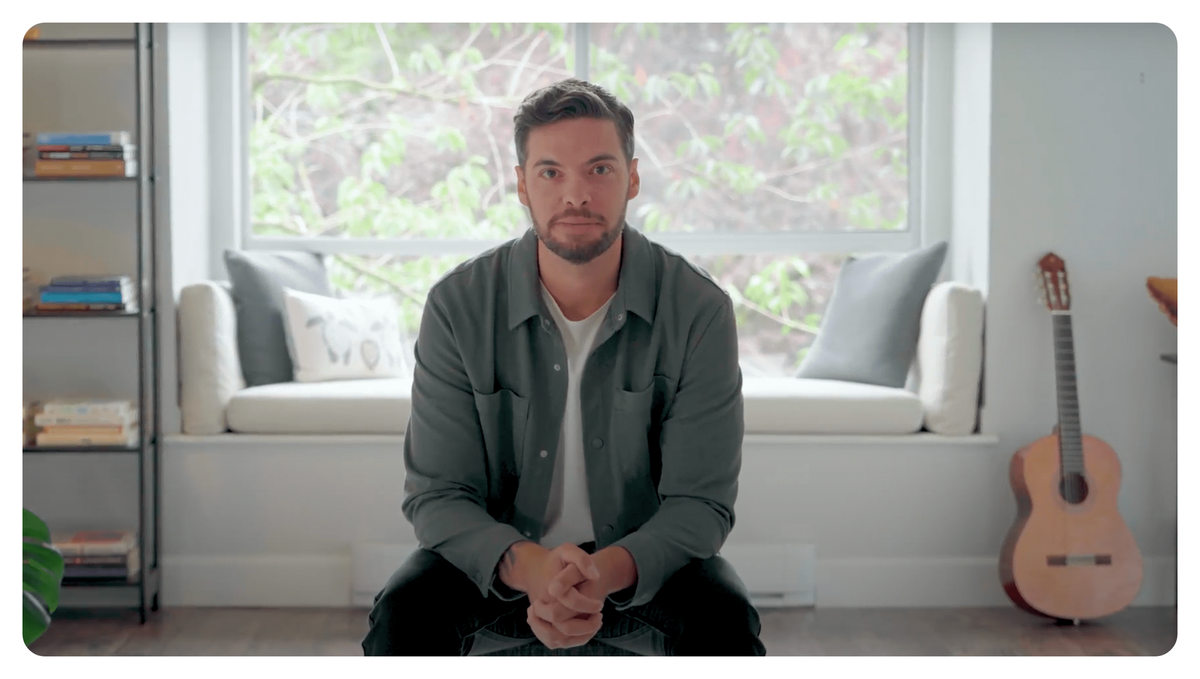
Nick Gray grew up in Toronto, spent fifteen years building and scaling B2B technology companies, and came to environmental monitoring the way most people come to the problems that define them: by accident, through a room he almost didn't walk into.
After a post-COVID travel period that took him through South America, Central America, and eventually to Mexico City for nearly two years, Nick and his wife returned to Canada to put down roots. They landed in Calgary, a city Nick deliberately chose for its nature, professional depth, and sense of community. He had joined a Canadian accelerator called Co.Labs, based in Saskatoon, where he worked with portfolio companies on product strategy and growth. That work brought him, through a two-day onsite, to a company then called Environmental Material Sciences, now LiORA, and to its founder, Steven, a world-renowned soil toxicologist who had spent thirty years watching strong remediation science fail because operators lacked the data to act on it.
Nick had spent a career reading product signals. What he read in that room stopped him. No client had ever left LiORA except to close a contaminated site. When a site closed, the sensors moved to the next one. That cycle, in a B2B SaaS environment where churn is the number everyone watches, is not normal. It means something is actually working.
The industry had been measuring contamination for decades. Nobody had a path to ending it.
The standard approach to contaminated site management runs on grab samples taken at most quarterly, usually annually. Results take months. By the time they arrive, the data is already outdated. The monitoring continues because regulation requires it, not because it provides the clearest understanding of site conditions. In many cases, it's simply the approach people know and have always used. Environmental coordinators who entered the industry to make things better find themselves in a cycle with no finish line.
What sits underneath this, and what Nick identified immediately from his product background, is a data problem. Grab samples are imprecise and infrequent. That imprecision flows directly into asset retirement obligations, the accounting line that tells a company how much contaminated land it is responsible for cleaning up. Large multinational clients of LiORA can carry up to $64 billion in AROs, roughly half of which is tied to soil and groundwater contamination. When your baseline data overestimates contamination, your liability is overestimated too, and the finance team has no way of knowing by how much.
LiORA's sensors sit below ground and generate continuous, high-frequency subsurface data that manual sampling cannot match. That data trains predictive models that forecast where contamination will move next. Across more than 60 North American sites, with over 500 sensors deployed and a proprietary dataset of more than 450 million environmental records, LiORA gives operators something they have never had. A live, accurate picture of what is happening underground, and a path to closure rather than a path to the next sample.
Building Canadian excellence, one closed site at a time
Nick joined LiORA as COO. He has chosen, at several points in his career, to stay in Canada when opportunities elsewhere presented themselves. He describes it as something he owes back to the ecosystem, a belief that world-class companies can be built here and that the talent and diversity of builders in Canada are worth committing to.
The commercial picture supports that conviction. In 2026, LiORA released its Chloride product to address brine spills, launching to a waiting list of over 15 logos. The company is focused on scaling its go-to-market efforts to reach $5 million in annual contract value. The problem it is solving touches oil and gas, industrial manufacturing, and real estate, four of the largest industries in the world, measured in trillions. For Nick, that scale is not a pressure. It is room to move.
"We all live closer to a contaminated site than we do to a Walmart," he says. He didn't know that before he walked into that room in Saskatoon. He couldn't look away after that.
About Flashpoint POV Spotlights
Flashpoint Global produces each Founder POV Spotlight using its proprietary category leadership framework. Every Spotlight begins with a Future Narrative session, where a founder’s POV is clarified and operationalized as the lens through which new categories are built. The result is content that moves founders beyond product messaging and into the role of category leader, helping the market understand the problem, the stakes, and the future being created.
If you are a founder building a new category, learn more.