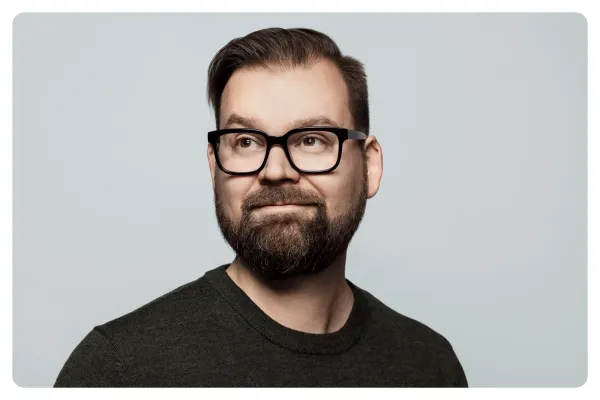
Every EV in Every Driveway Is a Grid Asset. Emulate Is the Infrastructure Utilities Need.
Shwan Lamei's co-founder proved at MIT that coordinated residential devices behave like a grid-scale battery. Emulate is the production-grade platform giving utilities real control over EVs, heat pumps, and batteries already in their customers' homes.


Utilities across Europe and the US are managing an electrification wave they were never built to handle. EVs, heat pumps, and home batteries are connecting to the grid faster than the software exists to coordinate them, turning what should be a flexibility resource into a source of grid stress. Shwan Lamei's company, Emulate, is the infrastructure layer that changes that. Built on virtual battery research developed at MIT, the platform gives utilities real-time control over residential devices at scale, reducing grid costs and opening access to energy markets that were previously out of reach.
Two friends from Lund, one research paper, and a giant virtual battery
Shwan grew up in Lund, a small city in southern Sweden, studied there, and spent his early career doing management consulting at an industrial conglomerate with dozens of operating companies. The work suited him. He was sent into businesses to improve margins, develop market strategies, and set up new operations, the kind of work that requires building something rather than maintaining it. Steady state never interested him. Give him a turnaround or a blank page and he comes alive.
His co-founder and best friend, also from Lund, moved through academia before landing a postdoctoral position at MIT. The research asked whether flexible residential devices, coordinated correctly, could collectively behave like a single grid-scale battery. The answer was yes. When Shwan moved to the US around the same time, the two of them started turning that answer into a company. They built it on the side at first, running pilots while holding down their day jobs, and went full-time around 2022 after securing their first venture capital.
The grid lost its one control point and gained millions
For a hundred years, grid operators managed electricity with a single reliable mechanism. Demand rises, you turn up the gas plant. Demand falls, you turn it down. Renewables removed that mechanism entirely. Solar produces when the sun is out. Wind produces when the wind blows. Neither can be dispatched on demand, which means the old model of matching supply to demand in real time no longer holds.
What replaced the power plant's knob was not one new control point but millions of small ones. Every EV in a residential driveway has flexibility built into it, charging windows that can shift without affecting the driver's morning routine. Every heat pump cycles within a comfort band that creates room to adjust load without anyone noticing. Every home battery stores surplus that can be timed and directed. Individually, these signals are small and scattered. Coordinated across a fleet, they behave like a dispatchable grid-scale resource. "There are millions of these little knobs in every home out in the grid," Shwan said, "and to get these things to work in a coordinated fashion that's reliable for an operator is difficult." That is exactly what Emulate solves. The platform connects utilities to their customers' devices, aggregates the flexibility across entire fleets, and makes that resource available directly to tariffs and energy markets. The grid does not need more physical batteries. It needs software that treats what is already in people's homes as the infrastructure it actually is. Emulate is the market leader in Sweden, one of the world's most advanced electricity markets, with active customers now expanding across Europe and the US.
A hundred years of stagnation behind us and twenty years of disruption ahead
Shwan is direct about what drives him. It is not the environmental mission, though he operates in one of the most consequential sectors for the energy transition. It is building things. Shaping the world around him. The satisfaction of taking something that does not work and making it work. The energy sector caught his attention because it is one of the largest industries on earth, has barely changed in a century, and is now being upended entirely as production shifts from centralized to decentralized over the next two decades. The problems are real, the stakes are significant, and there is enough left to solve that he intends to stay in the space for the rest of his career. Right now his focus is singular: getting utilities to adopt what Emulate has built, because he is convinced it is what they need. The scaling from Sweden is already underway.
About Flashpoint POV Spotlights
Flashpoint Global produces each Founder POV Spotlight using its proprietary category leadership framework. Every Spotlight begins with a Future Narrative session, where a founder’s POV is clarified and operationalized as the lens through which new categories are built. The result is content that moves founders beyond product messaging and into the role of category leader, helping the market understand the problem, the stakes, and the future being created.
If you are a founder building a new category, learn more.