Could a Fly Be the Solution to Overfishing?
While the aquaculture and pet food industries face a growing protein supply crisis, Jarna Hyvönen built Volare around a conviction that the raw material to fix it was already sitting in food factories being discarded.


While the aquaculture and pet food industries face a growing protein supply crisis, Jarna Hyvönen built Volare around a conviction that the raw material to fix it was already sitting in food factories being discarded. Her answer is the black soldier fly, a bioconversion process that turns the lowest-value food industry waste into high-quality protein meal, oil, and fertilizer, with a first industrial-scale factory now under construction in Pori, Finland.
She went to art school, studied economics, and ended up building a factory full of flies.
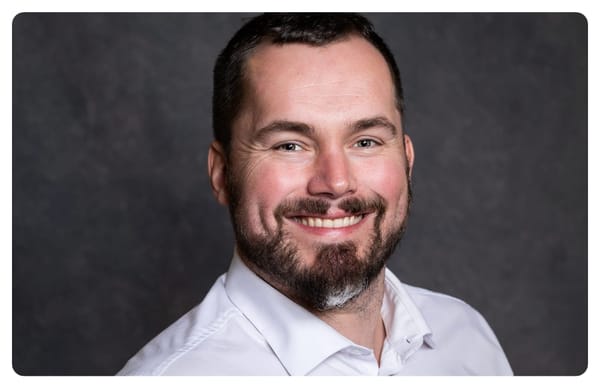
Jarna Hyvönen grew up in Espoo, just outside Helsinki, and took a path that didn’t follow a straight line. She attended a visual arts high school, then found herself drawn to economics, game theory, and the mechanics of how systems work. Social sciences became her degree, and management consulting became her business school. She spent years working with companies on strategy and operating models before joining Finland’s largest waste management company, where she held P&L responsibility for growth businesses in the circular economy. One of those businesses was a food waste reduction service that was eventually exited. By the time she heard about a small research team at VTT, Finland’s national research centre, she had spent nearly a decade watching the food system accumulate problems it wasn’t solving.
Her co-founders, Matti and Tuure, had been at VTT since 2018, an engineer and an agronomist who came together to research the black soldier fly and how to turn food industry sidestreams into something the food chain actually needed. A former consulting colleague who had become a partner at Volare’s first investor connected her with the team before the company even had a name. She joined immediately, before the company had been spun out of VTT. Volare was founded in 2021.
The oceans are running out of fish, and the food industry is throwing away the solution.
93% of global fish stocks are already maximally or overfished. Aquaculture has grown to fill the gap, with farmed salmon and other species increasingly feeding a world that wants more protein, particularly across Asia as wealth rises. But aquaculture itself depends on fish meal, protein made from wild-caught fish dried and processed into feed. The industry is scaling fast toward a supply wall it can already see. Jarna’s read on this was not that the world needed a new source of protein. It was that the source was already there, leaving food factories every day as waste.
In Europe alone, 20% of food waste comes from processing and manufacturing, 17 million tons annually. Oat, wheat, corn, and other vegetable-based by-products are leaving factories as costs rather than as resources. Volare takes that material, feeds it to black soldier fly larvae, and lets biology do the work. The larvae process the biomass during their growth stage, living close together in boxes, much the same way they do in nature, converting what nobody wanted into something the feed industry needs badly. The outputs are protein meal for aquafeed and pet food, oil high in lauric acid for the chemical industry and animal gut health, and organic fertilizer for regenerative agriculture. Nothing else comes out. Not even wastewater.
The technology Volare built around this process uses dry electric processing, which cuts energy use by 30% compared to conventional methods and eliminates fossil fuels from production entirely. Pet food products powered by Volare ingredients have been on shelves since 2022, and binding offtake agreements are in place with Skretting, a Nutreco company and one of the world’s leading aquafeed producers, as well as a major global chemical company.
Building for the market that exists today, and the gap that is coming regardless.
What drives Jarna is not difficult to locate in conversation. She talks about building something meaningful, about caring deeply about the purpose behind the company, about seeing the long-term trends in the food system clearly enough to know that acting now matters. But she is precise about something most founders in this space are not. Seeing where things are heading and building a business that works right now are two different problems, and she holds both at once. Traditional protein sources are still cheap relative to what they will cost when supply constraints bite harder. Long-term commitments in the food chain are still rare. The urgency the data points to is not yet fully reflected in market behaviour.
So Volare builds on the terms the market offers today. The first industrial-scale factory, Volare-01, is a repurposed 10,000-square-metre printing house in Pori, Finland, with a production capacity of 5,000 tons of dry protein meal per year. It is halfway through construction and on track to begin serving customers in 2026. After that, the plan is to multiply the turn-key factory model with agri-food partners globally who want to valorize their own sidestreams. Jarna describes herself as impatient, as someone who likes getting things done. She also joined the company before it had been spun out of VTT because she believed in what it was building. Both things are true, and together they explain how a factory full of flies ends up being the most considered answer to one of the food system’s most urgent problems.
About Flashpoint POV Spotlights
Flashpoint Global produces each Founder POV Spotlight using its proprietary category leadership framework. Every Spotlight begins with a Future Narrative session, where a founder’s POV is clarified and operationalized as the lens through which new categories are built. The result is content that moves founders beyond product messaging and into the role of category leader, helping the market understand the problem, the stakes, and the future being created.
If you are a founder building a new category, learn more.