
GITEX Africa: Sovereign Systems Replace Infrastructure Narratives
GITEX Africa 2026 confirmed that African tech has moved past infrastructure storytelling into deployment at scale. Sovereign digital strategies and cross-border fintech are now live products, not roadmaps.


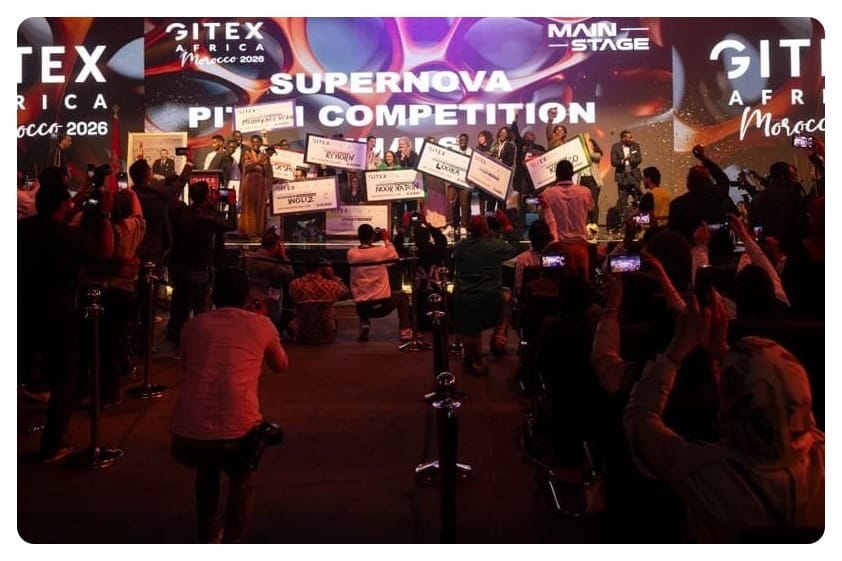
GITEX Africa has long served as the testing ground for whether African tech can move beyond infrastructure promises into operational scale. The 2026 edition in Marrakech functioned as a referendum on that transition, with 55,000+ attendees and 1,500+ exhibitors converging around a single question: are sovereign digital strategies and cross-border solutions now deployed products or still aspirational frameworks?
The answer is clear. This year marked a shift from cloud and connectivity pitches to live government-backed systems and fintech rails moving real transactions across borders. AI applications are no longer research projects but tools built around local constraints—intermittent connectivity, fragmented regulatory environments, and cash-dominant economies.
The thesis: African tech is now defined by what works in production, not what could work with more capital.
What Stood Out
The startups and solutions on display reflected a maturing ecosystem focused on execution under constraint.
- Sovereign digital infrastructure is operational: Governments are deploying national cloud platforms and digital identity systems as live products, not pilot programs, with startups building on top of these rails rather than around them.
- Cross-border fintech has moved to Series A traction: Payment and remittance platforms are processing volume across multiple African markets, solving for fragmented currencies and compliance without waiting for regulatory harmonization.
- AI applications are constraint-native: Startups are shipping models optimized for low-bandwidth environments and offline-first use cases, treating connectivity gaps as design parameters rather than blockers.
- Healthcare and logistics startups are post-MVP: Companies in these verticals are showing repeatable unit economics and multi-market deployment, with buyers that include both private enterprises and government health systems.
- Francophone ecosystems are closing the gap: Startups from Morocco, Senegal, and Côte d'Ivoire are reaching comparable scale and sophistication to Anglophone counterparts, backed by regional policy alignment and capital inflows.
Supernova Pitch Competition
Gitex Africa Morocco featured a startup competition showcasing emerging companies from across the region. The competition provided a platform for early-stage ventures to present their solutions and gain visibility within the broader tech ecosystem.
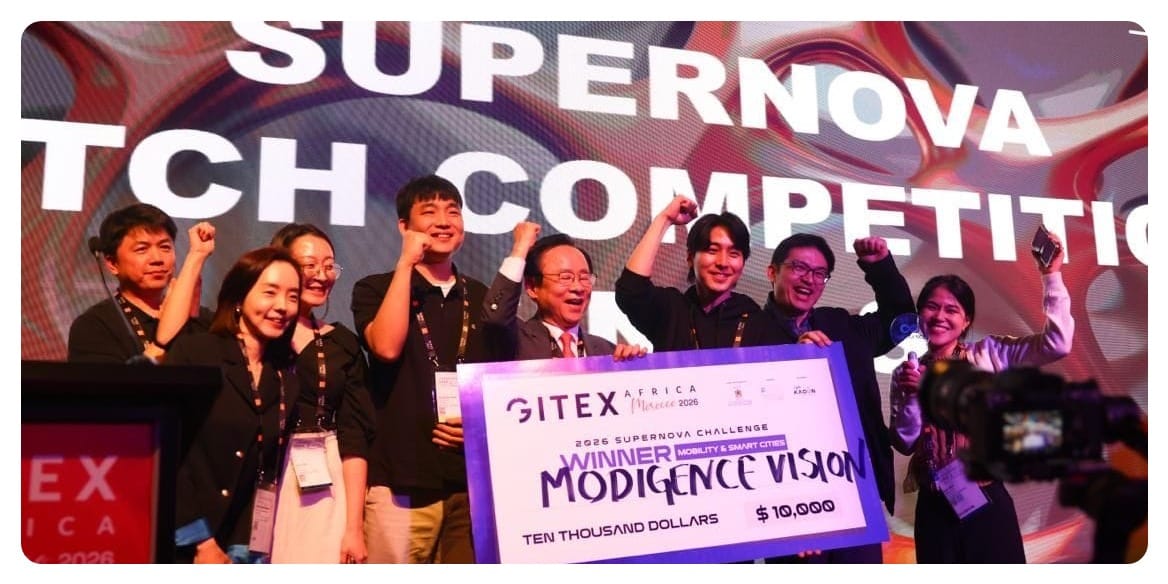
Winners: ModigenceVision, Koloso, LOOKA Research, VelyVelo, and WOLIZ.
Below is a closer look at selected startups from the competition.
The GITEX Africa Startups
ModigenceVision
Founder: Daehee Kim
Pitch:
ModigenceVision builds a 3D camera platform with edge AI that gives robots real-time spatial awareness and object recognition in unstructured environments.
Problem:
Robots operating in dynamic settings lack the precise depth perception needed to navigate and make autonomous decisions reliably.
What stood out:
The platform processes 3D vision data at the edge rather than relying on cloud inference, reducing latency for time-sensitive robotic decisions in manufacturing and logistics workflows.
Traction:
The company joined the KDB NextONE startup program and signed an MOU with French company MOUNTAIN at CES 2026 to co-develop physical AI applications.
Why it matters:
Enabling robots to interpret complex spaces autonomously expands automation beyond fixed, repetitive tasks into adaptive operations that respond to changing conditions.
Koloso
Founder: Petra Chikasa
Pitch:
Koloso provides teachers with curriculum-aligned lesson plans, automated assessments, and performance analytics designed to function in low-bandwidth environments.
Problem:
Teachers spend excessive time on manual lesson planning, grading, and compliance reporting instead of focusing on instruction.
What stood out:
The platform is built to operate reliably in low-connectivity settings, addressing a constraint that renders many edtech tools unusable in African schools.
Traction:
Deployed in over 320 schools across Zambia, with 750+ teachers and 6,500+ learners actively using the platform.
Why it matters:
By automating administrative work in environments where connectivity is inconsistent, Koloso makes data-driven instruction accessible in contexts typically underserved by edtech infrastructure.
VelyVelo
Founder: Asmaa Alaoui
Pitch:
VelyVelo leases electric bikes to delivery professionals and logistics operators, bundling the vehicles with maintenance and fleet management software to run last-mile operations.
Problem:
Urban delivery companies face high vehicle costs, maintenance overhead, and tightening emission regulations that restrict traditional fleets.
What stood out:
VelyVelo removes the capital burden by turning e-bike infrastructure into an operational expense, letting logistics companies shift to compliant fleets without upfront investment or in-house maintenance capacity.
Traction:
The company raised €4M led by Via ID and operates across Paris, Lyon, Bordeaux, and Marseille, with expansion into Morocco through a partnership with Marjane City.
Why it matters:
As cities enforce stricter vehicle restrictions, electrified delivery transitions from a sustainability choice to a regulatory requirement, making turnkey fleet solutions operationally critical.
LOOKA Research
Founder: Serigne Fall
Pitch:
LOOKA Research operates a pan-African market research platform that combines online surveys, AI-moderated conversational research, and a network of 500+ field surveyors to collect consumer insights across fragmented markets.Problem:
Companies expanding into Africa lack access to reliable, on-the-ground consumer data, particularly from offline populations that traditional digital tools cannot reach.
What stood out:
LOOKA bridges the gap between expensive traditional research firms and digital-only tools by integrating technology with human infrastructure—field surveyors who can reach offline consumers in local languages where global SaaS platforms have no presence.
Traction:
The company generated $222k ARR in 2024 with 32% average annual growth and has been profitable since 2024.
Why it matters:
By making African consumer data accessible and affordable, LOOKA enables product teams and investors to build culturally relevant solutions in markets where reliable insights have historically been a bottleneck.
Fanaka Technologies
Founder: Hillary Sang
Pitch:
Fanaka operates a credit system for informal MSMEs that enforces repayment through daily micro-payments aligned to cash flow, agent incentives tied to collections, and conditional capital access.
Problem:
Informal MSMEs earn in small, daily cash flows, but loans are structured around fixed monthly repayments, creating liquidity stress and repayment rates of 65–70%.
What stood out:
Fanaka makes capital access conditional on performance—agents lose disbursement authority if collections fall below 95%, turning repayment from an assumption into an enforced outcome at the system level.
Traction:
The company has served 3,200+ MSMEs, disbursed 6,400+ loans (~$690K deployed, $870K collected), and achieved 95%+ repayment on matured cohorts with ~75% repeat usage.
Why it matters:
By enforcing repayment discipline structurally rather than relying on borrower intent, Fanaka demonstrates that the informal MSME credit gap may be a design problem, not a risk problem.
XChangeBOX
Founder: Abiola Jimoh
Pitch:
XChangeBOX finances agricultural invoices in 3 days instead of 90 using AI-powered credit scoring, converting each transaction into trade data that builds a credit infrastructure for Africa's agricultural supply chains.
Problem:
African agri-suppliers deliver goods but wait 90 days for payment, creating cash flow bottlenecks that contribute to $106 billion in annual losses and 40% harvest waste.
What stood out:
Every financed trade generates data that feeds the platform's machine learning credit scoring engine, creating a proprietary intelligence layer that becomes more accurate with scale and cannot be easily replicated by traditional banks.
Traction:
The company has financed 5,340 trades and onboarded over 3,400 agri-traders and farmers, with $132K raised toward an $850K round and a SEC crowdfunding license application in progress.
Why it matters:
By replacing delayed payment cycles with near-instant liquidity, XChangeBOX unlocks working capital that allows suppliers to reinvest in operations and reduce post-harvest losses across African agricultural markets.
Sharing Worker
Founder: Olivier Rospide
Pitch:
Sharing Worker provides connected bracelets and beacons that alert both workers and machine operators to proximity risks in real time, creating shared vigilance on construction sites and industrial environments.
Problem:
Workplace accidents remain frequent in high-risk environments, but existing safety solutions are too complex or expensive to achieve widespread adoption on site.
What stood out:
The system equips workers directly—not just machinery—enabling simultaneous alerts to pedestrians and operators without requiring infrastructure, network connectivity, or vehicle modifications.
Traction:
The solution is deployed on live worksites with major construction and energy groups including Vinci, Colas, EDF, Bouygues, and internationally with Ortec and Larsen & Toubro, with several hundred users equipped.
Why it matters:
By making safety technology simple and field-ready, Sharing Worker addresses the adoption gap that has kept accident rates high despite industry investment in prevention.
Beekee
Founder: Vincent Widmer
Pitch:
Beekee builds portable hardware devices—the Beekee Box and Beekee Hub—that create local wireless networks to deliver digital learning materials and Learning Management Systems like Moodle without requiring internet access.
Problem:
Learners and frontline workers in remote or humanitarian settings cannot access digital training due to unreliable internet and power infrastructure.
What stood out:
The hardware approach removes the dependency on connectivity entirely, making digital education deployable in crisis zones and off-grid environments where cloud-based solutions fail.
Traction:
The company has secured partnerships and pilot programs with humanitarian and educational organizations including Médecins Sans Frontières, the Red Cross, Arizona State University, GIZ, and the Mastercard Foundation.
Why it matters:
Offline-first infrastructure makes scalable training accessible in emerging markets and emergency response contexts where traditional edtech cannot operate.
Courtee AI
Founder: Amine Bensouda
Pitch:
Courtee AI is a Moroccan fintech platform that uses an AI assistant to guide users through the credit application process and connects them directly with financial institutions for personalized loan advice.
Problem:
The loan application process is complex and opaque, limiting access to capital for individuals and small businesses in emerging markets.
What stood out:
The platform removes intermediaries by connecting borrowers directly to lenders while providing step-by-step guidance, making the process more transparent and reducing friction in markets where credit access is traditionally gatekept.
Traction:
Selected to participate in the Supernova Challenge at GITEX Africa 2026 and exhibiting in partnership with Tamwilcom.
Why it matters:
Simplifying credit access in Morocco creates a pathway for broader financial inclusion and supports local economic development in underserved markets.
COVA AFRICA
Founder: Virginie Ngomi
Pitch:
COVA Africa is an embedded insurtech platform that enables businesses in Francophone Africa—including fintechs, mobility apps, and e-commerce platforms—to integrate digital micro-insurance products directly into their customer journeys.
Problem:
Millions of people in Francophone Africa lack formal financial protection due to complex paperwork, high costs, and distrust in traditional insurance claims processes.
What stood out:
COVA Africa embeds insurance at the point of transaction rather than requiring separate enrollment, removing friction for users who have historically avoided formal coverage.
Traction:
The company won the CATAPULT: Inclusion Africa program in 2023 and recently launched an AI-powered remote claims payment solution for auto insurance.
Why it matters:
By making insurance invisible within everyday digital services, COVA Africa creates a path to financial protection for populations that traditional insurers have struggled to reach.
ENAKL
Founder: Charles Pommarède
Pitch:
ENAKL operates an app-based shared minibus service for daily commuters in North Africa, offering guaranteed seats on direct routes to major workplaces.
Problem:
Urban professionals face unreliable commutes with limited options between expensive private rides and overcrowded public transport.
What stood out:
ENAKL treats commuting as a predictable, bookable service rather than a variable transit experience, creating a middle-market alternative that doesn't require cities to build new infrastructure.
Traction:
The company raised a $2.3M Seed round following a $1.4M Pre-seed and operates active routes to business hubs including Casanearshore in Morocco.
Why it matters:
Tech-enabled shared transit offers African cities a way to address congestion and mobility gaps without waiting for large-scale public infrastructure investment.
FitLife
Founder: Mohammed Kaki
Pitch:
FitLife is a B2B health and sports tech platform that uses AI to deliver personalized nutrition and training programs for sports federations, clubs, and academies.
Problem:
Sports organizations lack scalable systems to provide athletes with data-driven, individualized guidance for performance optimization.
What stood out:
FitLife targets institutional buyers rather than individual athletes, positioning personalized programming as an operational tool for academies and federations managing multiple athletes at once.
Traction:
The company was accepted into the Sanabil 500 Global Startup Unlocked Program and has been featured at Seamless Saudi Arabia and Jeddah Fit Expo 2026.
Why it matters:
As Saudi Arabia expands its sports infrastructure, embedding performance technology at the institutional level could standardize how local organizations develop competitive athletes.
Lupiya
Founder: Evelyn Kaingu
Pitch:
Lupiya operates an AI-powered neobank that provides online loans, payments, and investment products to individuals and small businesses in Zambia and Southern Africa.
Problem:
Traditional banks exclude many individuals and small businesses in emerging markets from credit access due to rigid requirements and slow manual approval processes.
What stood out:
Lupiya uses AI to automate credit decisioning, replacing manual underwriting with digital assessment that expands access to borrowers who lack conventional credit histories.
Traction:
The company raised an $11.25 million Series A extension led by Alitheia IDF to scale operations and expand regionally.
Why it matters:
Lupiya demonstrates that AI-backed credit models can profitably serve underbanked populations in African markets where traditional banking infrastructure remains limited.
OneNine
Founder: Josh Pineda
Pitch:
OneNine is an AI consulting and engineering firm that builds custom software and provides strategic guidance to help businesses integrate artificial intelligence into their operations.
Problem:
Most businesses lack the technical expertise and organizational readiness to turn AI investments into measurable operational results.
What stood out:
OneNine positions itself as a bridge between off-the-shelf models and production-grade systems, focusing on organizational transformation alongside technical implementation rather than treating AI adoption as purely a software deployment problem.
Traction:
The firm has deployed solutions for clients including TravailDirect, ARTFCL, and Desmarais & Gagné Inc., and established partnerships with District3, LavalInnov, and the Chamber of Commerce of Metropolitan Montreal.
Why it matters:
As enterprises move from experimentation to deployment, demand is shifting toward partners who can address both the technical and operational dimensions of AI integration.
Riskspot
Founder: Joyce Chachu
Pitch:
Riskspot is a cybersecurity SaaS platform that delivers security awareness training and phishing simulations to prepare employees for cyberattacks.
Problem:
African SMBs face rising digital threats but lack affordable, accessible tools to train their workforce, leaving employees as the weakest link in their security posture.
What stood out:
Riskspot focuses on human risk management rather than infrastructure-level defenses, addressing the reality that most breaches stem from employee behavior rather than technical vulnerabilities.
Traction:
The company launched its platform in Accra in late 2024, exhibited at the Tech in Ghana Conference, and was featured in the Gitex Africa Supernova Challenge.
Why it matters:
As African businesses digitize rapidly, accessible tools that reduce human-driven security incidents become foundational to building cyber resilience across the continent's growing SMB sector.
Sharing Worker
Founder: Florent Bonneau
Pitch:
Sharing Worker equips construction workers and machine operators with wearable sensors and connected devices that alert them to proximity risks in real time, preventing collisions and falls on high-risk worksites.
Problem:
Existing safety systems are often too complex or expensive for field conditions, leading to low adoption despite persistent accident rates on construction and industrial sites.
What stood out:
The system requires no fixed infrastructure and equips workers directly rather than relying on site-wide installations, enabling rapid deployment and creating shared vigilance between pedestrians and machinery operators.
Traction:
The company is deployed across live worksites with several hundred users equipped, including multiple pilots converted to operational use in France and internationally.
Why it matters:
Direct worker equipment shifts safety from centralized monitoring to distributed awareness, making hazard prevention scalable across fragmented construction environments.
Skaletek Inc
Founder: Amine Bensouda
Pitch:
Skaletek automates regulatory compliance workflows for financial institutions, handling KYC verification, AML screening, transaction monitoring, and fraud detection through a single platform.
Problem:
Manual compliance processes create operational bottlenecks, drive up costs, and leave businesses exposed to fraud while struggling to meet evolving regulatory requirements.
What stood out:
The platform consolidates multiple compliance functions that typically require separate systems and manual coordination, reducing the operational overhead of maintaining regulatory readiness across jurisdictions.
Traction:
No specific metrics provided.
Why it matters:
Businesses operating across borders need compliance infrastructure that scales without adding headcount, particularly as regulators increase scrutiny in emerging markets where manual processes dominate.
Sohaara
Founder: Khadija Khartit
Pitch:
Sohaara is an AI-powered work-tech platform that combines upskilling, practical business tools, and networking to connect professionals and entrepreneurs with jobs and income opportunities.
Problem:
Job seekers and entrepreneurs navigate separate platforms for learning skills, accessing business tools, and finding work, creating fragmented career development.
What stood out:
Sohaara integrates skill acquisition directly with income generation rather than treating education and employment as separate journeys, shortening the path from learning to earning.
Traction:
Selected for Morocco 300 at GITEX Africa and secured investment from BananCo and MFounders following an appearance on Shark Tank Morocco.
Why it matters:
Platforms that directly link skill-building to work opportunities accelerate economic mobility in emerging markets where traditional career pathways are less accessible.
Sparrow
Founder: Harrison Hochman
Pitch:
Sparrow is a search and comparison platform that shows borrowers personalized rates from over 17 private student lenders through a single application without affecting credit scores.
Problem:
Students shopping for loans face an opaque process with no way to compare actual rates before committing to a lender.
What stood out:
Sparrow surfaces real rates upfront rather than estimated ranges, giving borrowers clarity on their actual borrowing costs before they apply. This shifts the decision point from post-application to pre-commitment.
Traction:
The platform has facilitated over $1 billion in searched student loan volume across borrowers from more than 8,000 schools and raised $7 million in Seed funding.
Why it matters:
Transparent rate comparison before application gives borrowers leverage to negotiate and optimize debt structure at the point of decision rather than after lock-in.
What This Signals
This cohort reflects a fundamental shift in how African tech companies are built. The startups gaining traction are those that treat regulatory fragmentation, infrastructure gaps, and cash economies as product constraints, not market risks. They are deploying across borders with live transaction volume, not waiting for policy alignment or infrastructure upgrades.
The presence of government-backed digital rails changes the build calculus. Startups are now integrating with sovereign systems rather than building around them, which compresses time to market and creates defensible distribution. The companies that understand this—and can execute in environments where connectivity, compliance, and capital are all variables—are the ones scaling.
We will continue tracking the founders and systems shaping what is UpNext in the global economy.