Growing food in the desert is possible with one founder's NASA-inspired photonics technology
A Spanish founder who grew up hungry and moved across three continents found a NASA irrigation technology during COVID lockdowns, built a patented indoor garden sold at Costco, and is now growing food in a Saudi government greenhouse for a nation that imports 90% of its food.

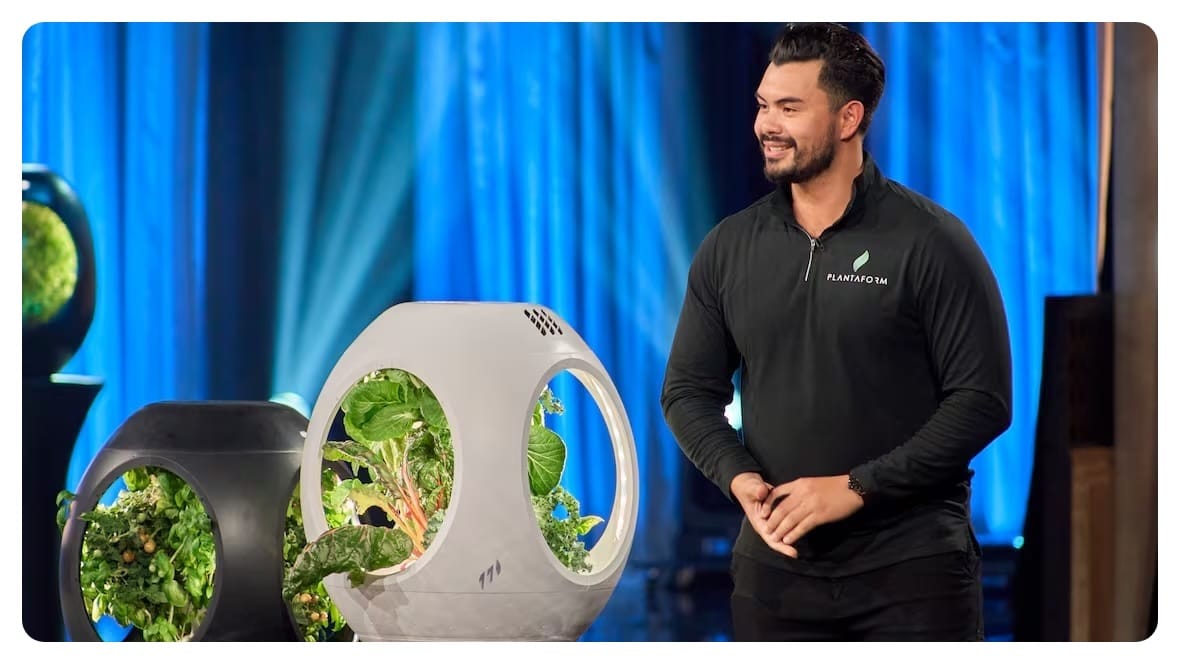
Alberto Aguilar was eight years old in Jakarta when his mother would come home from work and hand him her food because there was only enough for one. He had moved from Barcelona to Indonesia after his parents separated, attending an international school on fees covered by the divorce agreement, which made him the poorest kid in a building full of children who had everything. Dinner on many nights was instant noodles, the only thing they could afford. Those years taught him something that never loosened its grip. Healthy food is not a small thing, and most of the world does not have enough of it.
From Barcelona to Jakarta to Dubai, Always Watching the Food
He carried that understanding through difficult years back in Spain, where his father lost everything in the 2008 financial crisis, and the family went from a comfortable house with a garden to eating on savings in a smaller place with no room to grow anything. When his mother, now remarried to a Canadian, offered him a way out, he took it. He moved to Dubai, finished school, and began to rebuild. Dubai had infrastructure, education, healthcare and opportunity, but the produce was wrong. Tomatoes tasted bland, berries had no sweetness, and everything arrived harvested early, packed with nitrogen, and chilled for a journey of thousands of kilometres. His mother told him to be grateful for what they had. He was grateful and also noticed something real. A city with everything except food that tasted like food, because almost none of it was grown anywhere nearby.
He moved to Canada for university, started his first company in his second year, and built a second one that was gaining real traction before COVID shut the relocation market it depended on entirely. He sold his equity and found himself in an Ottawa apartment with time, clarity, and a growing sense that the food problem he had been noticing since Jakarta had not gone away.
The Pandemic, the Lettuce Limit, and a NASA Article
Watching people queue outside supermarkets for lettuce rationed at two heads per person, Alberto went down a research rabbit hole and found a series of NASA articles describing fogponics, a technology developed for growing food in space. It delivers nutrients as an ultrasonic mist directly to plant roots, producing plants 30% faster while using 50% less water than hydroponics. When he searched for companies already building with it commercially, the market was essentially empty.
What he found instead were hobbyists on Reddit and Facebook, scattered across Vietnam, Taiwan, the Netherlands and the United States, each one having solved part of the puzzle and stalled on another. He messaged every single one of them. Nine months of cold outreach later, he had assembled their collective knowledge, turned his Ottawa apartment into a laboratory, and was growing plants in the living room, the spare bedroom, and a friend's basement. After enough iterations to know the technology was genuinely viable, he turned his attention to the object that would carry it into people's homes.
The first working version was the size of a telephone booth. Alberto's team redesigned it around the egg, the strongest shape in nature, producing a consumer device that Mashable called one of the neatest smart home gadgets at CES 2025. It won the CES Best of Innovation Award, landed on shelves at Costco, crossed $1.1 million in revenue, and kept 76% of customers on a recurring pod subscription. Behind the consumer product sat a patented fogponics system with applications that reached far beyond any kitchen counter.
The Desert, the Ministry, and a Greenhouse Given Freely
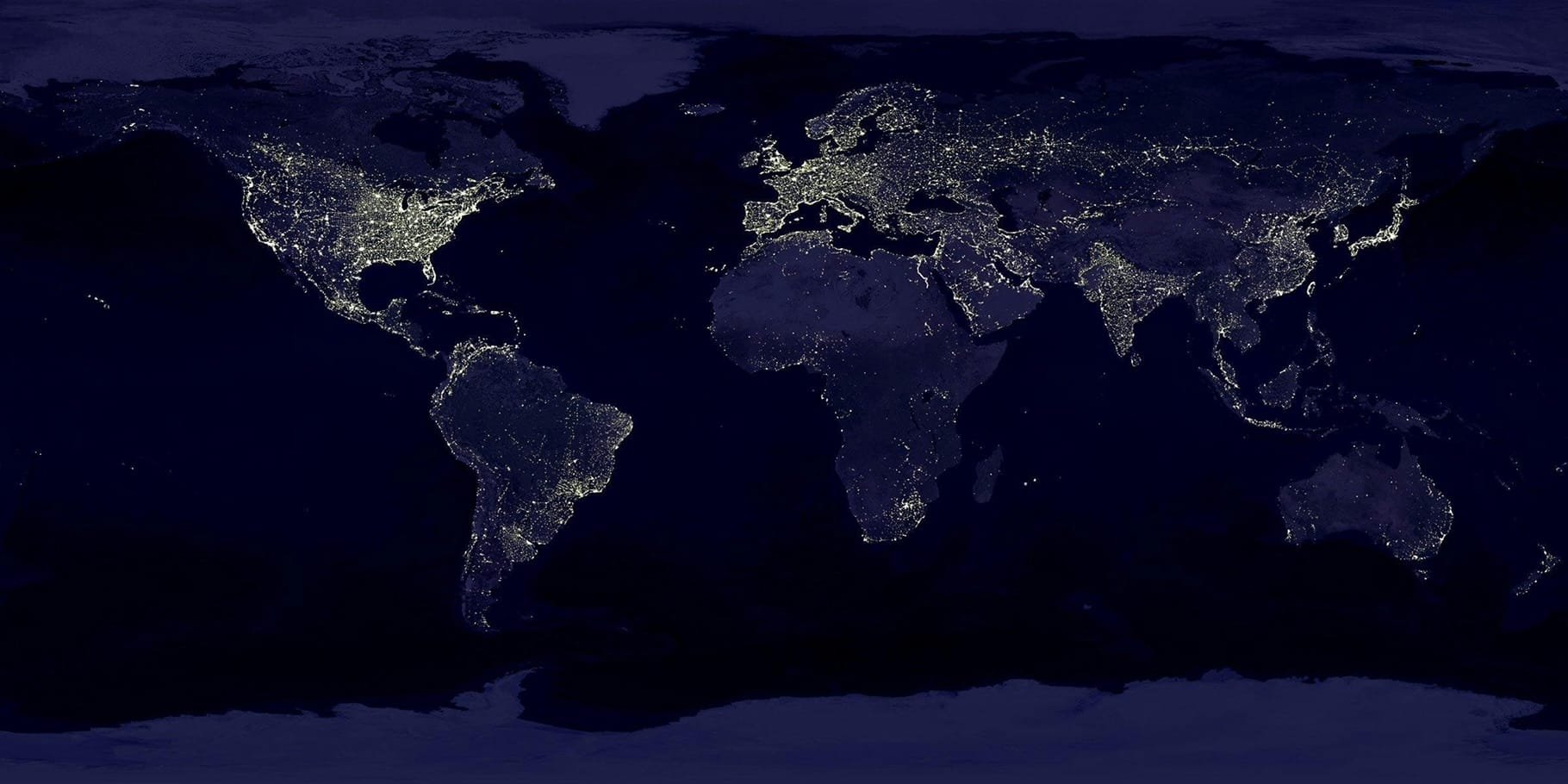
Alberto had always understood that the places where his technology would matter most were not in Ottawa. They were in Riyadh and Dubai, where deserts cover the land, 87% of the water is desalinated, and governments import the vast majority of what their populations eat. Saudi Arabia imports over 90% of its food, a dependency that every serious conversation about the country's future eventually reaches. In late 2025, Alberto moved to Riyadh with his wife and his twenty-month-old daughter to work on that problem directly.
Plantaform's path into the Kingdom came through the Sunbolah program, run under the Ministry of Water, Environment, and Agriculture, which was established specifically to attract global agritech solutions aligned with Saudi Vision 2030. The program's mandate is to remove barriers for innovators bringing proven technology to scale, and it connected Plantaform with Estidamah, the research and development institution that operates under the Ministry and provided the greenhouse facility. Where other markets layer approval processes on top of each other, Saudi Arabia's Vision 2030 agenda has made speed a priority. The greenhouse was handed over fully equipped and staffed, and the ask was to move as fast as possible.
The commercial model Plantaform is building in the Kingdom is a franchise system constructed around the farmer rather than the company. Plantaform installs fogponics infrastructure on a farmer's land, buys back all the produce at a guaranteed price, and supplies supermarkets with locally grown berries that remain fresh for two weeks rather than the three to five days imported fruit manages after its long, cold journey. The farmer earns a predictable income without taking on capital risk, Plantaform builds the supply network and the brand, and the supermarket receives a product that spoils far less. "I can sell 300 to 500 farms in one year," Alberto says, "because it is a sales engine. I sell to one farmer, he says yes, and I move to the next."
The ambition reaches beyond Saudi Arabia into Kuwait, Qatar, the UAE and Rwanda, and back in Canada, Plantaform is working with the National Research Council on a greenhouse in Gatineau while exploring a deployment for the military in the Arctic. The same fogponics system is being pushed toward minus forty degrees in the north and plus fifty-five degrees in the Gulf simultaneously, which says something about how broadly Alberto thinks the problem extends.
He measures the company's progress not in revenue but in the number of people eating from Plantaform farms. The GCC alone has close to 80 million people. "In a few years, if we build the biggest berry brand in the Kingdom," he says, "people will look it up and find out it was this Canadian guy who came here and built it, and that is why they are eating fresh berries in the middle of summer." He grew up watching his mother skip dinner so he could eat. That memory has not loosened its grip, and it is still pointing him forward.
About Flashpoint POV Spotlights
Flashpoint Global produces each Founder POV Spotlight using its proprietary category leadership framework. Every Spotlight begins with a Future Narrative session, where a founder’s POV is clarified and operationalized as the lens through which new categories are built. The result is content that moves founders beyond product messaging and into the role of category leader, helping the market understand the problem, the stakes, and the future being created.
If you are a founder building a new category, learn more.