The Battery Industry Built for EVs Is Failing the Industries That Need It Most
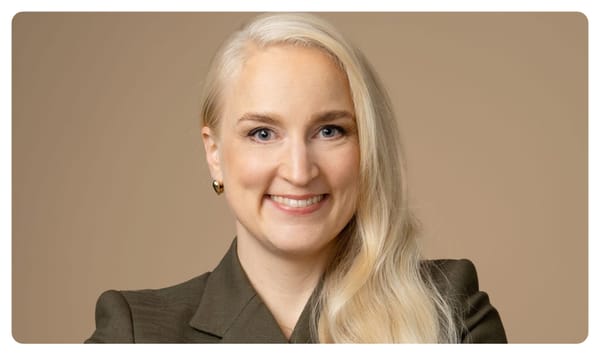
Industrial operators running mining equipment, ferries, and logistics fleets need batteries designed for their reality, not adapted from EV technology. Anders Teigland founded TioTech in Bergen to fill that gap with TitanB, an anode material that charges in six minutes and delivers 90% uptime.

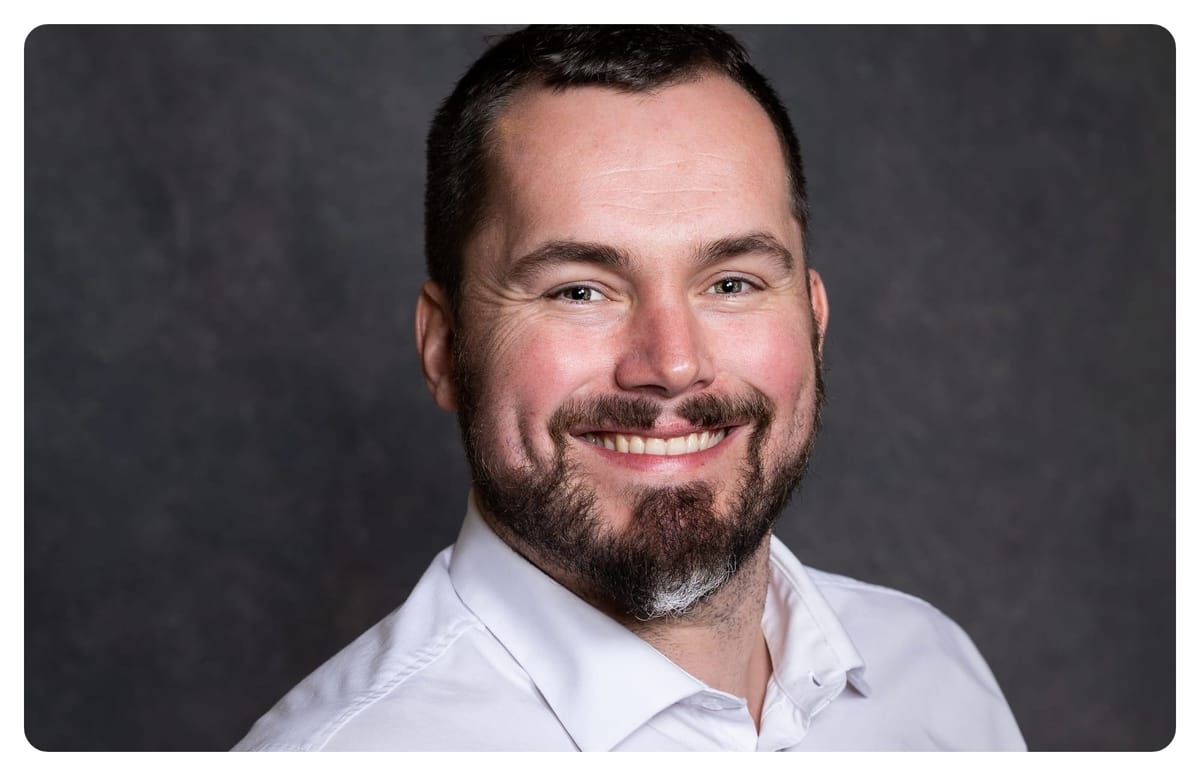
Anders Teigland grew up in Hardanger, a fruit-farming district on the west coast of Norway, in a village of about 100 people. He studied nanotechnology at Bergen, then went to Cambridge, joined a small Norwegian nanomaterials startup as a scientist, and eventually became its CEO. That startup is TioTech, and its product, TitanB, is an anode material for lithium-ion batteries designed specifically for the industries that run equipment all day, every day, in conditions that consumer battery technology was never built to handle. Mining operators, maritime fleets, logistics warehouses, and rolling stock operators need batteries that charge in minutes, last for decades, and work as reliably in the Arctic as they do in the desert. TitanB is built to do all of that.
From studying ant hills to moving dangerous goods through supply chains
As a child, Anders would spend hours watching ant hills, dropping a blueberry in to observe how the colony responded. He built small dams in rivers to see how water moved. He pulled things apart constantly, less interested in putting them back together than in understanding how they worked. He captained sports teams, ran local organizations, and, at one point, baked goods in his mother’s kitchen and sold them to neighbours as part of a youth program. The science and the leadership were always running in parallel.
Nanotechnology drew him in because it felt like the frontier. At Bergen, and later at Cambridge, he found an environment that expanded what he thought was possible. He started a PhD in energy materials, focusing on gas storage, CO2 capture, hydrogen, and new battery materials. When TioTech’s founders invited him to join as a scientist, he already knew, from an exam question three years earlier, that titania was theoretically viable as a battery anode material. He left the PhD to join the startup because it was more interesting. When the founding CEO decided he could raise capital more effectively as chairman, the board asked Anders to take over, and he has been building the company in that role ever since.
An 80% solution that works every time is worth more than a perfect one that doesn’t
The battery industry has spent years optimizing for energy density, and Anders thinks that is the wrong metric for most of the applications that matter. “An 80% solution that works 100% of the time is a lot better than a 100% solution that only works 80% of the time.” In mining, maritime, and heavy logistics, a battery that degrades quickly, charges slowly, or fails in cold weather is not a minor inconvenience. It stops equipment running and pushes operators back toward diesel.
TitanB replaces the graphite anode in a lithium-ion battery with a titanium dioxide nanomaterial, produced through a chemical bottom-up process using widely available feedstock. It charges to capacity in six minutes, delivers 90% uptime, operates safely across extreme temperatures, and carries a cycle life long enough to avoid replacement in continuous industrial use. Its safety profile is strong enough to remove the complex control systems conventional lithium-ion batteries require. TioTech has 22 granted patents across five families, a pilot production line running at 100 tonnes per year in Bergen, a battery cell development agreement with GUS Tech in Taiwan, and a technical sales agreement for battery systems with Admiral Energy in the UAE.
It’s time to stop pulling energy from the ground
“I hate inefficiencies,” Anders says, and it shows in how he thinks about the energy transition. For 150 years, humanity has extracted energy from the ground and used it. That era is ending, and replacing it requires a complete redesign of how energy is stored and moved, not just where it comes from. The industries TioTech serves are those where the redesign is most urgent and where conventional battery technology has done the least to help.
The next step is scaling production from 100 tonnes per year to 2,000, supported by a EUR 10M raise currently underway, with a longer-term plan to reach 20,000 tonnes per year capacity by 2032. The immediate work is converting existing pilots and validation studies into long-term offtake agreements, and Anders is focused on exactly that.
About Flashpoint POV Spotlights
Flashpoint Global produces each Founder POV Spotlight using its proprietary category leadership framework. Every Spotlight begins with a Future Narrative session, where a founder’s POV is clarified and operationalized as the lens through which new categories are built. The result is content that moves founders beyond product messaging and into the role of category leader, helping the market understand the problem, the stakes, and the future being created.
If you are a founder building a new category, learn more.