Managers Can’t Lead While They’re Buried in Coordination
After 25 years in mobile and banking technology, Finnish founder Kristian Luoma identified the real obstacle to leadership, the coordination tax consuming 40% to 70% of every manager’s week. In Parallel is built to remove it.

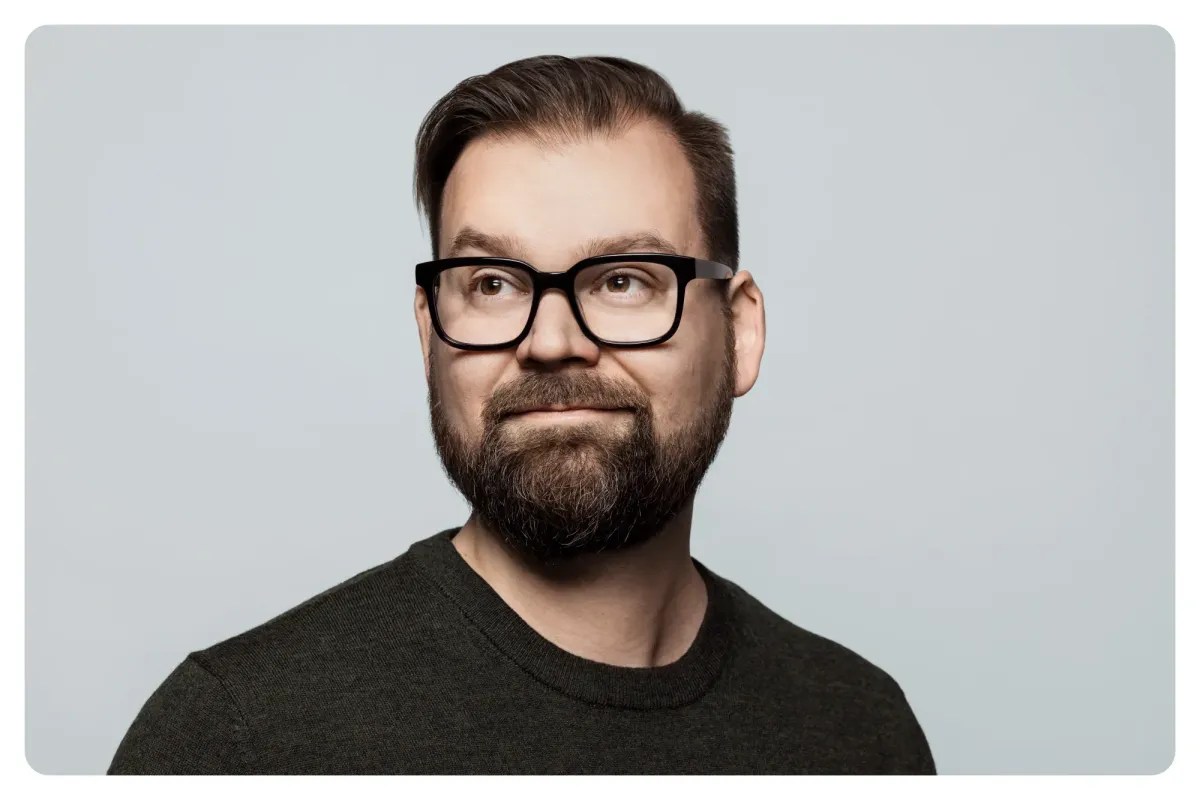
Kristian Luoma has spent 25 years watching technology reshape the way humans work, and every time he has seen it fail, the reason was the same. New capabilities had been built without asking whether they made sense for the humans using them. The Finnish co-founder of In Parallel grew up near the Arctic Circle, started building websites at 14, and carried that instinct through Nokia, through banking innovation, and eventually into a conviction that the modern workplace has a problem nobody is talking about honestly. The coordination overhead sitting on top of every manager’s actual job has quietly become the job itself, and In Parallel is the system he built to change that.
Technology Has to Make Sense for Humans
Kristian’s tech career began early with his first job in the Santa Claus Technology Village in Rovaniemi. His early years at Nokia gave him room to explore what he calls his need for new things, filing patents and helping build mobile services at a time when nobody fully understood what mobile applications would mean for the world. One service he worked on launched with 300 million active users. Nokia also taught him that technology only creates value when it makes sense for the humans using it, and he didn’t think Nokia did that especially well compared to what was coming.
That realization followed him into banking, where he led innovation and award-winning personal finance design and found himself spending more and more time with startups. He met his co-founder, Markku, in Silicon Valley while visiting with the bank’s management team, and the two became operators together at a Swiss company that grew from 40 to 1,300 people in 18 months. It was there, watching that growth compound in real time, that the problem came into focus. The bottleneck was the coordination layer sitting atop every team at every level, consuming time and attention that should have been devoted elsewhere.
The Paper Map Is Still on Every Desk
Kristian uses an analogy that lands immediately for anyone who has navigated an unfamiliar city before smartphones existed. You picked up a paper map from the hotel lobby and oriented yourself from corner to corner the whole way. You held the route in your head, rechecked every turn, and stayed so focused on not getting lost that you stopped being present with what was around you. You could have walked past the Eiffel Tower and barely registered it. That cognitive overload was simply the cost everyone accepted before a better system existed.
The same cost sits on every manager’s desk today. After every meeting, someone has to track the action items, communicate the decisions, update the execution plans, maintain the status reports, and remember to follow up on whether the thing actually got done. Deloitte puts the time cost at roughly 40% of a manager’s week. Kristian’s customers tell him it’s closer to 70. “Coordination has become the work,” he says, “not the outcomes.” In Parallel attends the meetings, monitors signals from connected tools like Jira and Salesforce, detects decisions and risks, and maintains what Kristian calls a living execution plan, a single source of truth that stays current automatically, without anyone having to do it manually. The navigator that shows what’s next, always up to date, so the person in the room can focus on the conversation instead of the map.
The Judgment Era Is Closer Than You Think
The intellectual framework Kristian keeps returning to is John Boyd’s OODA loop, the observe, orient, decide, act model developed by the American fighter pilot and strategist. Boyd’s argument was that a well-run organization should be able to move through that cycle faster than its environment changes. Kristian’s version is that AI can now handle the first two stages. It can observe everything happening around a company and orient based on what it finds. What it cannot do is decide and act with the values, judgment, and accountability that leadership requires. That gap is where humans belong, and most managers are nowhere near it because they’re still stuck doing the observe and orient work manually.
Stephen Wolfram has described this shift as the end of knowledge work. What comes next, he argues, is a judgment era, where humans use taste, intuition, and values to guide things rather than spending their days transforming information from one container to another. Kristian thinks that era is closer than most people realize, and that meetings will become more important as a result, not less. When the coordination layer runs itself, the people in the room can do what only humans can do. “We get to lead instead of manage,” he says. For the five enterprise teams already running on In Parallel, and the next stage of growth ahead, that is what Kristian is building toward.
About Flashpoint POV Spotlights
Flashpoint Global produces each Founder POV Spotlight using its proprietary category leadership framework. Every Spotlight begins with a Future Narrative session, where a founder’s POV is clarified and operationalized as the lens through which new categories are built. The result is content that moves founders beyond product messaging and into the role of category leader, helping the market understand the problem, the stakes, and the future being created.
If you are a founder building a new category, learn more.