Every Surgery Produces Enough Data to Predict Complications. Why Is Almost None of It Being Used?
Every year, 60 million patients suffer anesthesia complications that current monitoring cannot anticipate. Eva Gubern and Pedro Gambús built Predictheon to change that, starting with 30 years of mathematical modelling and a proprietary patient database nobody else has.

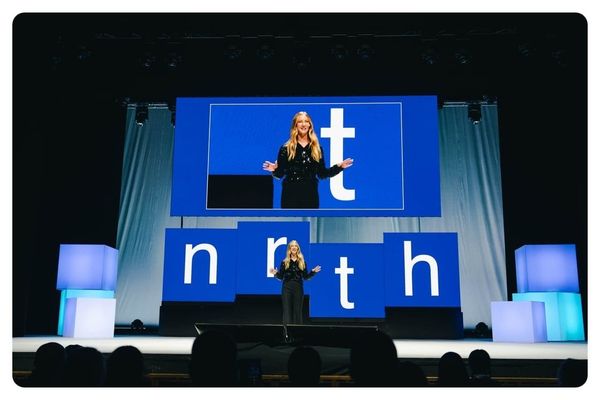
Every year, 60 million patients suffer anesthesia complications that their doctors had no way to anticipate. The operating room generates 100,000 data points per hour per patient, tracking brain activity, heart rate, oxygen levels, and respiratory function, and at the end of the procedure, 95% of that data is discarded. Eva Gubern is the CEO of Predictheon, a Spanish medical AI company building the predictive layer that the operating room has never had.
She could not get into medical school, so she went to Rwanda instead
Eva grew up in Barcelona, shaped by a grandfather who had lived through the Spanish Civil War and came out the other side believing that luck, not ability, determines where a person starts. He built a construction company from nothing and took his granddaughter to Africa at fifteen, teaching her that the only reasonable response to good fortune was to use it in the service of others. She wanted to be a doctor. The grades required for medical school in Spain are among the strictest in Europe, and only the top five percent of students get in. Eva ended up in engineering instead, which turned out to be the longer route to the same place.
She went to work for GSK, convinced the CEO to fund an oncology care program in Rwanda, secured $10 million, and moved there with her husband to build it from scratch. The work put her in daily contact with doctors doing things she found extraordinary, running vaccination campaigns that reached half a million babies, making decisions that determined whether children lived or died. She came away with a precise understanding of what it costs when healthcare systems fail to use the tools available to them, and a deep respect for what clinicians do inside the constraints they are given.
One anesthesiologist, six surgeries, and no way to see what is coming
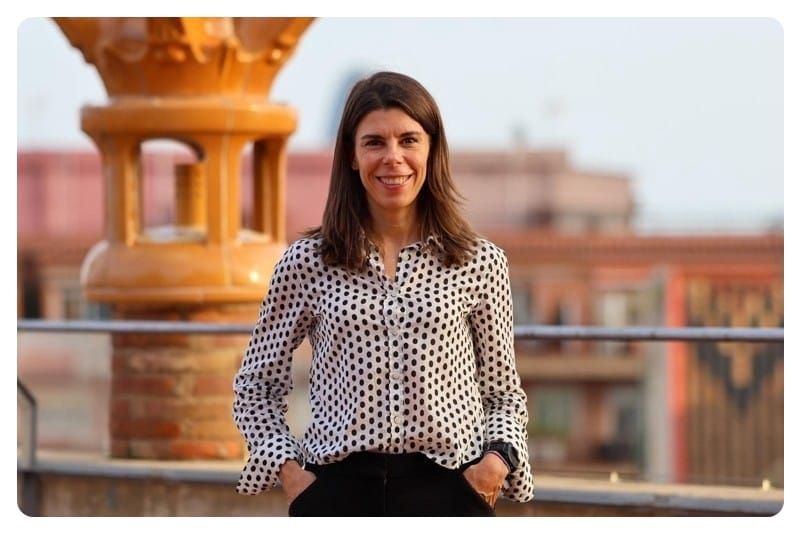
Years later, back in Spain, Eva sat down with her uncle, Pedro Gambús, and listened as he explained what he had been building for three decades. Pedro, an anesthesiologist at a Spanish public hospital who earned his PhD at Stanford, has spent his career studying how individual patients respond to anesthesia. He has more than 120 published papers and a proprietary patient database built from real surgeries that cannot be purchased or replicated anywhere. The insight behind his work is one that the entire medtech industry had left unaddressed. Anesthesiologists have no predictive tools. They respond to complications after they begin, often while overseeing several operating rooms simultaneously, moving between screens with no way to know in advance where the risk is. As Eva puts it, “You would not board a plane with a captain who doesn’t have weather predictions. Then why do we enter the operating room with doctors having no predictions?”
Predictheon’s PDA device integrates all patient monitoring data into a single platform and uses AI models trained on Pedro’s database to generate real-time individualized predictions for each patient throughout the procedure. Clinical data suggests the platform reduces complications by 80% and cuts recovery time by a quarter.
There are already half the anesthesiologists the system needs, and that gap is only growing
The demographic picture gives everything the team at Predictheon is building an urgency beyond the clinical argument. There are already 50% fewer anesthesiologists than the healthcare system needs, and the shortage will deepen as populations age. Predictheon's answer is to give them the predictive infrastructure that makes every anesthesiologist more capable within the constraints the system imposes. Predictheon is targeting European commercial launch through major medtech distribution partners, with the United States to follow. Pedro’s database and three decades of modelling are the foundation. Anesthesia, as Eva says, is just the beginning.
About Flashpoint POV Spotlights
Flashpoint Global produces each Founder POV Spotlight using its proprietary category leadership framework. Every Spotlight begins with a Future Narrative session, where a founder’s POV is clarified and operationalized as the lens through which new categories are built. The result is content that moves founders beyond product messaging and into the role of category leader, helping the market understand the problem, the stakes, and the future being created.
If you are a founder building a new category, learn more.