Most Great Athletes Never Get Discovered. SEE Is Changing the Odds
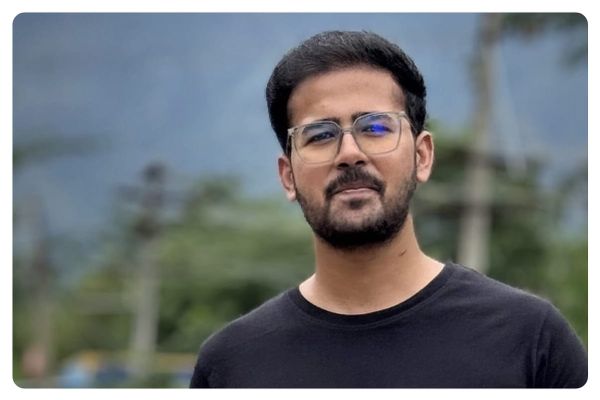
Abdelrahman Ghareeb dislocated his knee in 2014 and spent the next decade asking why nobody saw it coming. The Egyptian founder built SEE, an AI platform that turns any phone camera into an objective movement assessor, to give every athlete the data that only professionals have ever had.

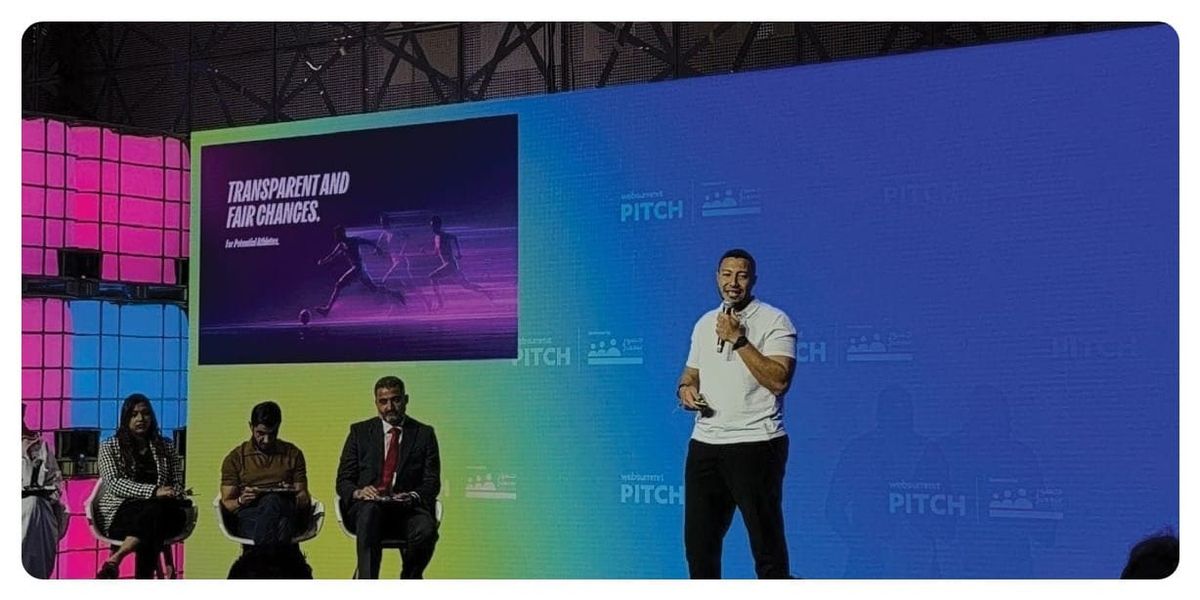
Abdelrahman Ghareeb has always wanted the answer to a simple question. He played football and basketball, handball at a professional level, kitesurfed, swam, did karate, and boxed across his life, and nobody could ever tell him which one he was actually built for. Every choice was someone else’s guess. His parents put him in swimming because they wanted him to be safe near water. He drifted into football because his father loved it. He was tall, so people told him to play basketball. He was good at most things he tried and exceptional at none of them in a way that settled anything. The question stayed open. It is still the reason he gets up in the morning.
A knee, an anatomy textbook, and a question nobody could answer
In 2014, while playing football, Abdelrahman dislocated his left knee. The injury itself was painful enough. What came after was worse. His other knee began to deteriorate through compensation, and nobody could explain why the first injury had occurred or how to prevent the second from happening. He went to physiotherapists and got the standard answers. Prevention was possible, prediction was not.
He didn’t accept that. Nine years as a technology and business consultant at Microsoft, moving between Seattle, Dubai, and Egypt, had taught him what prediction models could do. He knew movement could be tracked through a camera. So he went and read the science himself, studying anatomy and biomechanics until he understood which imbalances lead to which injuries and at what threshold. A doctor confirmed what he had suspected. If you knew a muscle was overloaded beyond a certain point, the probability of injury approached certainty. The data to flag his injury had existed before it happened. No one in sport had ever collected it for someone who wasn’t already a professional.

The system only finds Messi after he’s already beaten the defence
After the injury, Abdelrahman started researching how sport selection actually worked. He asked parents across multiple countries how they had chosen a sport for their child. The answers were almost identical everywhere. They went with what they knew, what they played, what was nearby, what their friends were doing. The most rigorous answer he found was a former athlete who had used a DNA test as a rough guide before making his own call. That was the best the system had to offer.
The sports technology industry wasn’t filling that gap. Every company in the space was focused on professionals, and the tools built for youth development still used stopwatches and human judgment. Children were assigned a sport and assessed within it, and nobody checked whether the sport suited them before putting them in it. Abdelrahman points to Messi as the clearest example. People noticed Messi was fast because he kept beating defenders. That was the data collection method. Watch him do it enough times, and eventually someone writes it down. Even at the professional level, most teams in his region had no objective record of who their fastest player was or who generated the most power. The system was built to find the next Messi by luck, and it was leaving everyone else behind.
The movement record you were never given
SEE took two years to build properly. The first attempt used custom hardware, but it wasn’t scalable, and nobody would pay for the equipment. The breakthrough came when Abdelrahman’s team got accurate computer vision assessments running on any phone camera, and from there, everything opened up. The platform takes a short set of standardized movements, a ten-metre run, a vertical jump, an agility test, and turns them into objective data covering speed, power, weight distribution, joint angles, and biomechanical imbalances. For clubs and academies, it produces team scores and individual player profiles. For younger athletes, it recommends the sports their physical makeup suggests they will actually excel in, and the injury warning system catches severe imbalances early, before they become acute.
The B2C version, built for individuals and families, is close to launch. The longer vision is what Abdelrahman calls a Sports ID. A complete movement record, built from childhood, carried from school to club across an entire lifetime. Every coach who works with that athlete gets the full picture from day one. Every young person gets an answer to the question the system never bothered to ask about them.
Abdelrahman thinks about what sport looks like when that infrastructure is everywhere. Two athletes competing, each of them knowing exactly what their body does best, using their actual strengths rather than the ones someone else assigned them. He spent his whole sporting life without that information. SEE is the answer he is building for everyone who comes after him.
About Flashpoint POV Spotlights
Flashpoint Global produces each Founder POV Spotlight using its proprietary category leadership framework. Every Spotlight begins with a Future Narrative session, where a founder’s POV is clarified and operationalized as the lens through which new categories are built. The result is content that moves founders beyond product messaging and into the role of category leader, helping the market understand the problem, the stakes, and the future being created.
If you are a founder building a new category, learn more.