Aquaplaning Has Existed Since the First Car. This Turin Founder Decided to Eliminate It.
Aquaplaning has caused accidents since the first cars drove on wet roads. Giovanni Blandina founded EasyRain in Turin to become the first company to actively restore grip, not just detect its loss.

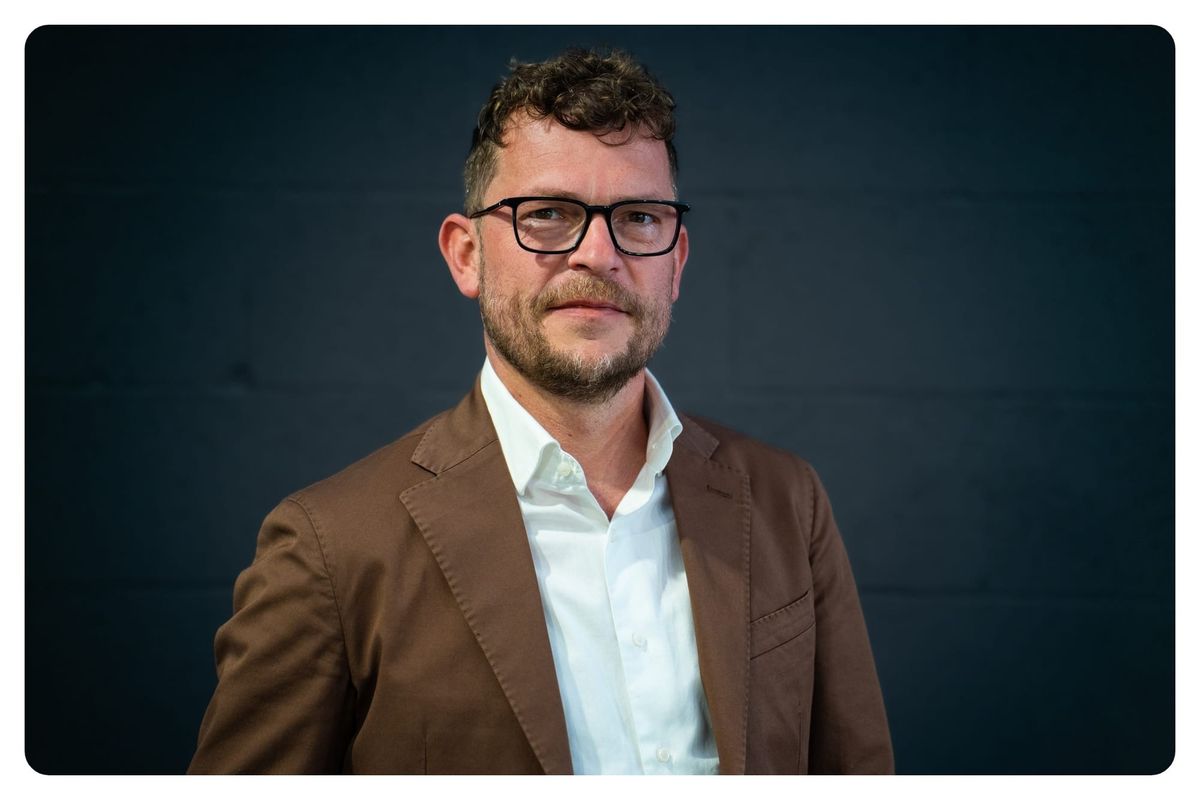
Aquaplaning kills people on wet roads every year. It has done so since cars first drove on them. More than 20% of all road accidents occur on low-grip surfaces, and for autonomous driving systems, the problem is even more acute. 15% of their failures occur in exactly these conditions. Giovanni Blandina, an innovator from Turin who spent his career in automotive R&D, founded EasyRain to build what the industry had deemed impossible. The first complete safety ecosystem for low-grip conditions, combining predictive software, an active hardware system, and a cloud infrastructure, is now under contract with Hyundai Motor Company and Easyrain. We are currently in discussions with NVIDIA is in discussions with NVIDIA for potential integration into their Halo Platform.
A passion for cars and a question he could not let go of
Giovanni grew up passionate about cars. He studied electronics and telecommunications, built his career in R&D, and moved into the automotive industry because it was where his interest had always been pulling him. The moment that changed everything came when he went into aquaplaning in his own car and found himself asking a question he could not let go of. Why had nobody solved this?
The answer he kept encountering was that the industry had simply learned to live with it. Aquaplaning was a known, old problem, and the accepted response was to warn drivers to slow down. Giovanni looked at that answer and saw something the rest of the industry had stopped seeing. The problem that had been present since the first car drove on a wet road was not unsolvable. It was an unsolved one.
Slowing down is not a solution
He founded EasyRain in Turin in 2018 with no venture ecosystem behind him and no industrial partner willing to engage until he had something to show them. The first venture capital conversations produced a question he still remembers: " Why you and not Bosch?” He had no answer yet, so he went and built one. Using a prototype built on borrowed funds, he constructed the first system, weighing 400 kilograms and filling an Alfa Romeo with pumps and instruments. It worked. The car recovered grip. He had changed his presentation from a vision on a PowerPoint to a vehicle an investor could actually test, and in 2018, he raised his first five million euros.
EasyRain has since built a modular safety ecosystem with three connected components. The DAI software platform uses virtual sensors to detect grip loss in real time, in under 150 milliseconds, without additional hardware, and leverages this data to enhance ADAS, autonomous driving, and vehicle control systems. The AIS goes further. It physically sprays pressurized water ahead of the front tires to displace the film that causes aquaplaning, restoring contact between the tire and the road rather than simply alerting the driver that contact has been lost. A first AIS prototype for snow and ice, tested in January, cut braking distance by thirty percent on its first run. The ERC infrastructure turns the data the system collects into operational intelligence for fleets, infrastructure managers, and autonomous vehicle operators.
The autonomous driving dimension is what makes all of this urgent rather than incremental. A self-driving car that has to slow to a crawl in rain or stop working on ice is not a viable product. Giovanni saw this before most of the industry was willing to name it. In his words, "You will never buy a 100,000 euro car to drive at 20 kilometres per hour in case of rain." The DAI software is in discussions with NVIDIA for potential integration into their Halo Platform.
Proving it is possible is the whole point
EasyRain has raised 18.1 million euros across five rounds and is currently closing a Series B targeting 25.3 million euros. Two contracts with Hyundai Motor Company are in place. The team in Turin numbers 35 people. Giovanni has built all of this in a city that, by his own account, should have been the most fertile ground in the world for exactly this kind of company, and largely was not.
That gap between what Turin could be and what it currently offers its automotive founders is a significant driver for him. He is not building EasyRain to become wealthy. He wants to reach production because getting there would make an argument that nobody has made successfully in the Italian automotive startup world. That it is possible. A founder who starts with a prototype built on borrowed funds and a question nobody else wanted to answer can build something that Hyundai and and leading OEMs want to be part of. "It's not a matter of money," he said. "I just want to give the message to the Italian startup in the automotive field. We can do that. It's possible."
About Flashpoint POV Spotlights
Flashpoint Global produces each Founder POV Spotlight using its proprietary category leadership framework. Every Spotlight begins with a Future Narrative session, where a founder’s POV is clarified and operationalized as the lens through which new categories are built. The result is content that moves founders beyond product messaging and into the role of category leader, helping the market understand the problem, the stakes, and the future being created.
If you are a founder building a new category, learn more.