Half of GI Cancer Patients Run Out of Options
When chemotherapy fails, immunotherapy does not respond, and targeted therapies do not apply, patients are left without a path forward. BiPER Therapeutics is developing an oral drug, selected by blood test, to treat that gap directly.

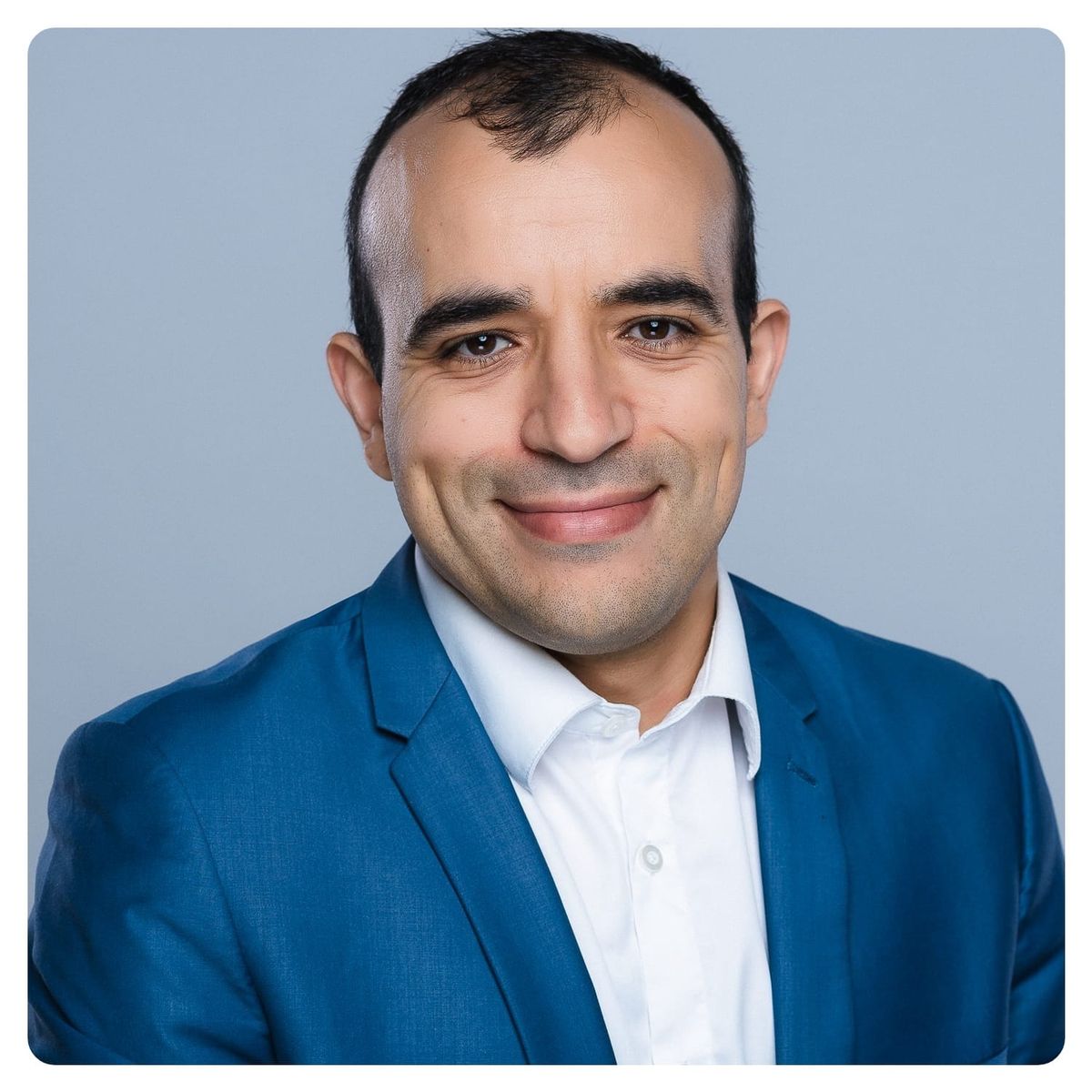
Mehdi Chelbi spent two decades helping other companies bring cancer drugs to patients before he found the problem worth building around himself. Half of all gastrointestinal cancer patients exhaust chemotherapy, immunotherapy, and targeted therapy without response and have nowhere left to turn. BiPER Therapeutics, the Paris-based biotech he co-founded, is developing a first-in-class oral drug that targets a protein overexpressed in more than half of that population, can be selected by a blood test, and is designed to push tumours to burn themselves out. The company is six months from its first clinical trial.
Twenty years of watching drugs move before building one of his own
Mehdi grew up near Lyon, in reach of the Alps, and, from an early age, was drawn to how things work at the cellular level. After his master’s degree in biology, he joined a medicinal chemistry startup during the first biotech boom of the early 2000s, a company of around fifty scientists building small molecules and developing its own pipeline of drug candidates. He was young, in a business development role, and learning fast. What he found he could not stop thinking about was what happened after the molecule left the lab. He wanted to see the end of the story.
That question pulled him into clinical research. He joined a spin-off from GSK Biologicals in Belgium, a team of immunology and vaccine specialists who had left to build their own clinical research organization. He expanded the company as an executive, opened an office in Boston in 2014, hired people in Canada to support the North American business, and over the following years managed more than 200 clinical trials across every phase of development, working with Sanofi and the top 30 pharma companies developing vaccines. By the time he felt ready to build something of his own, he understood the full arc from discovery to patient in a way very few people in the industry do.

When every available option runs out
When Mehdi looked at the treatment landscape for gastrointestinal cancers, he saw an arithmetic problem that nobody had named as a single failure. Around 60% of patients relapse after first-line chemotherapy. Only 15% are eligible for immunotherapy because their immune systems are too compromised to be re-educated, and GI tumours have a particular ability to evade immune detection. Most targeted therapies reach 15 to 20% of patients at best. Taken together, half of all patients exhaust every available option without response and end up on second- or third-line therapy with nothing left that works.
What Mehdi saw in BiP, the protein his academic co-founders had spent a decade studying, was a structural answer to that exclusion. Cancer cells overexpress BiP to cope with the internal stress associated with uncontrolled growth. It is a survival mechanism. Block it, and the stress becomes unresolvable. The cell burns out. More than 50% of GI cancer patients overexpress the target, and that overexpression holds regardless of which prior treatments have failed. “What works is focus on patient benefits,” he said. “If there is a patient benefit, of course, you build everything to be rewarded, but all those things are a consequence, not an objective.”
BPR001-615 is taken orally, which matters both for patient convenience and for reaching people who cannot easily travel to the hospital. A simple blood test confirms eligibility. Tumour regression has been demonstrated in colorectal and gastric cancer models in monotherapy and in combination with standard chemotherapy, and clinical and manufacturing plans have been agreed with the regulatory agency.
One life saves humanity
Mehdi played handball at a semi-professional level for 20 years and still treks for days at a time in the mountains near where he grew up. He describes both in the same terms. They teach you that effort has to be managed over a long distance, that consistency and discipline matter more than any single push. He has built BiPER to reflect that, lean and deliberately limited in fixed costs, what he calls flying light, so the company could survive two difficult years for European biotech fundraising without compromising the science.
The thing that gets him up in the morning is simpler than a financial model. He draws on a line from the sacred books as his mantra: one life saves humanity. If the drug BiPER, which is being developed, reaches one patient who has run out of road, that is enough reason for everything that came before it. He does not believe in magic bullets or in selling dreams to patients. What he believes in is building the right piece of a larger arsenal, matched to the biology of the patients who need it most, and letting the science do what he says science has always done. It does not lie.
BiPER is raising a Series A to finance BPR001-615 through Phase 2b efficacy data in gastric cancer. The first tranche of €10M takes the drug to Phase 1/2a. Mehdi has been preparing for this road for twenty years.
About Flashpoint POV Spotlights
Flashpoint Global produces each Founder POV Spotlight using its proprietary category leadership framework. Every Spotlight begins with a Future Narrative session, where a founder’s POV is clarified and operationalized as the lens through which new categories are built. The result is content that moves founders beyond product messaging and into the role of category leader, helping the market understand the problem, the stakes, and the future being created.
If you are a founder building a new category, learn more.